Location: Richmond
Size: 55,000 SF
Year Completed: 2026
LEED Silver
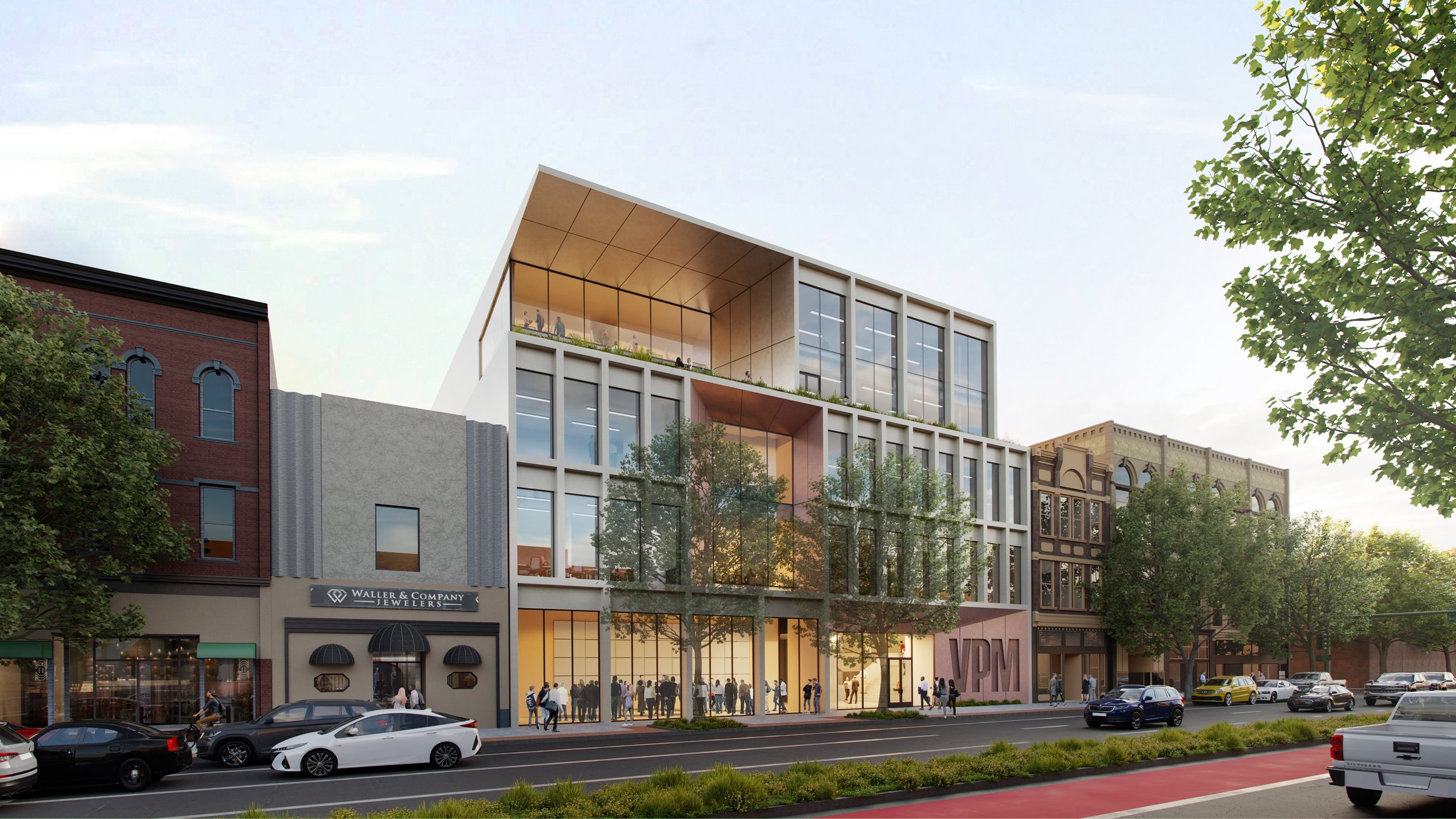
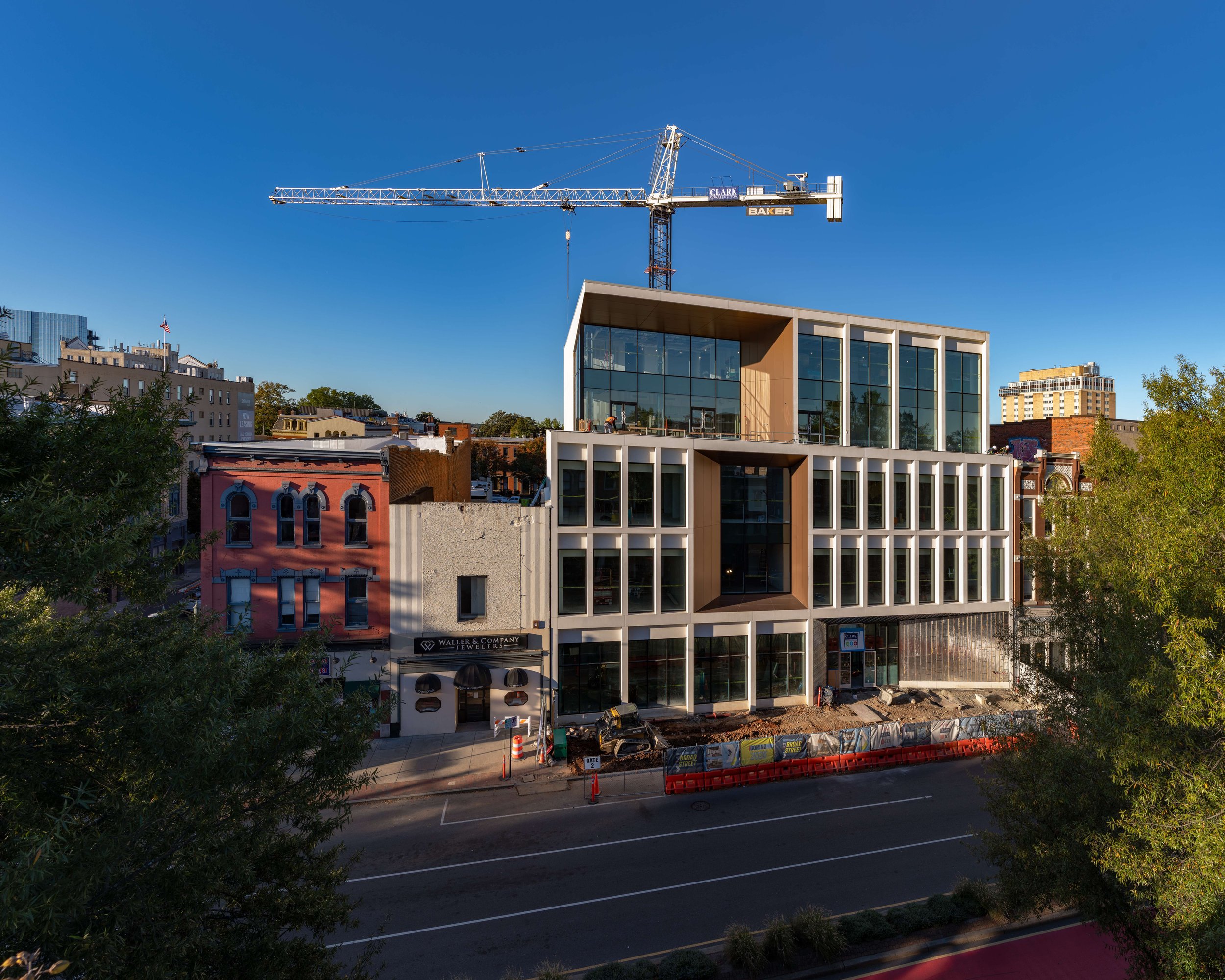
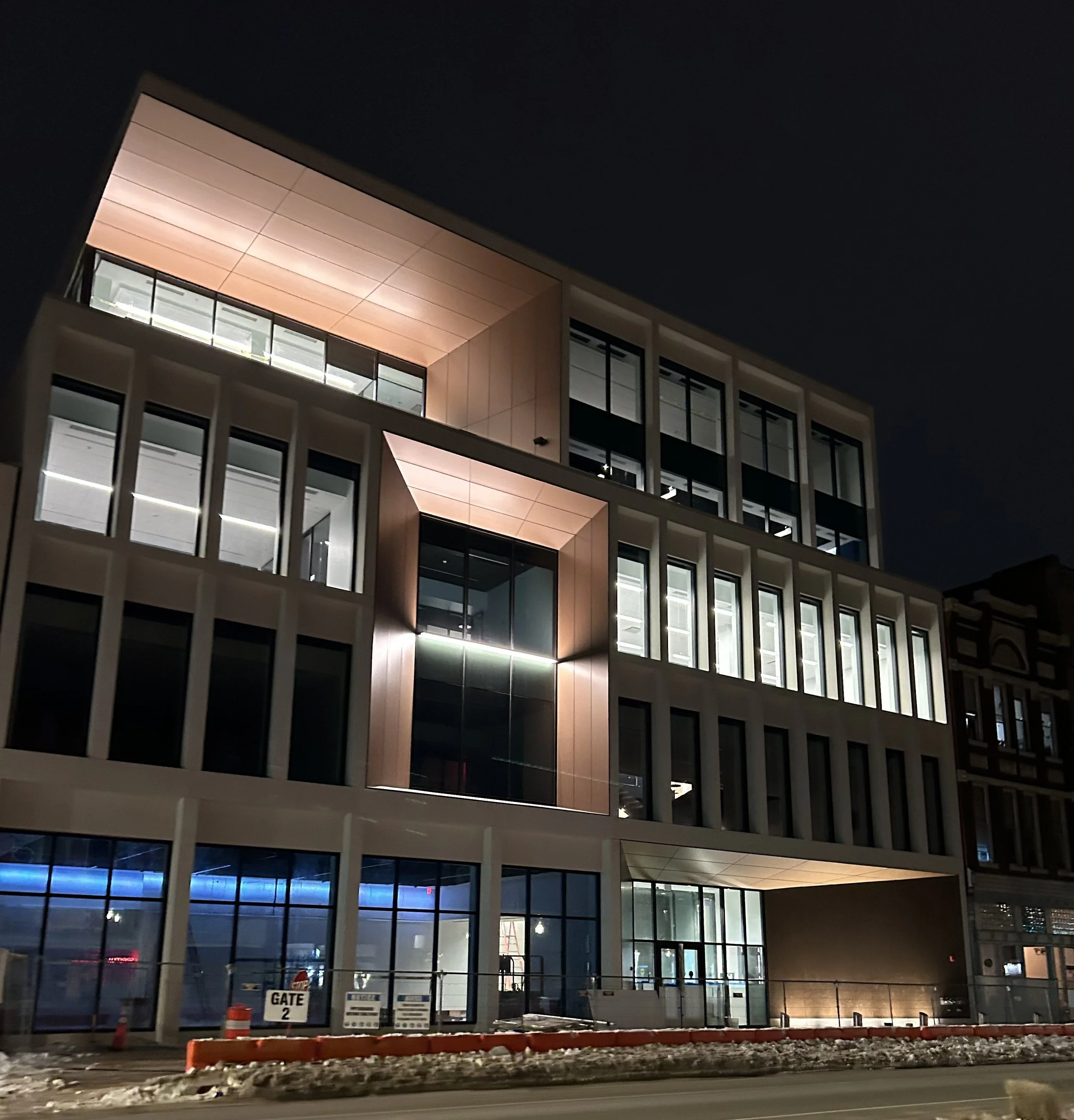
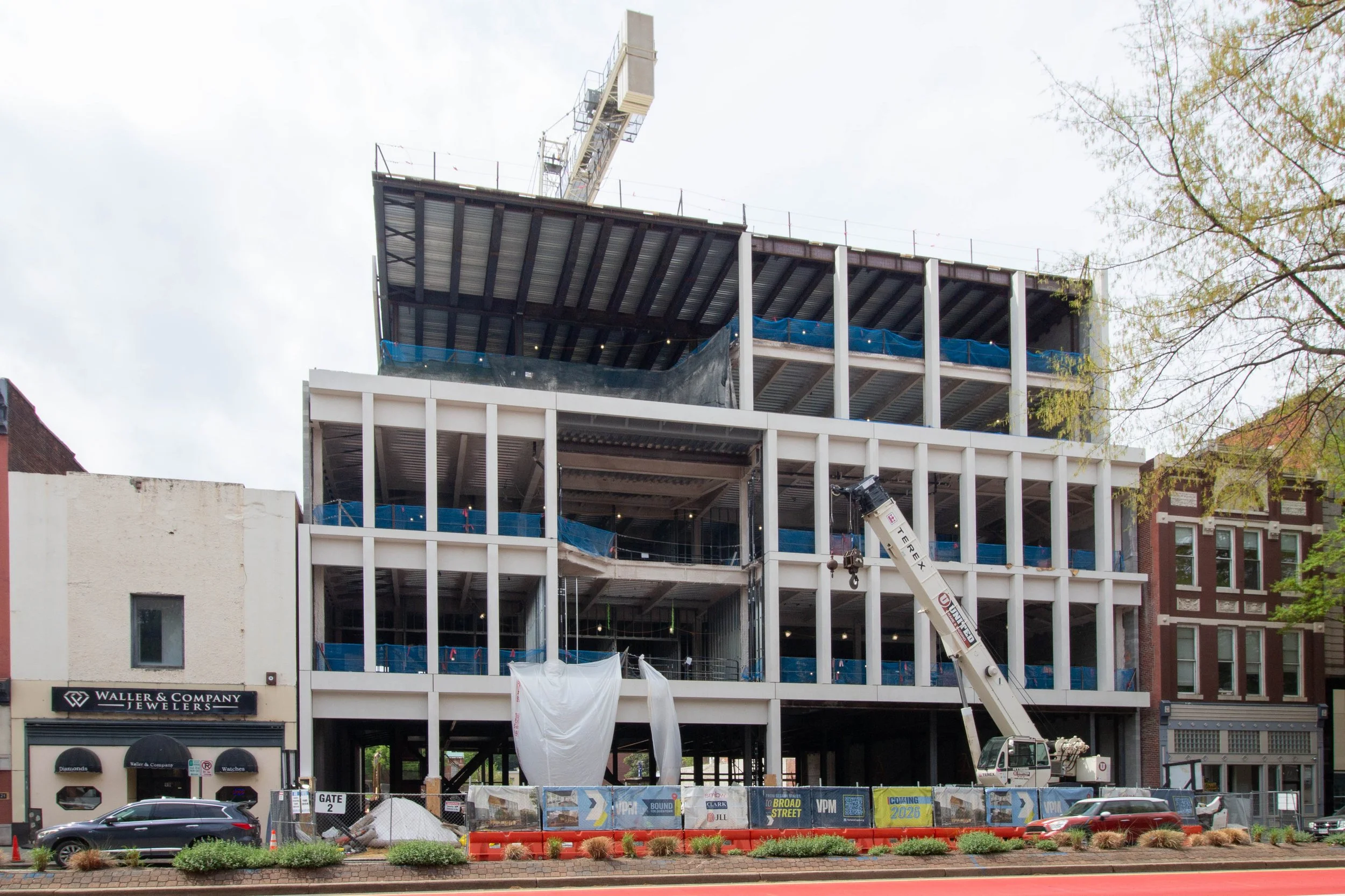
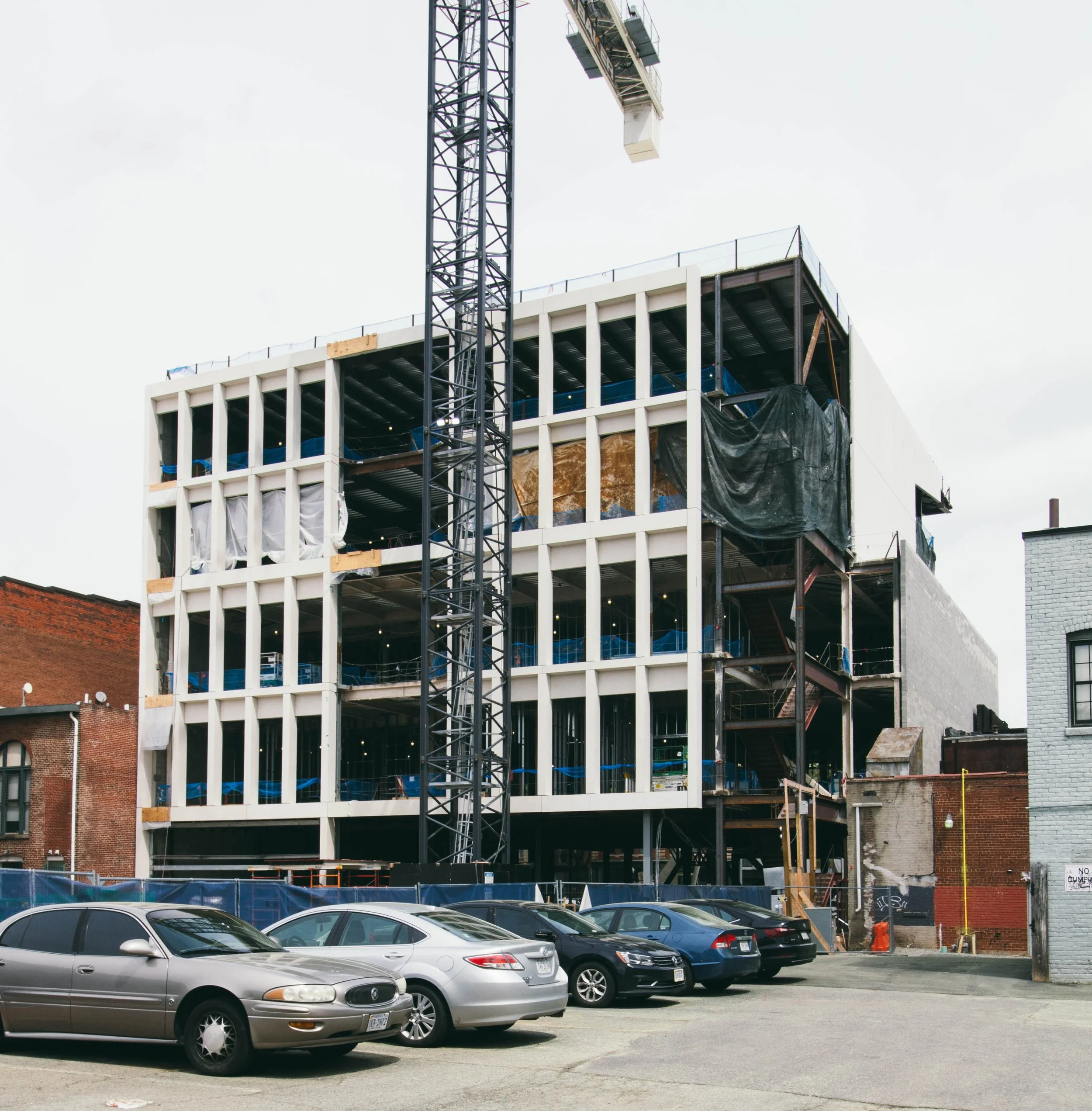
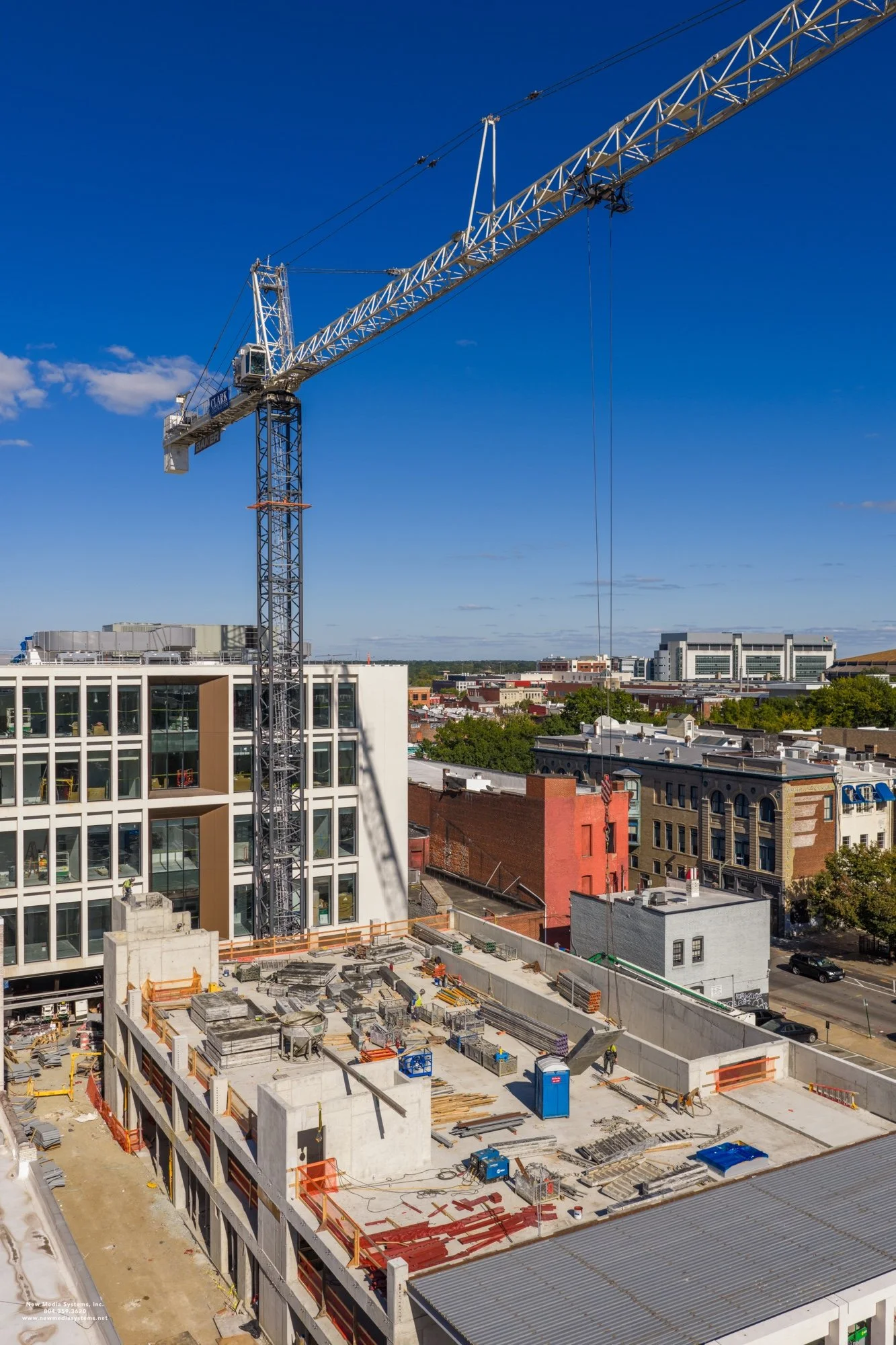
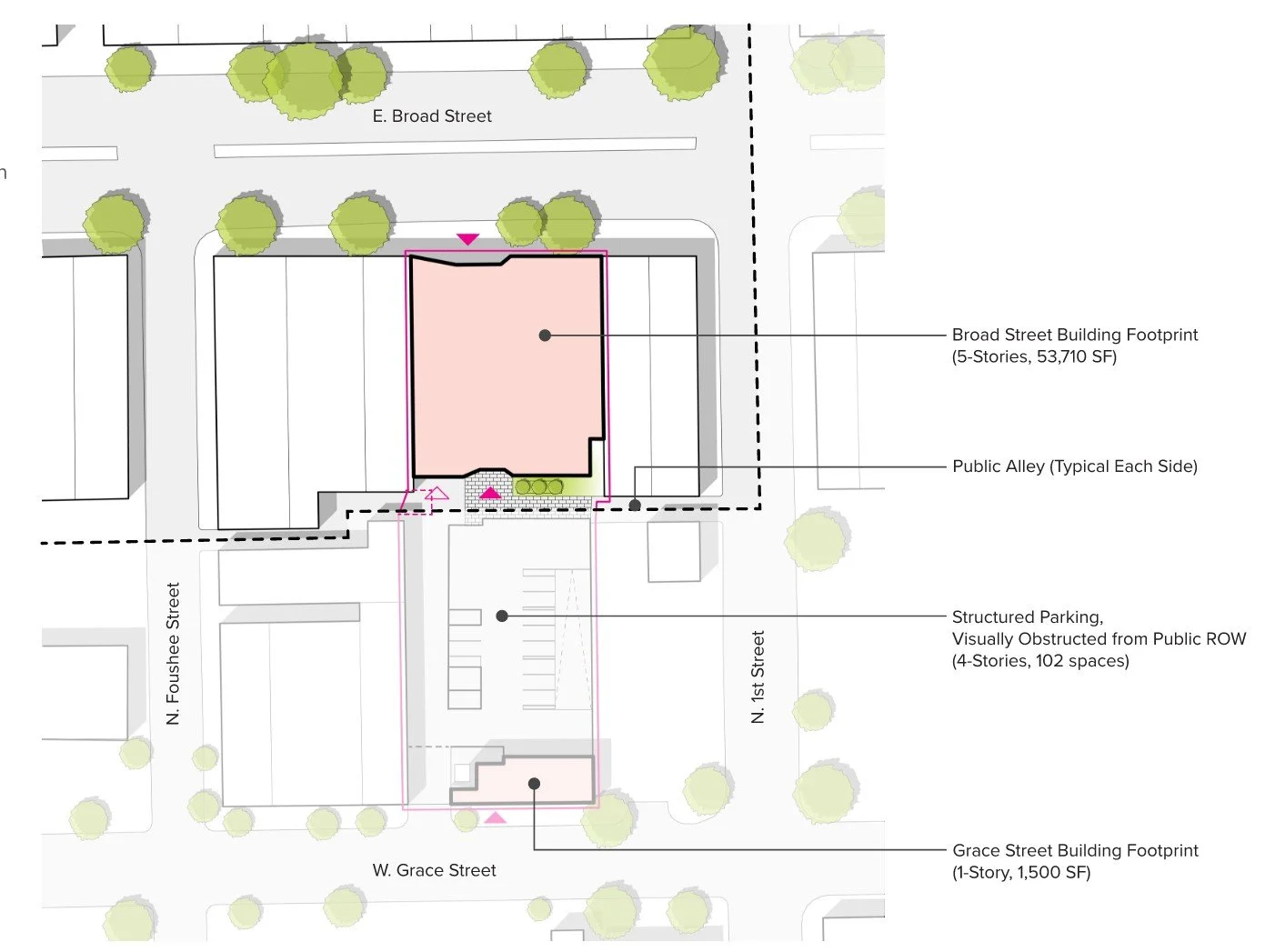
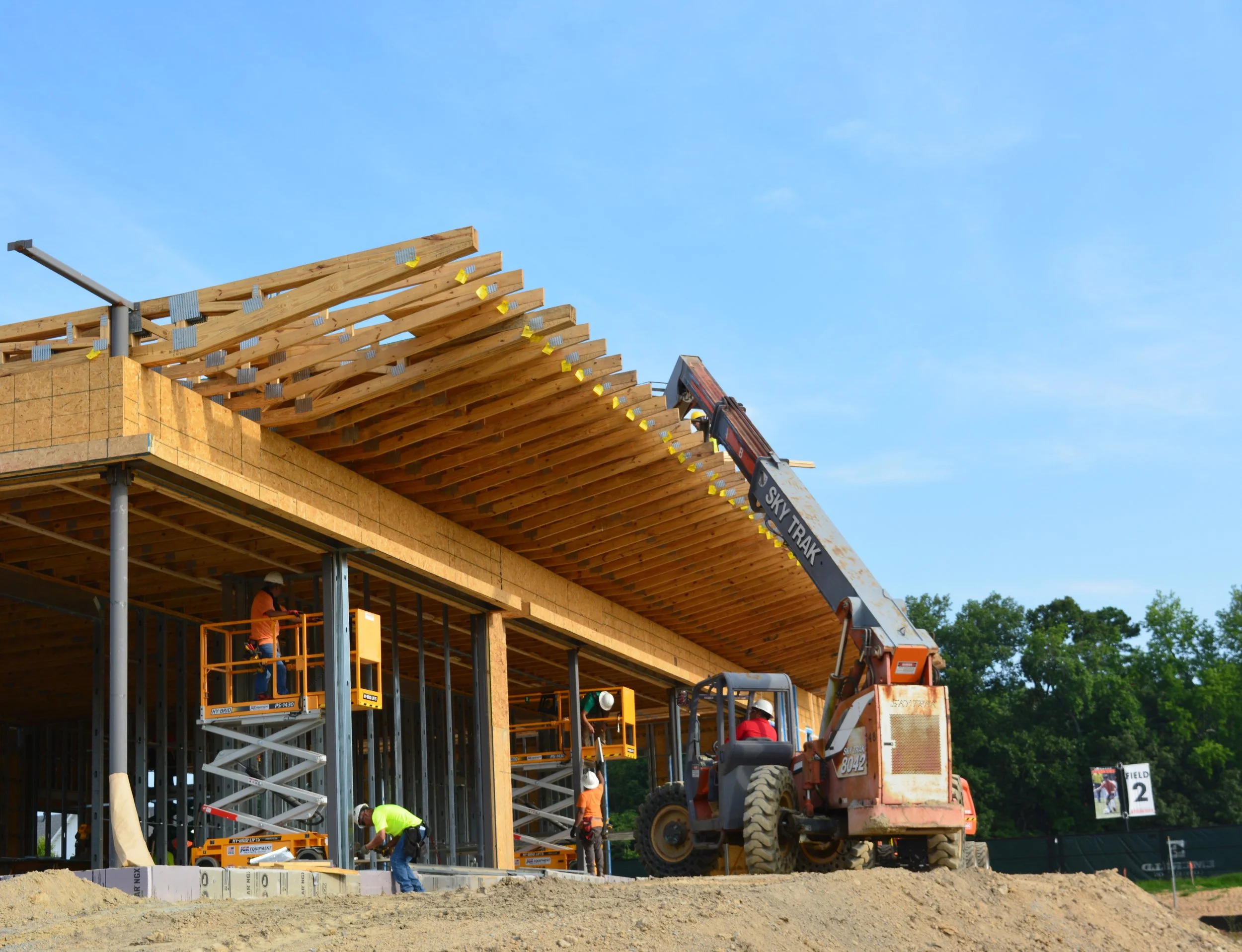
After an extensive property search in and around Richmond, VPM, Virginia’s home for Public Media, settled on a through-block urban infill site on Broad St. in Richmond’s downtown historic district.
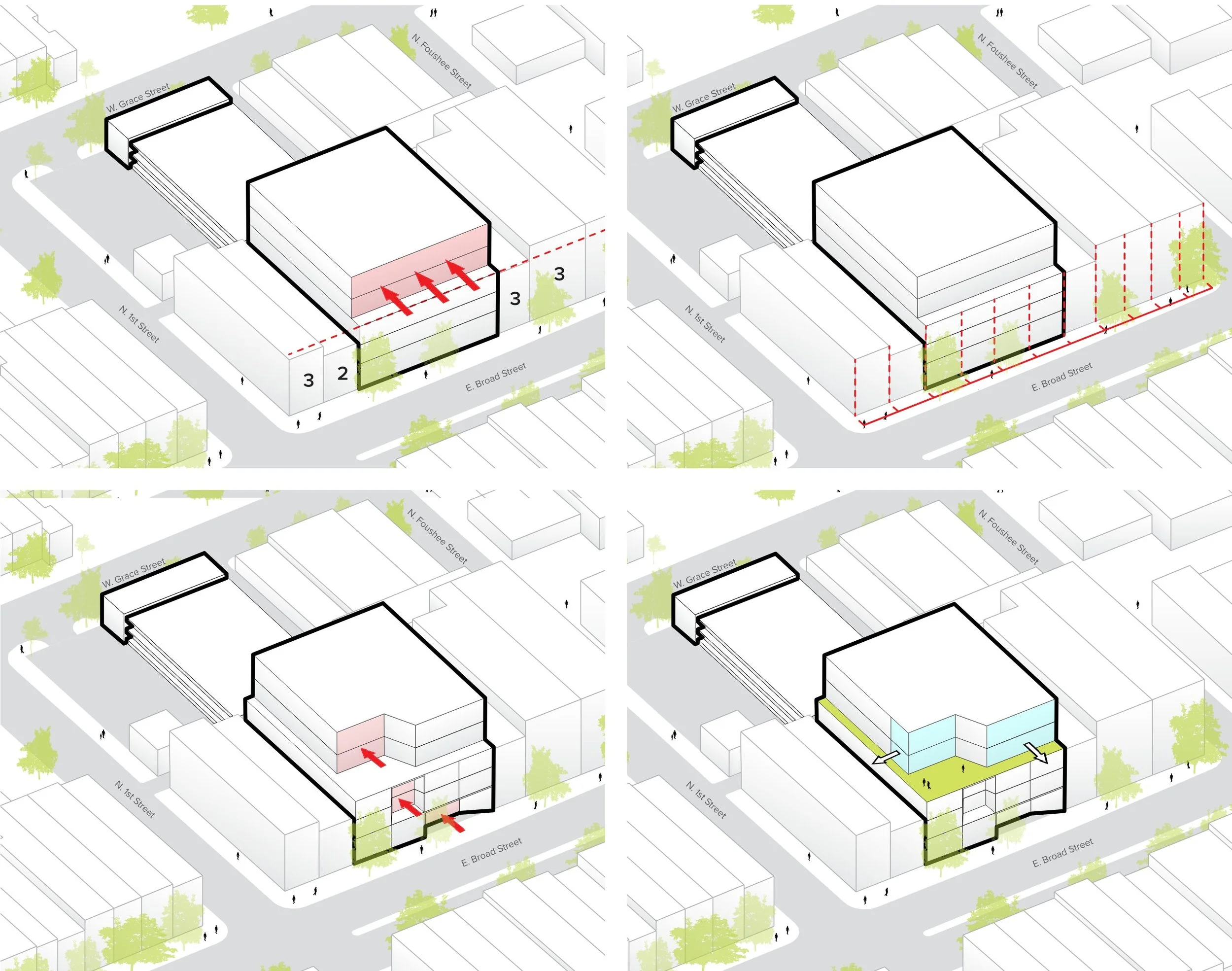
The design carefully responds to the neighborhood’s historic fabric. The Broad St. facade is organized into four 26’ modules, referencing the prevailing width of existing buildings on the block. These modules are further broken down creating a regularized pattern that is interrupted by interior programmatic elements including meeting spaces, a roof deck, and the building’s main entry.
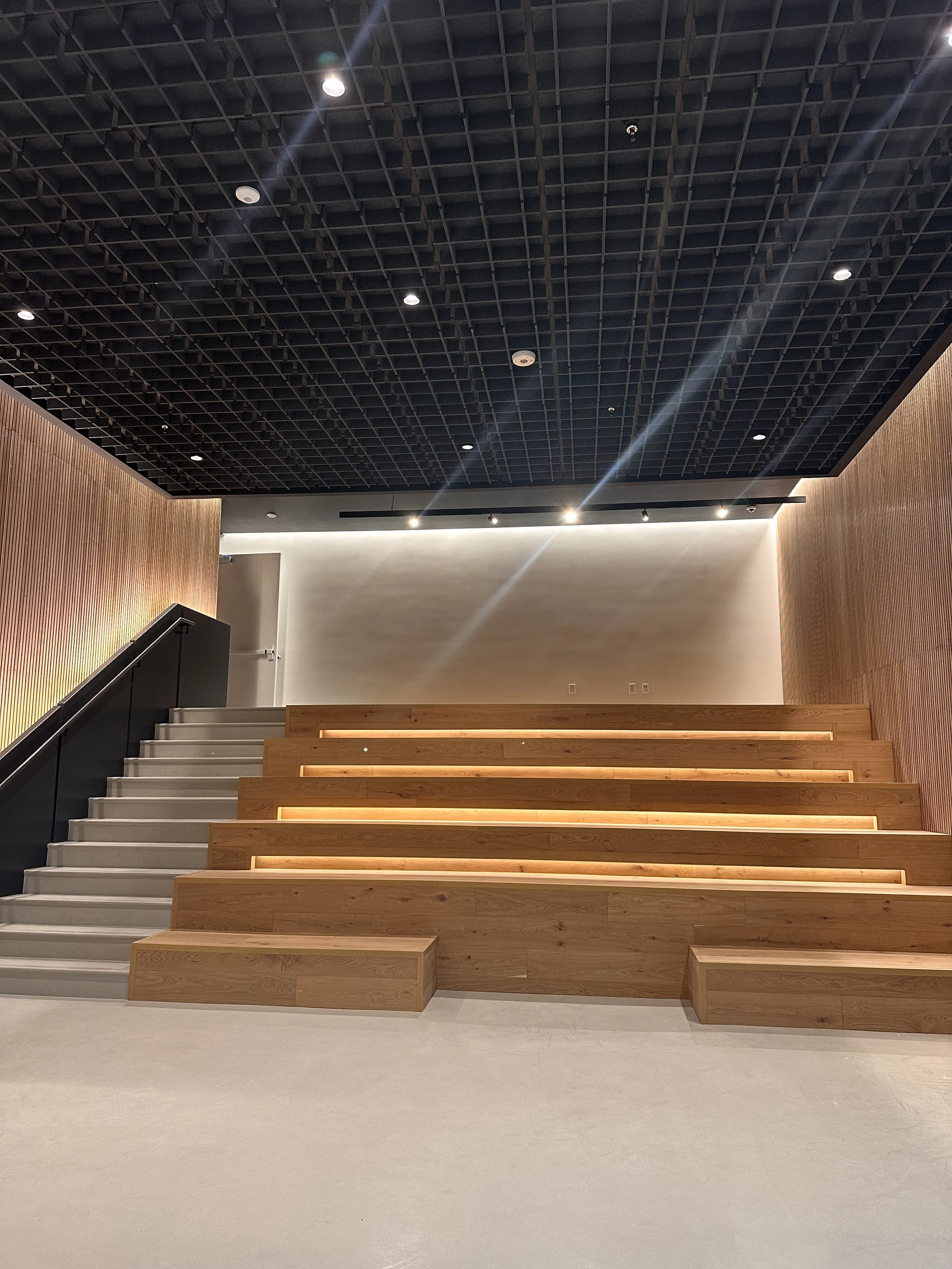
The five-story HQ building combines commercial office space, TV studios, podcast studios, production and post-production rooms, and flexible areas for community events. A 100-space parking garage and a commercial building along Grace Street complete the site.
As project architect, I led the project from initial concept through construction administration.
Location: Henrico
Size: 8,260 SF
Year Completed: 2025
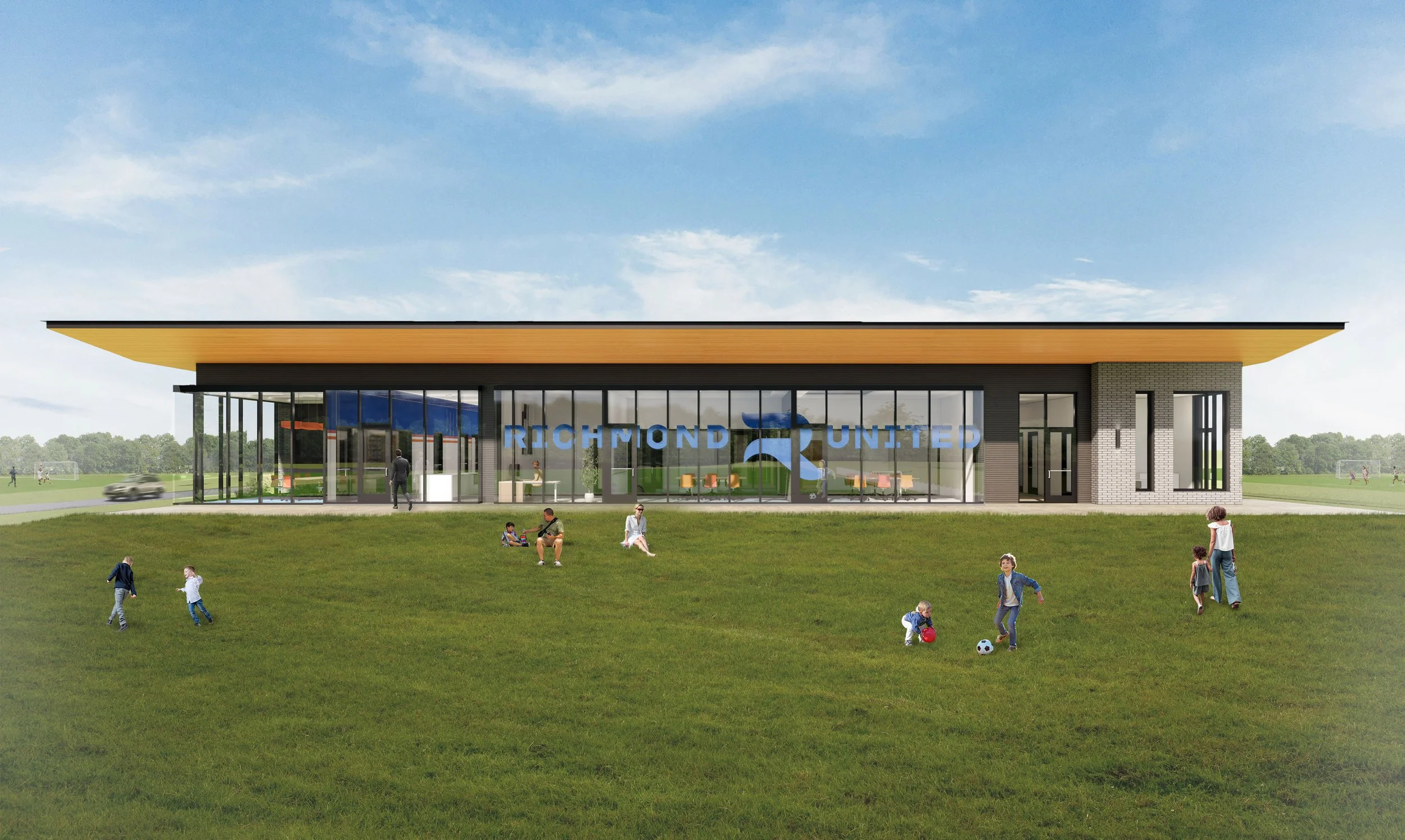
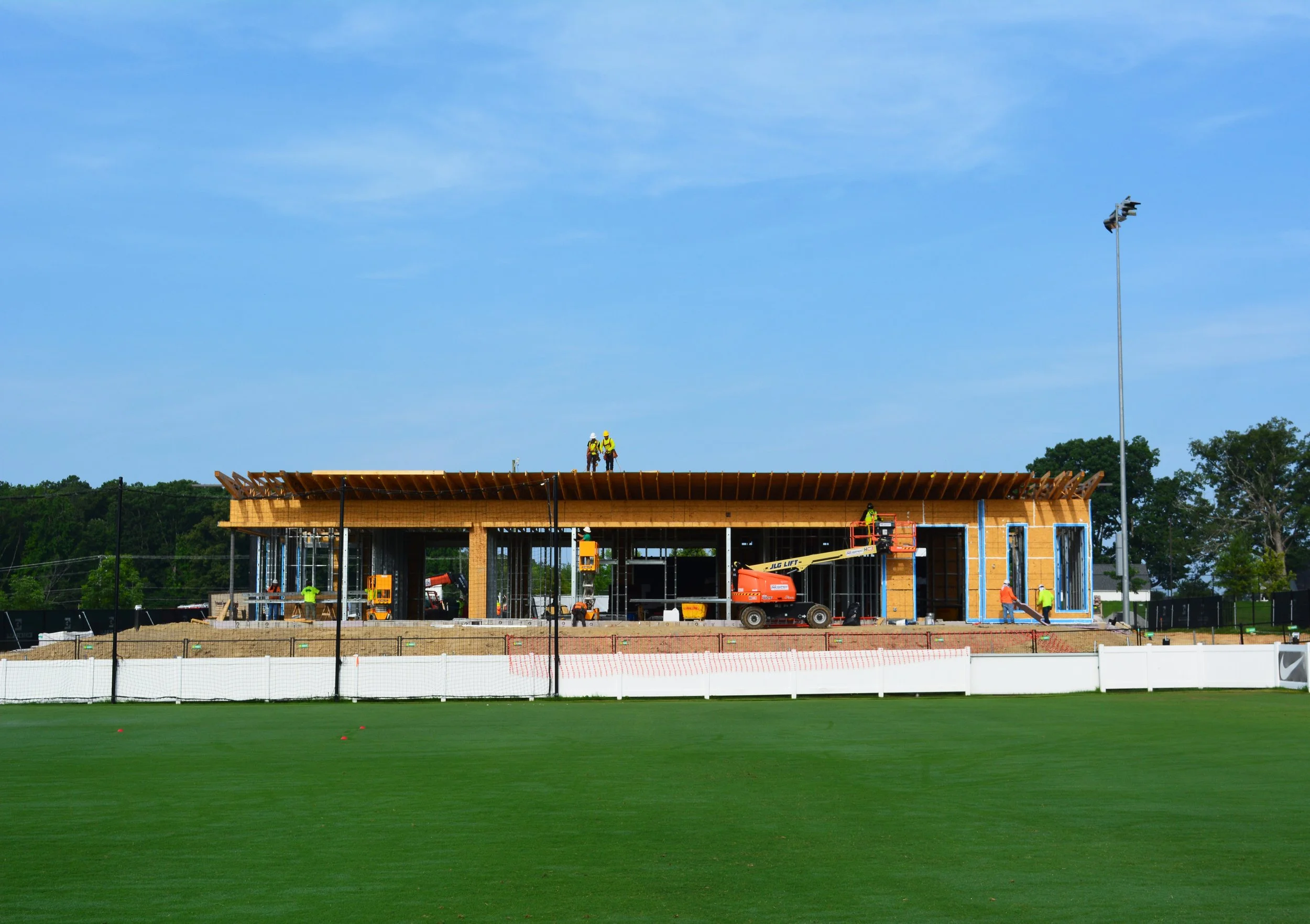
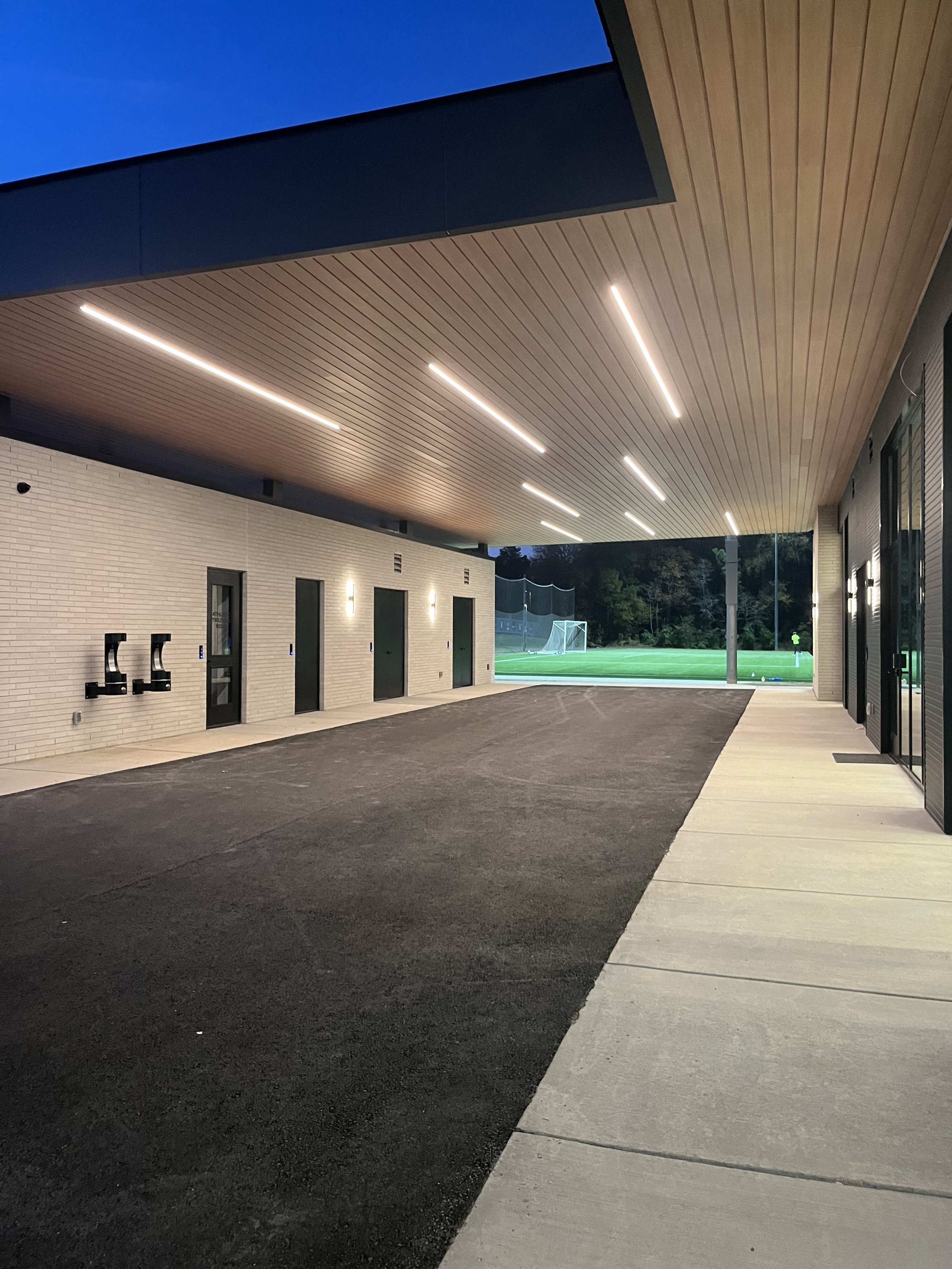
The Richmond United building at Striker Park is composed of two pavilions: one housing office and conference functions, and the other containing locker rooms, storage, and training room spaces. A sheltered outdoor courtyard between the pavilions provides a gathering space for players, families, and staff.
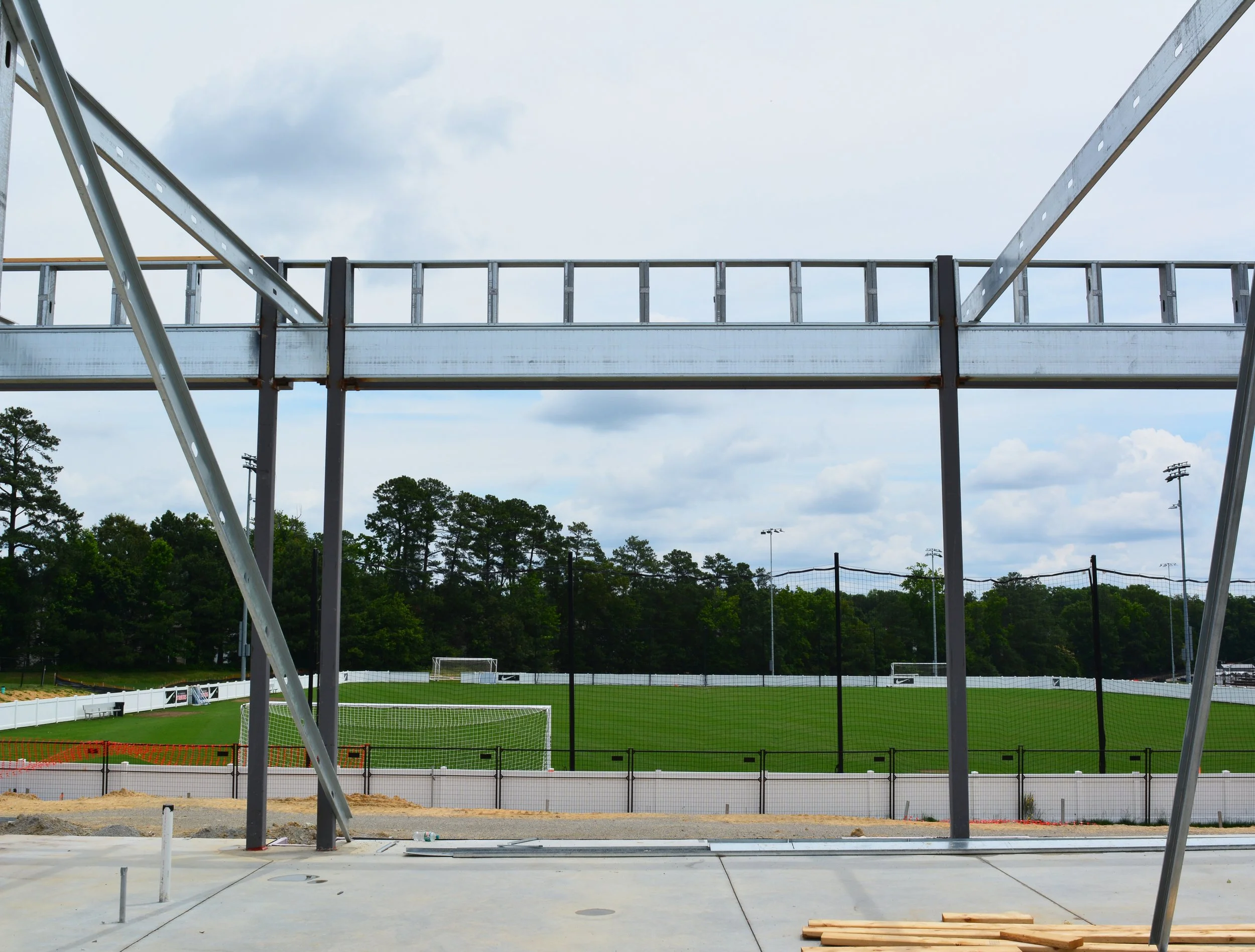
Expansive glazing along the east façade frames panoramic views of the soccer fields, allowing staff to visually oversee park activities while strengthening the connection between the building and the landscape. A shaded terrace offers an inviting place for parents and spectators to gather.
Support spaces were designed for flexibility and growth, with adaptable locker rooms and storage areas efficiently organized to meet evolving program and operational needs.
I served as project architect and project manager, leading the project from initial concept through completion
Location: Richmond, VA
Size: 80,500 SF / 89 Units
Year Completed: 2024
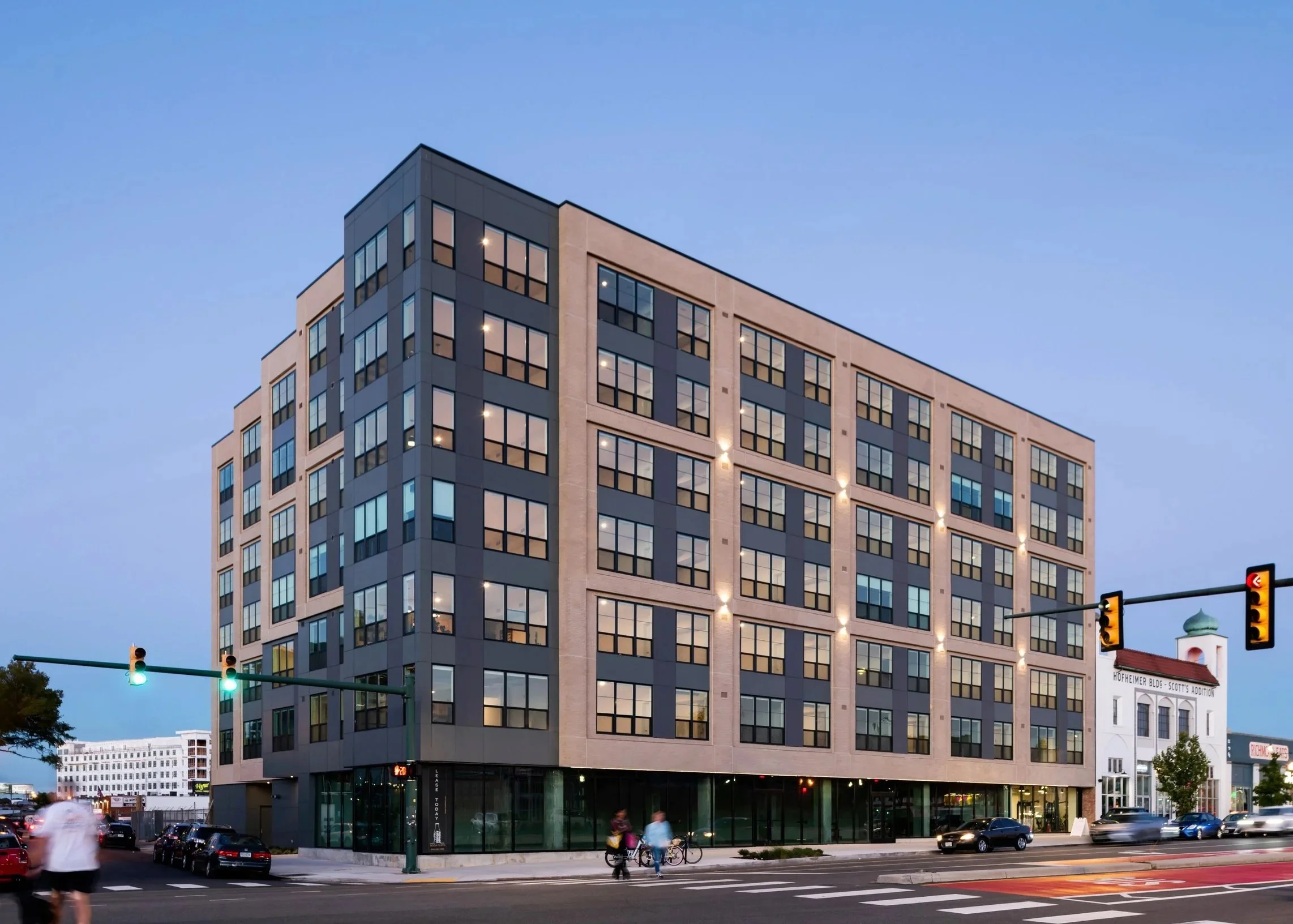
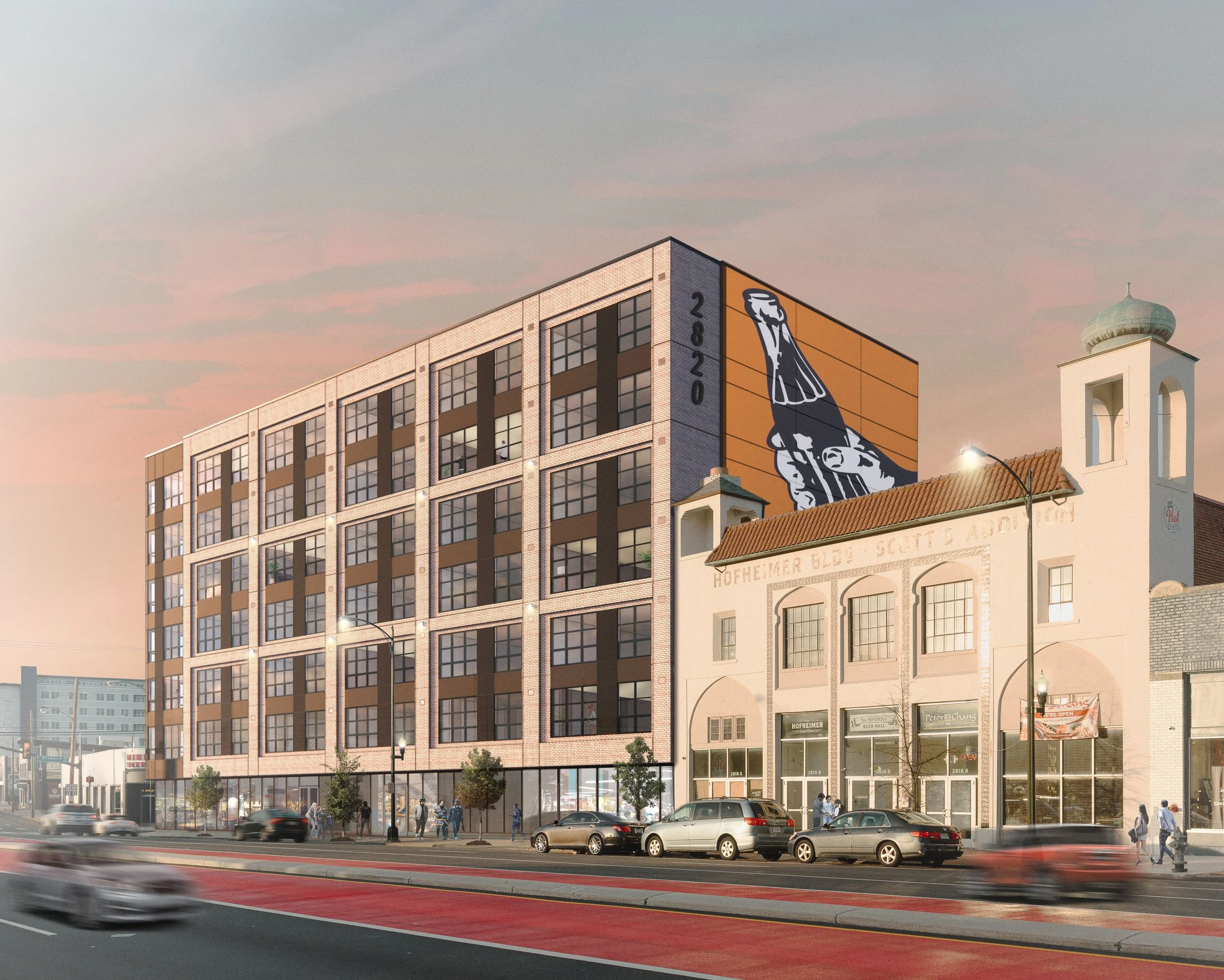
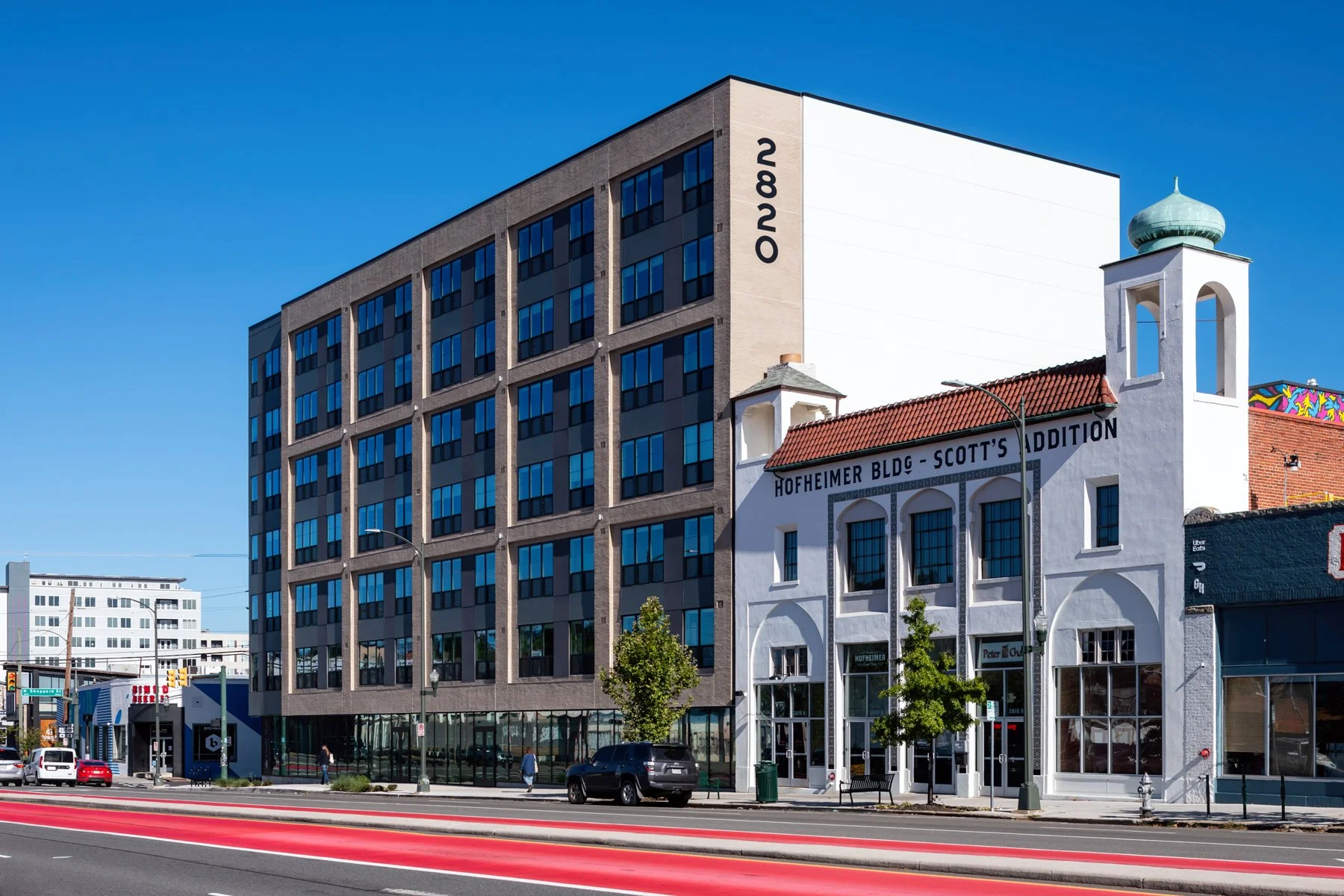
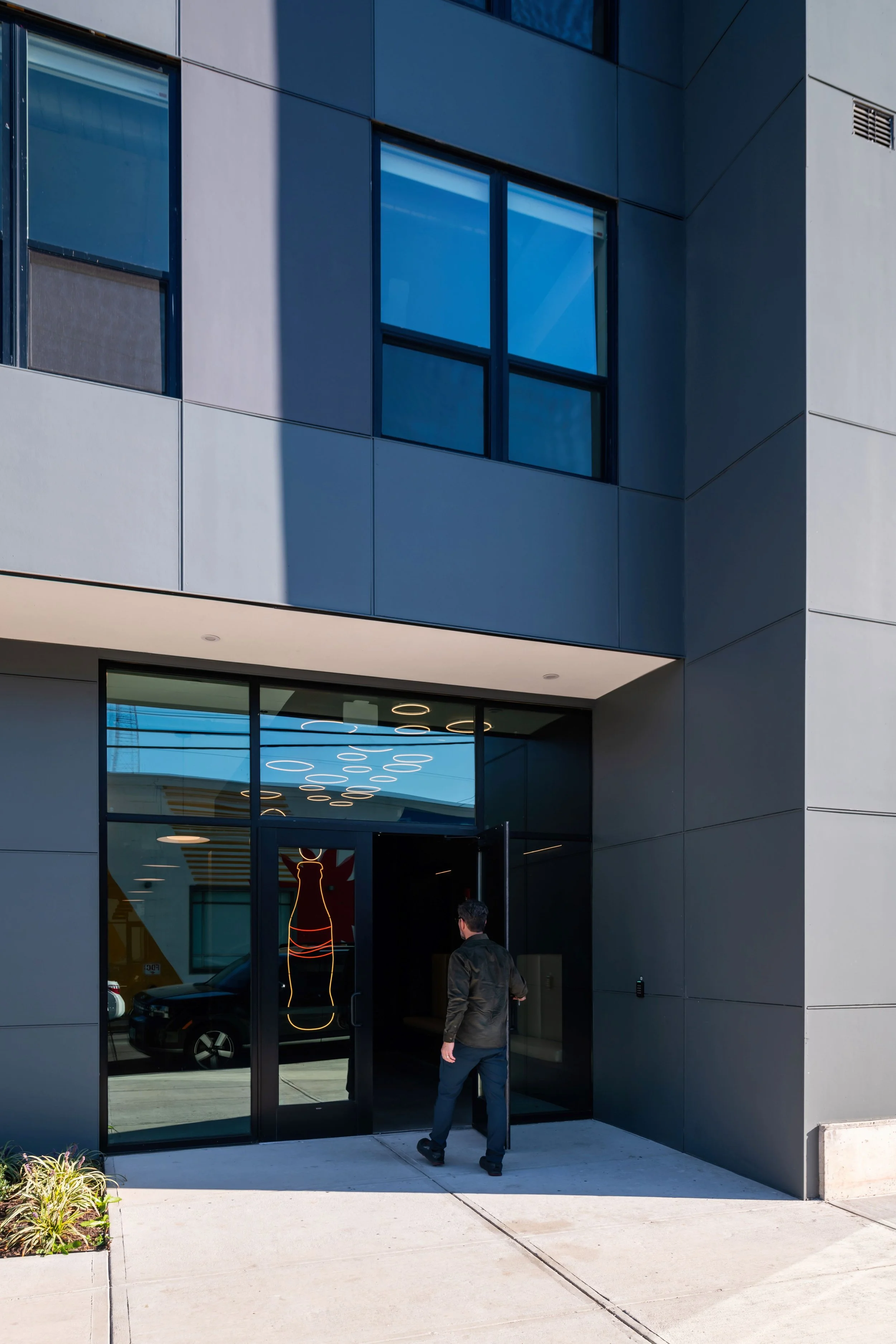
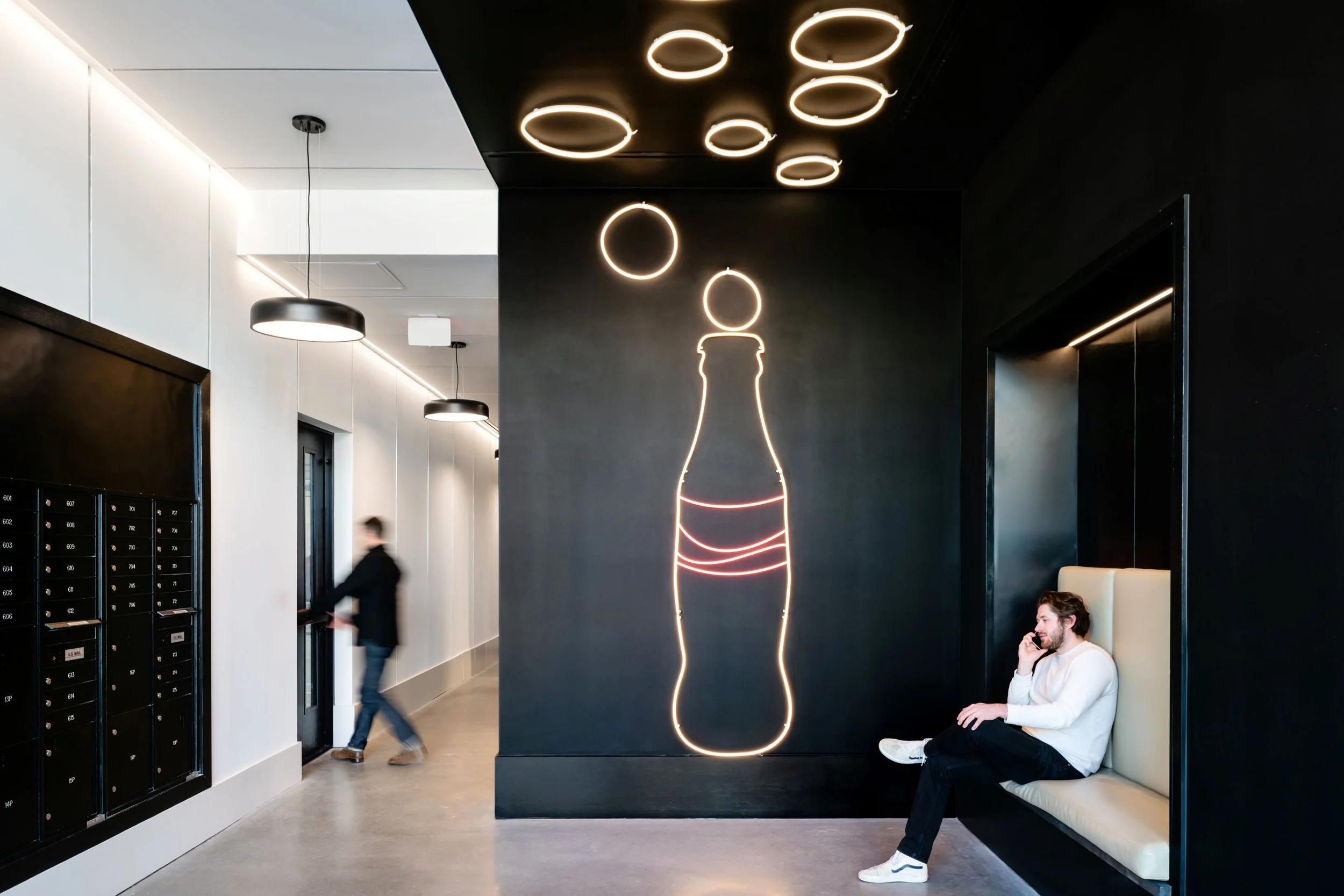
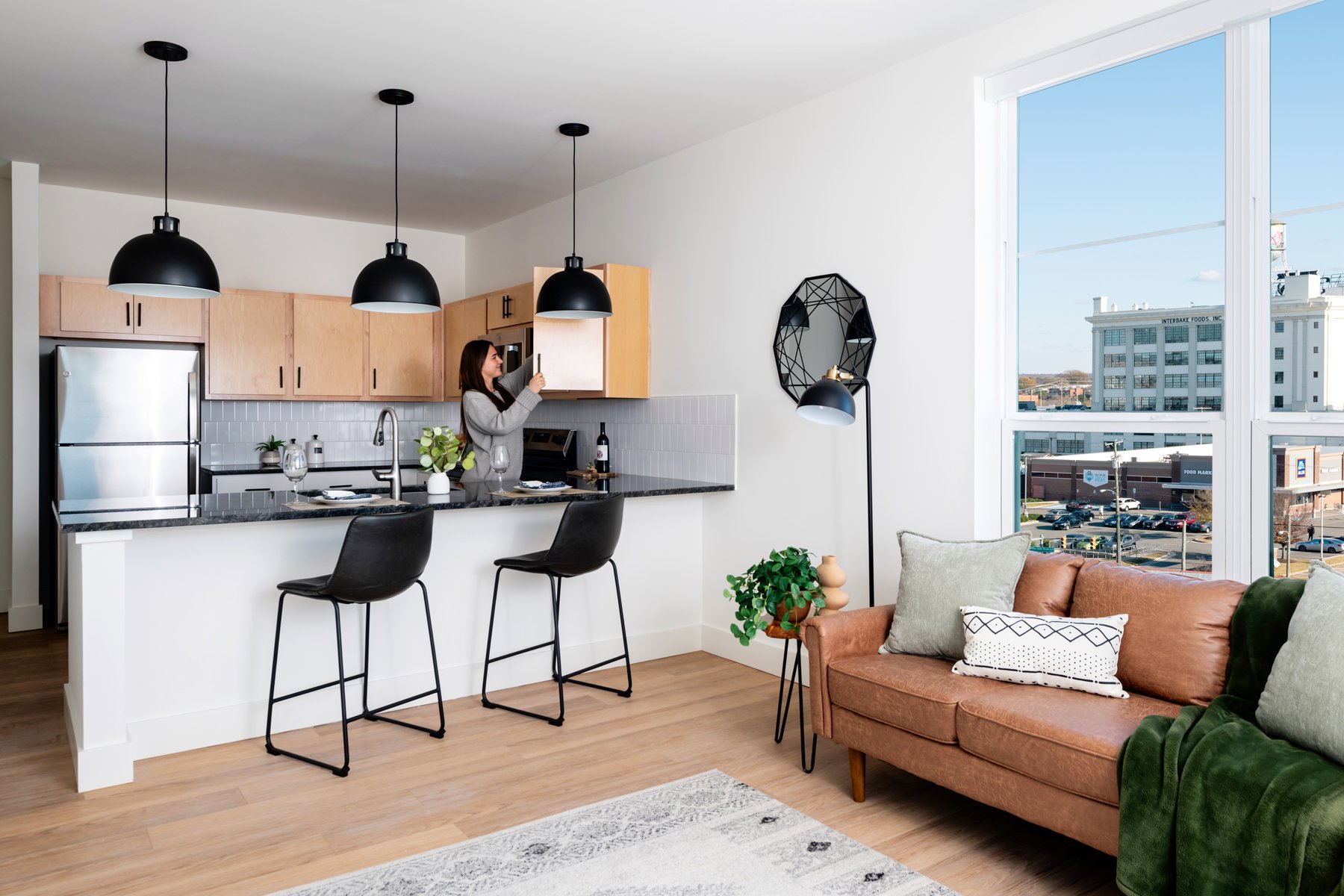
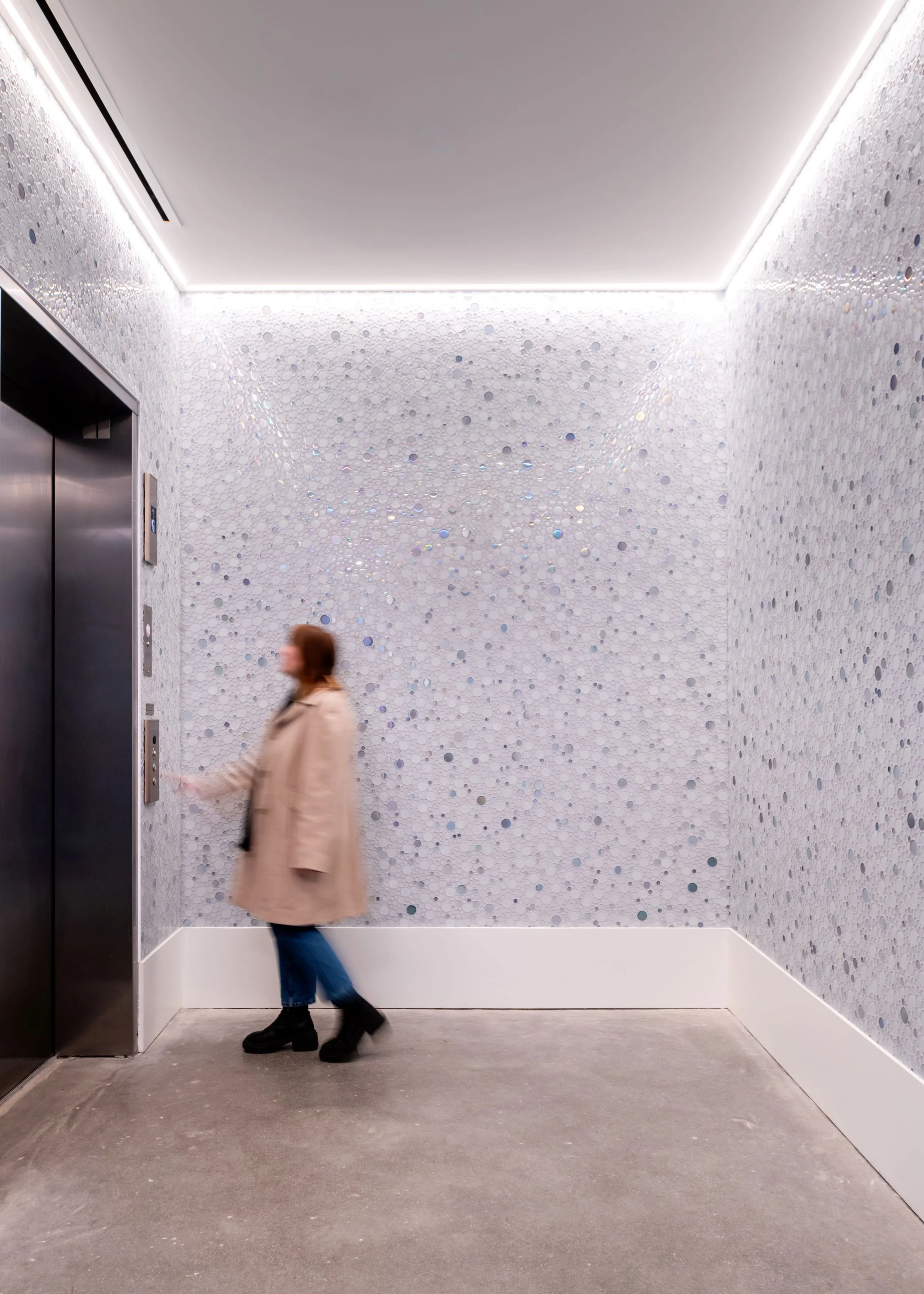
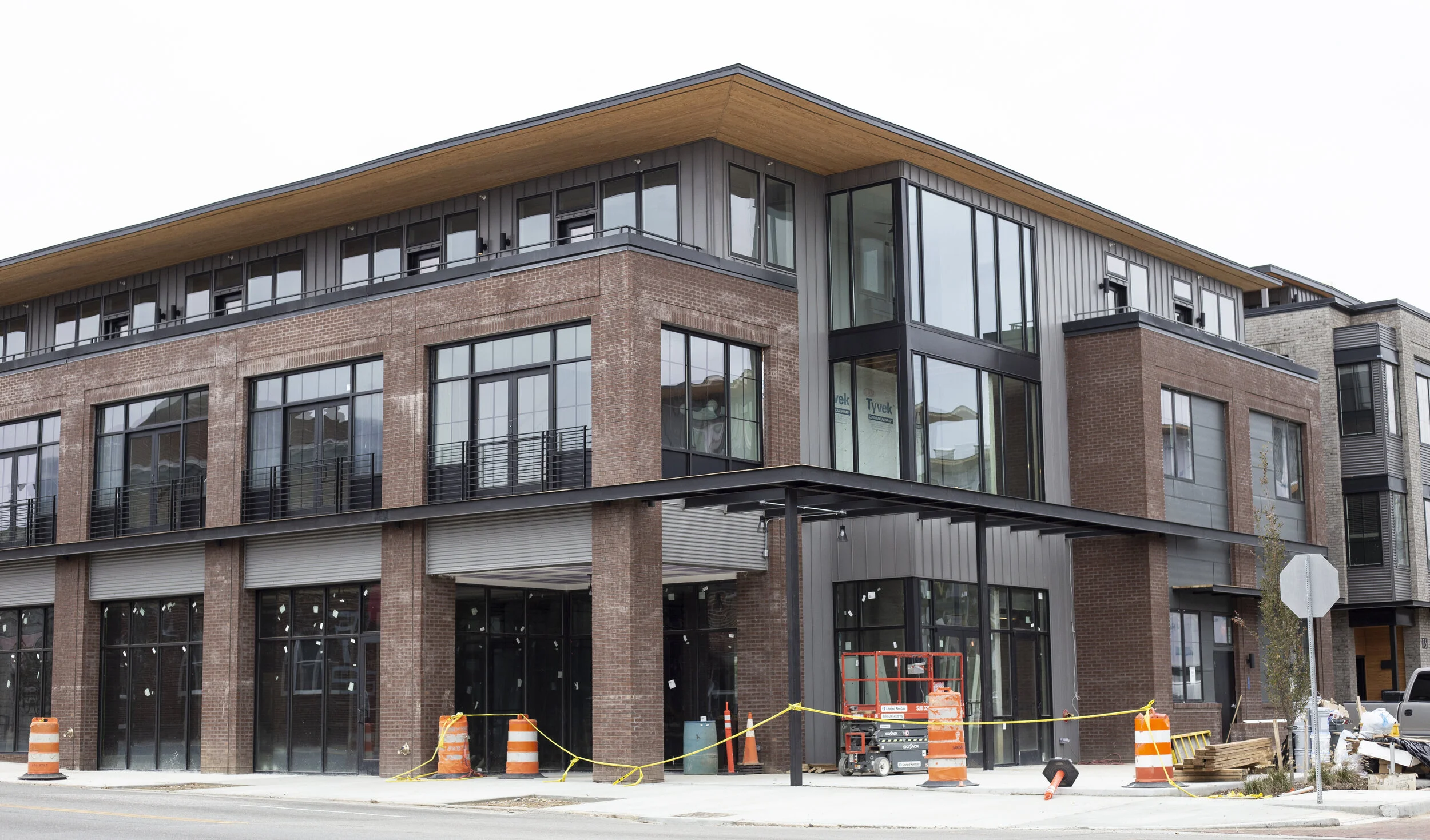
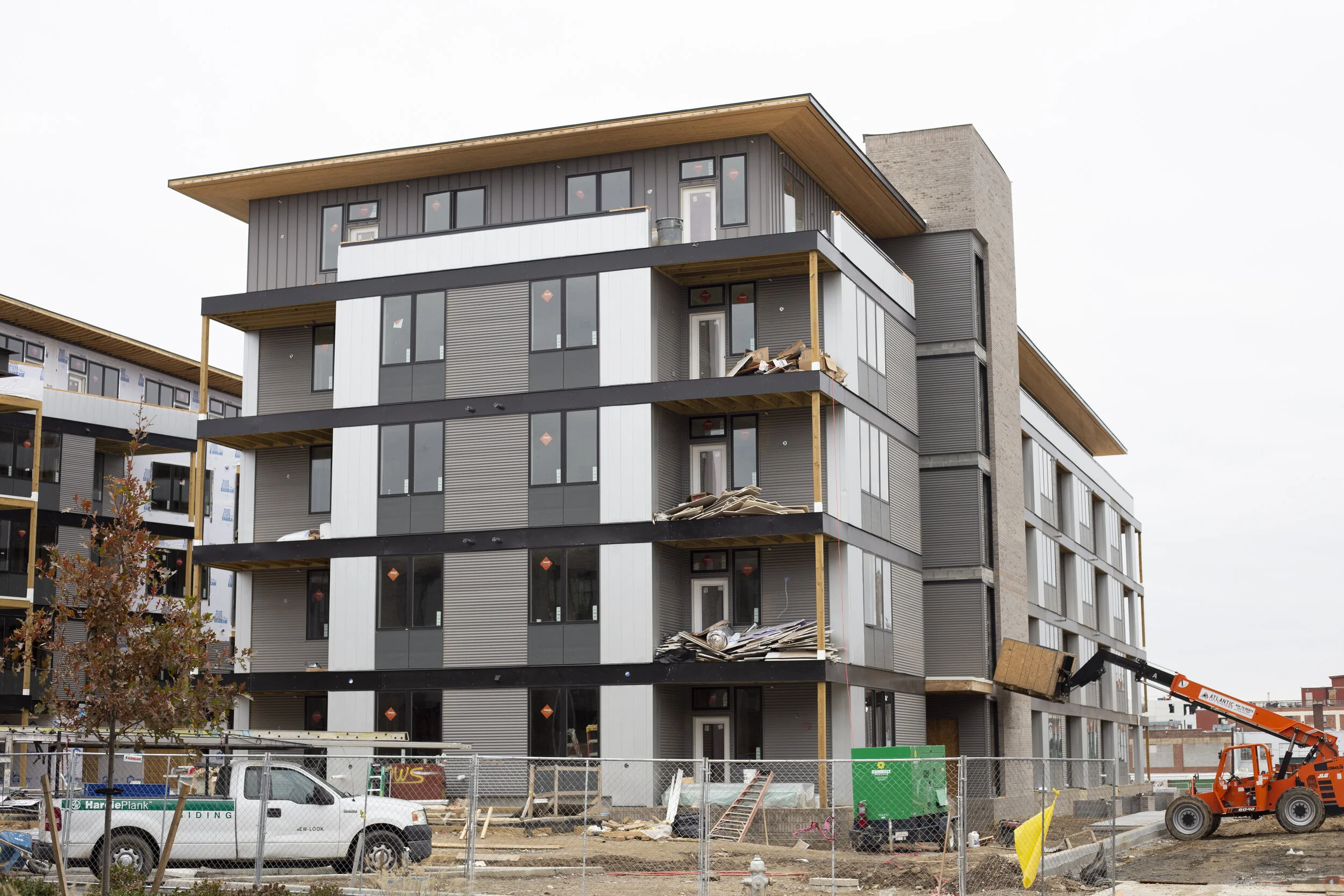
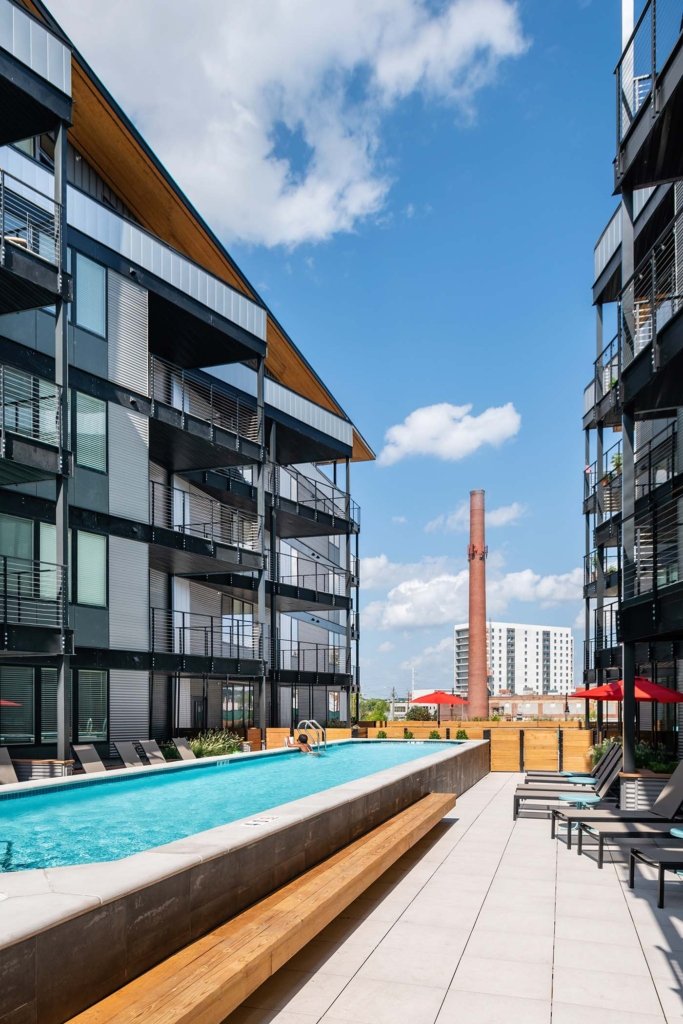
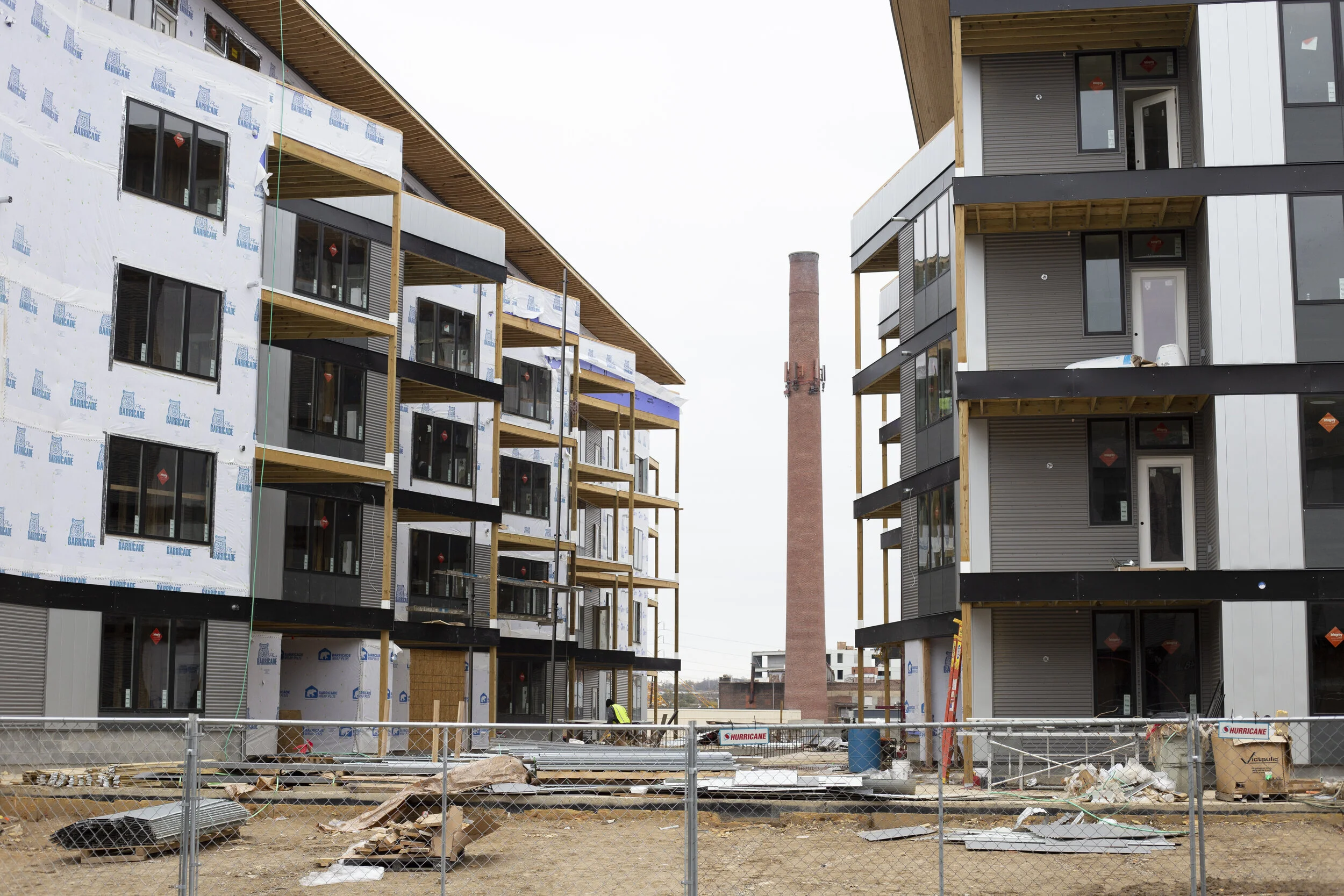
Located on West Broad Street in Scott’s Addition, Soda Flats is a mixed-use development named in reference to the former Orange Crush Bottling Plant that once occupied the site. The project weaves this industrial history into the design through integrated branding and commissioned artwork.
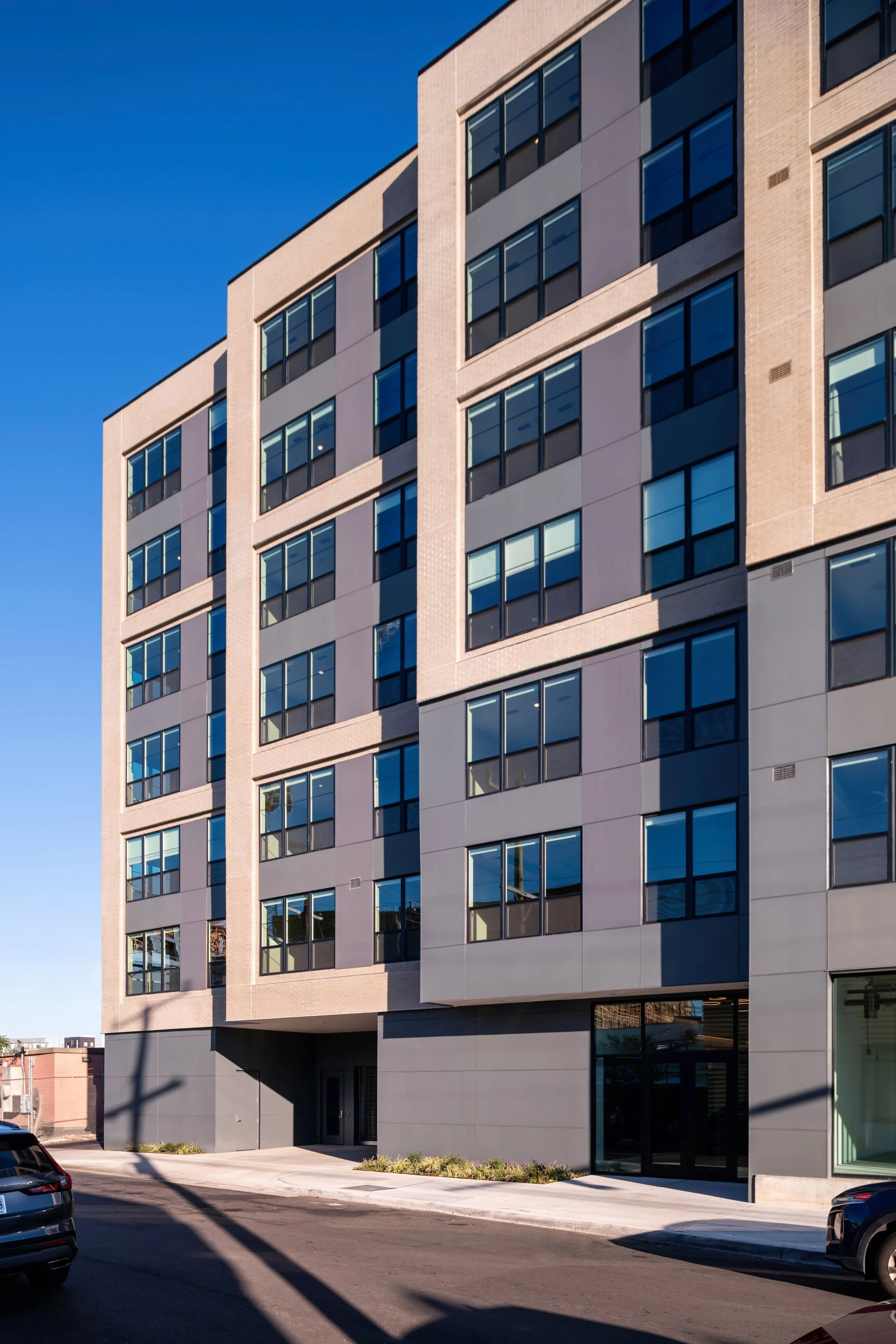
Drawing from the neighborhood’s vernacular architecture, the building features large window openings, regular structural bays, and restrained brick detailing that echo the surrounding factories and manufacturing buildings—many of which have been adaptively reused as lofts and breweries.
I served as both project architect and project manager, leading the project from initial concept through completion.
Location: Charlottesville
Size: 100,000 SF
Year Completed: 2019
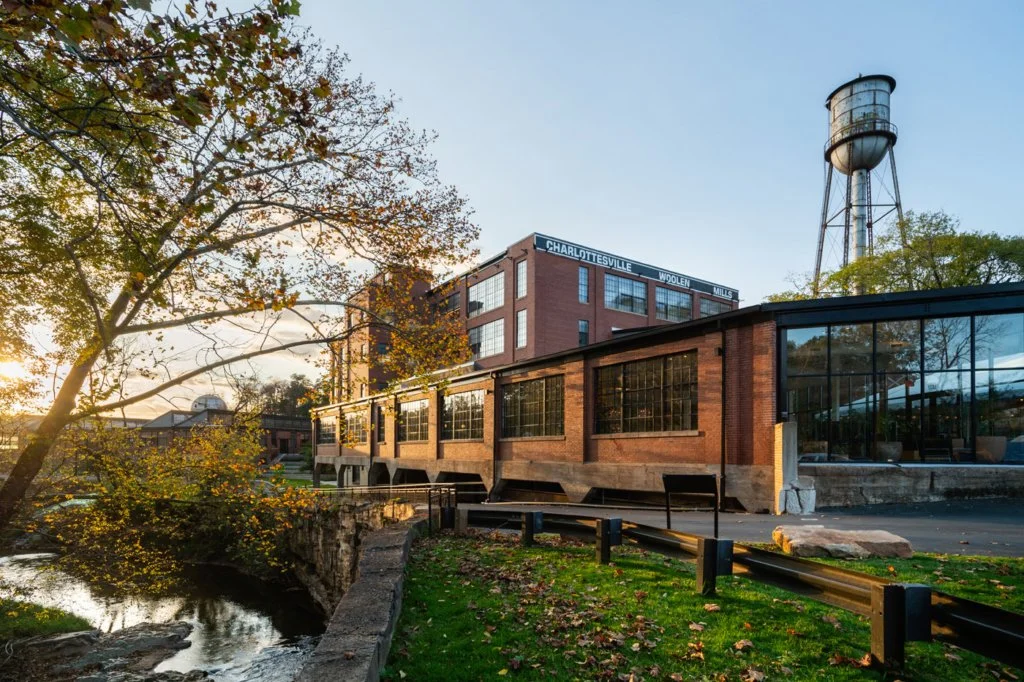
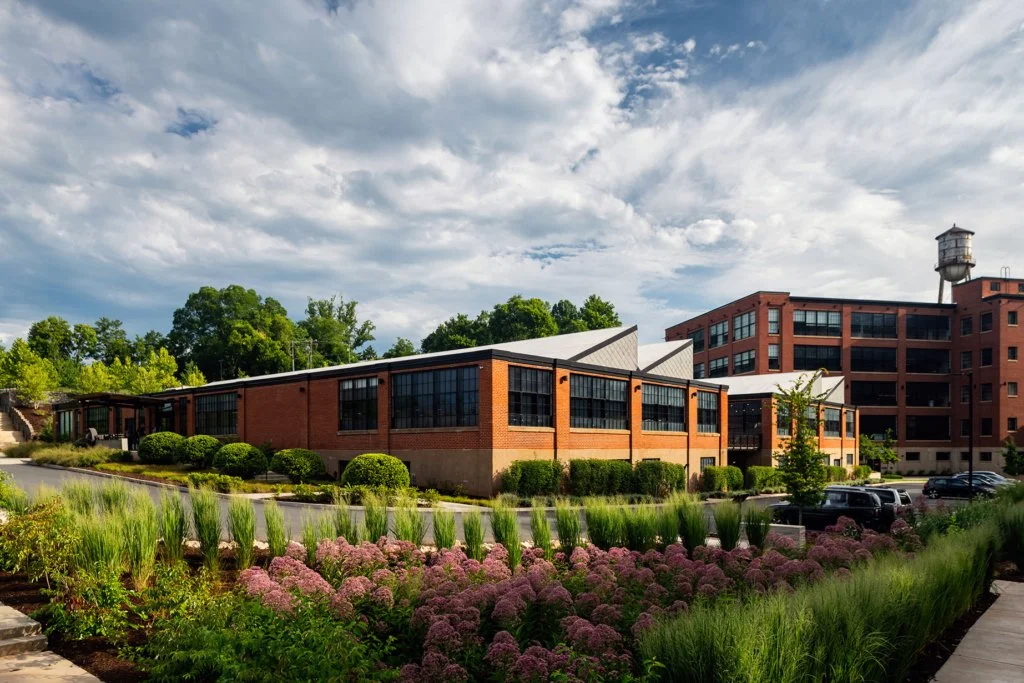
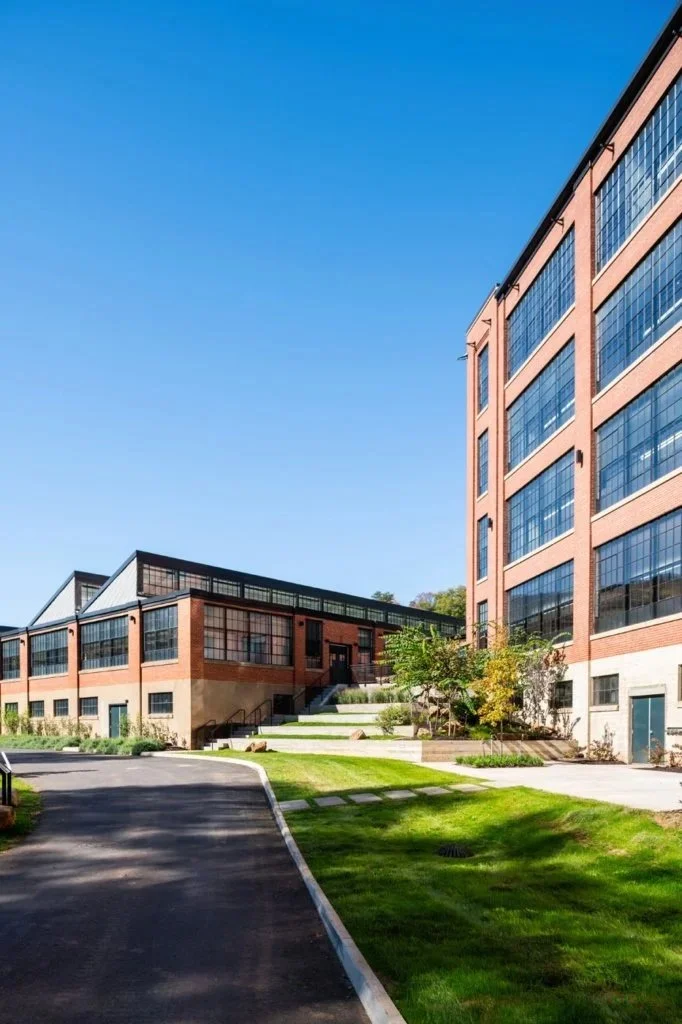
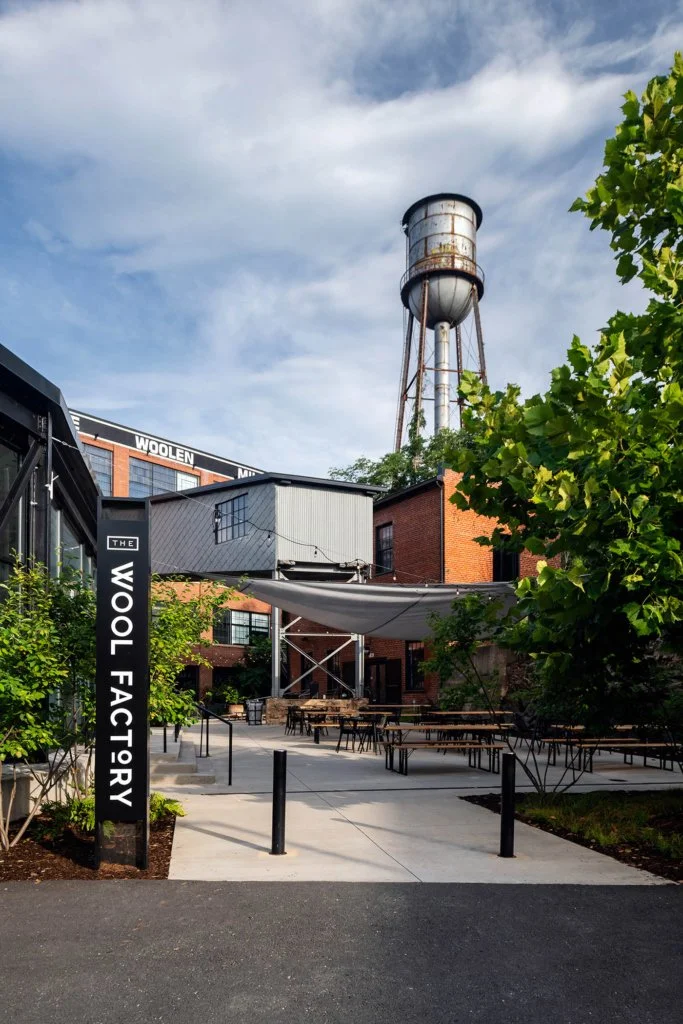
Woolen Mills is a historic industrial complex that operated as a wool mill until the 1960s, evolving over time through the incremental addition of brick buildings as manufacturing processes and needs changed.
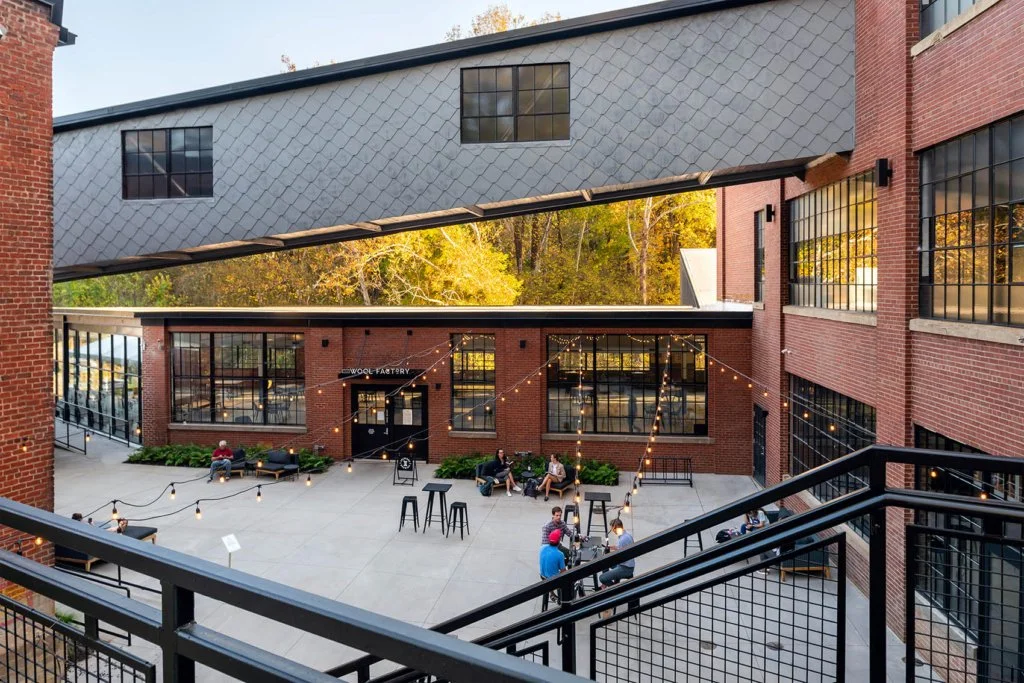
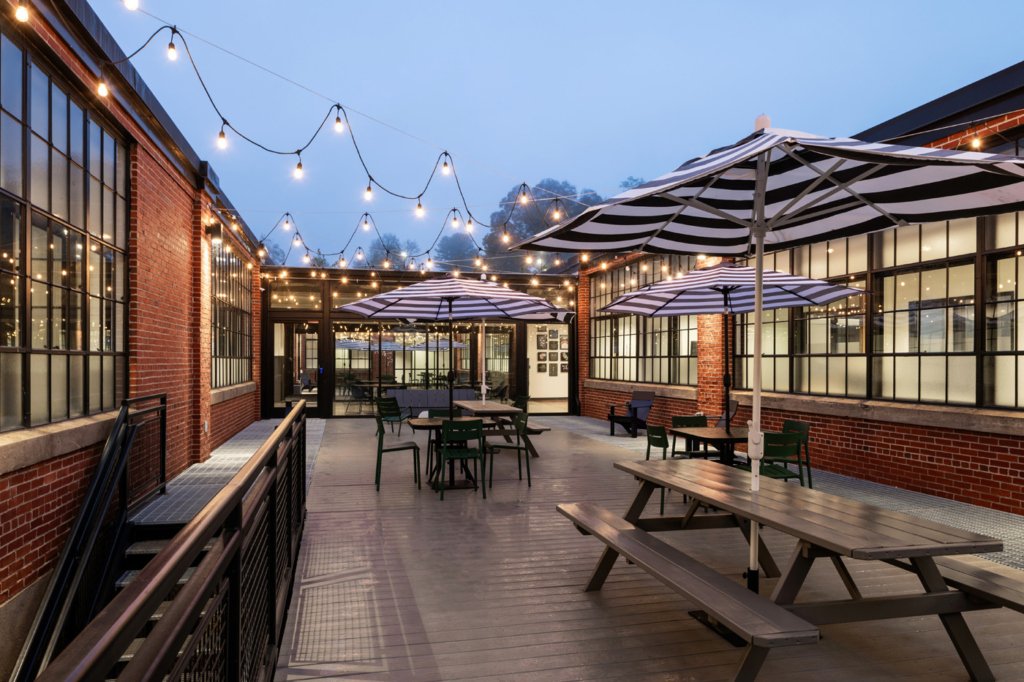
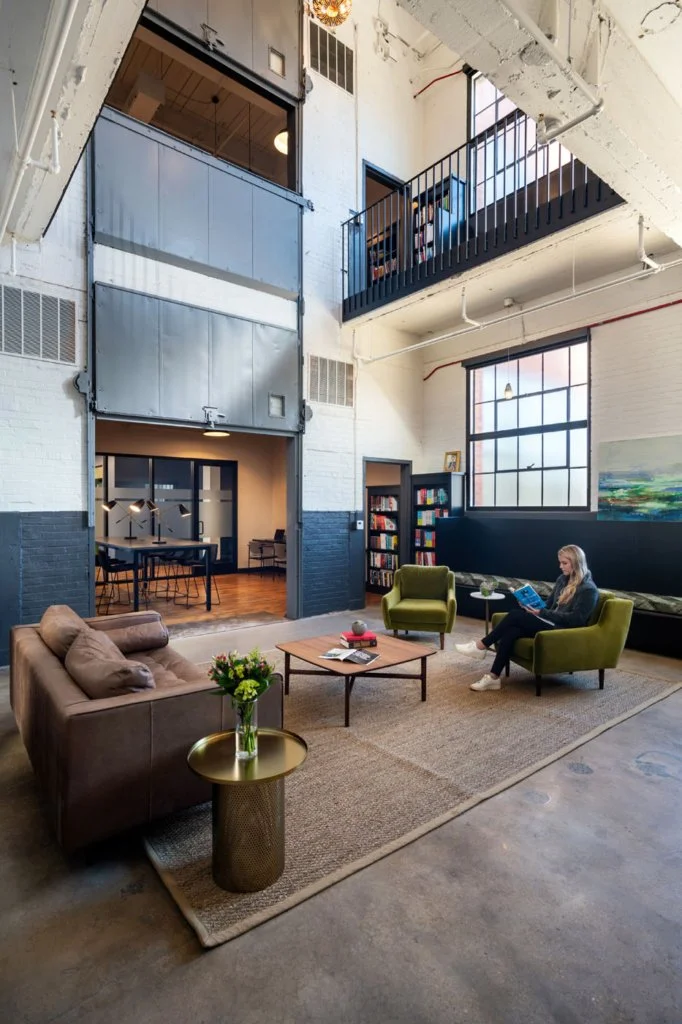
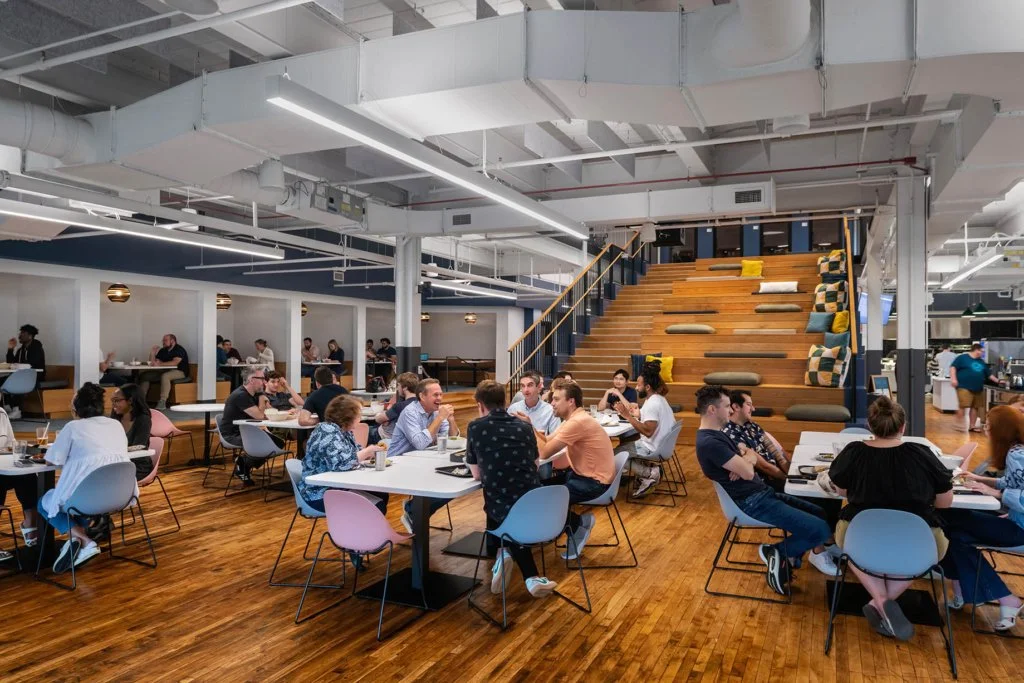
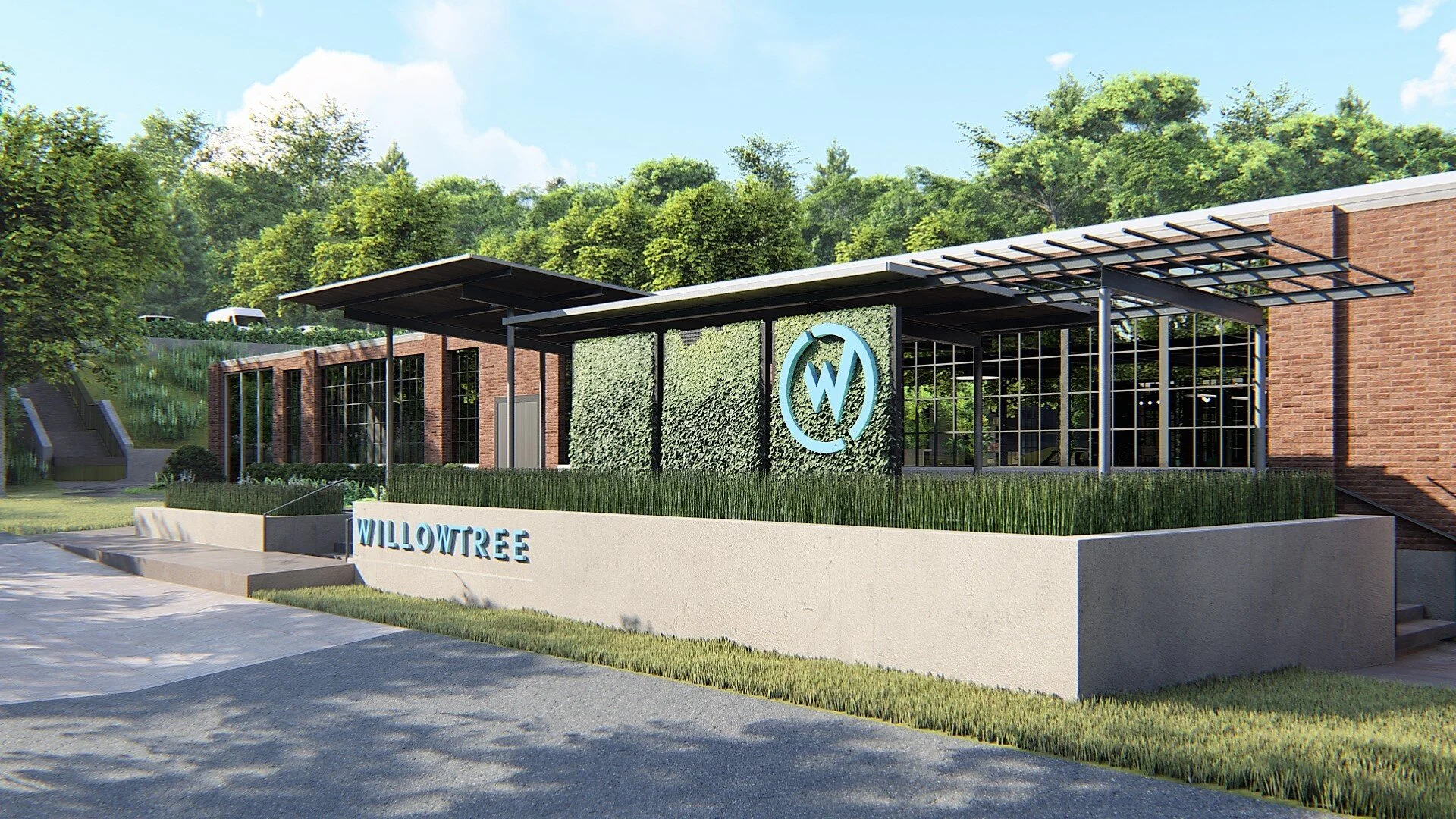
In collaboration with the developer, engineers, and a team of historic consultants, we developed a redevelopment strategy to transform the site into the headquarters for Charlottesville-based technology company WillowTree, along with a restaurant and event venue for a local coffee shop and brewery.
I contributed to the design and documentation of the core-and-shell renovation, including the integration of two new elevators, entry canopies, and an elevated courtyard, and worked closely with the contractor throughout construction administration.
Renderings by Hugo Render
Location: Richmond
Size: 65,000 SF
Year Completed: 2019
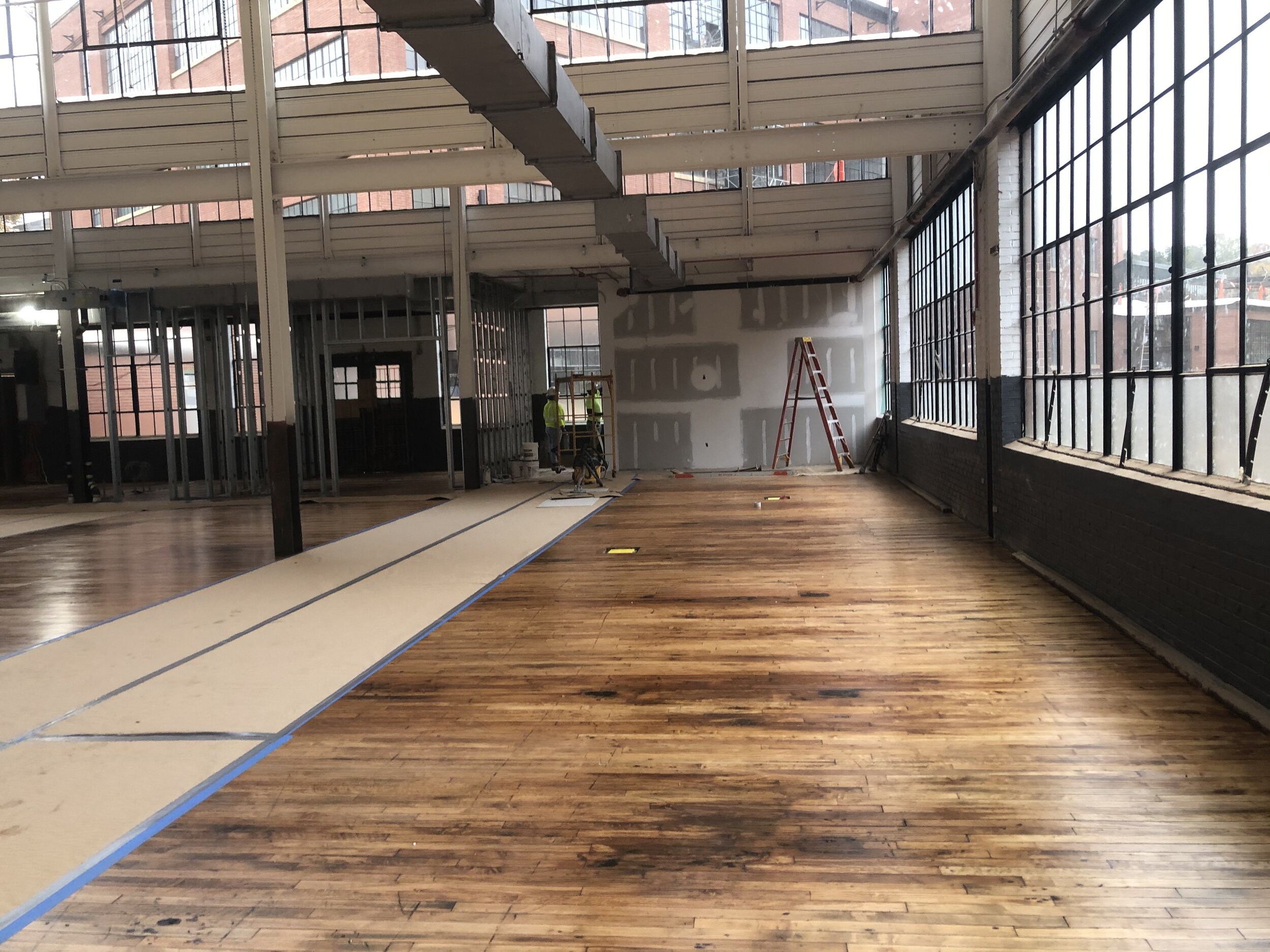
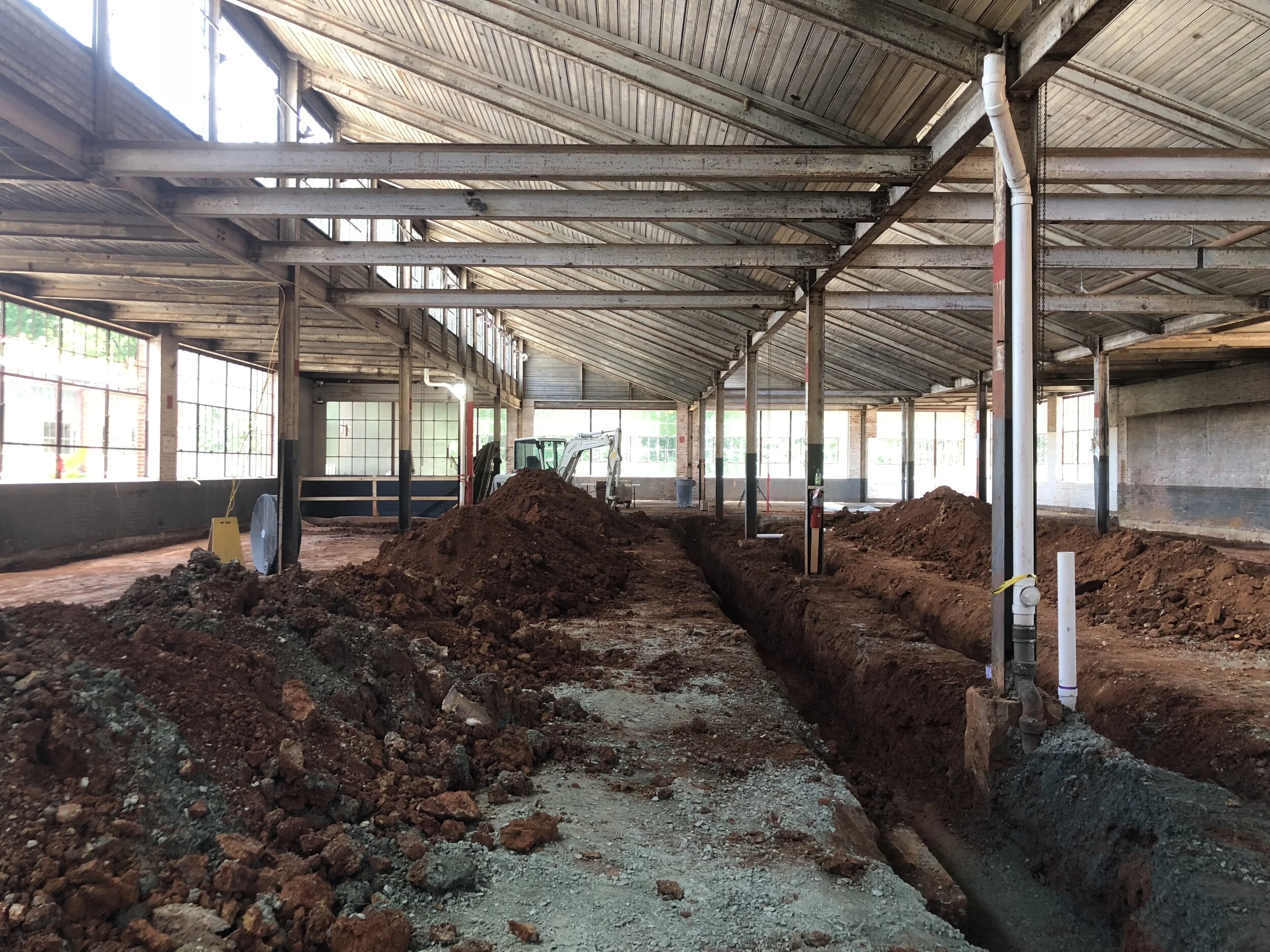
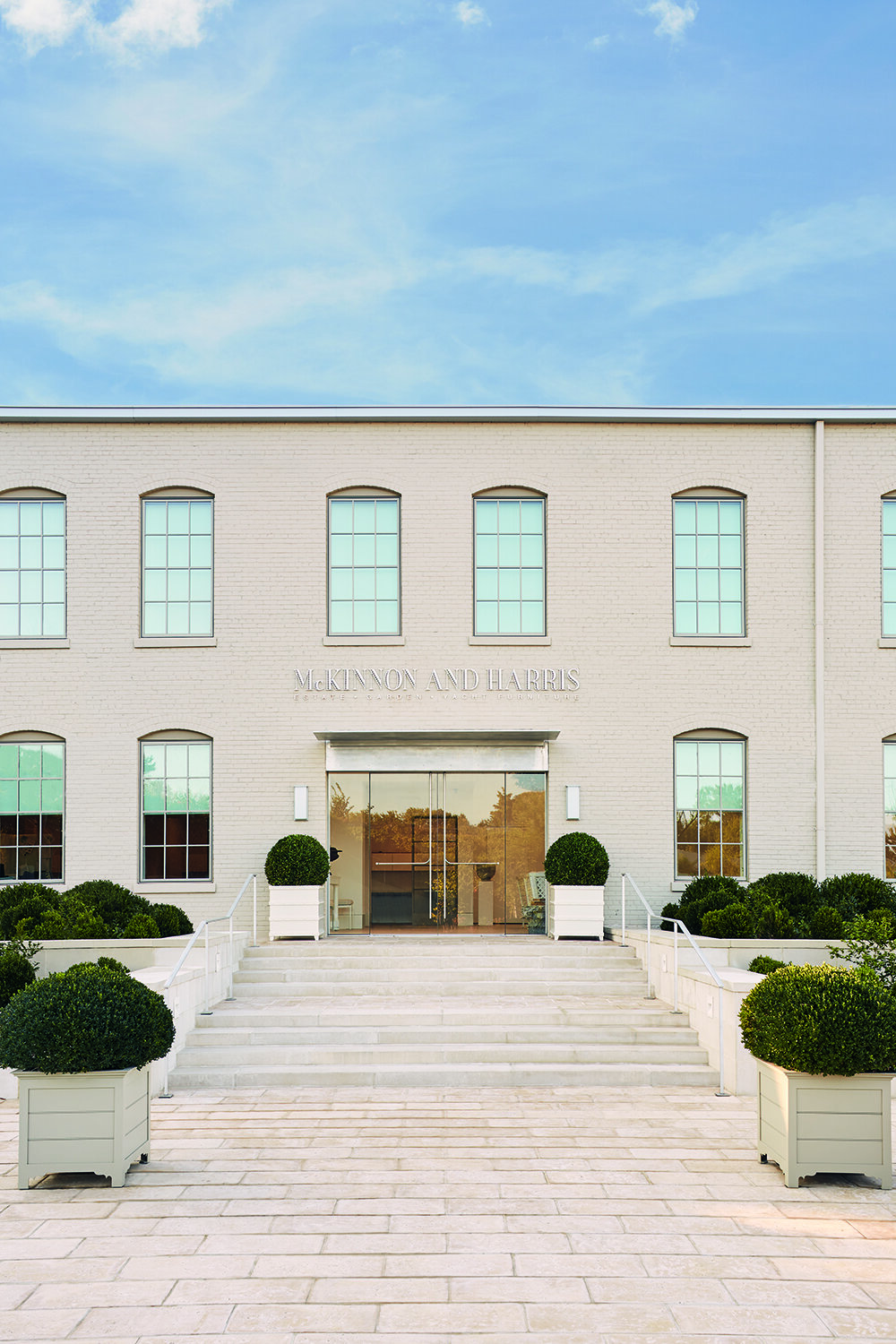
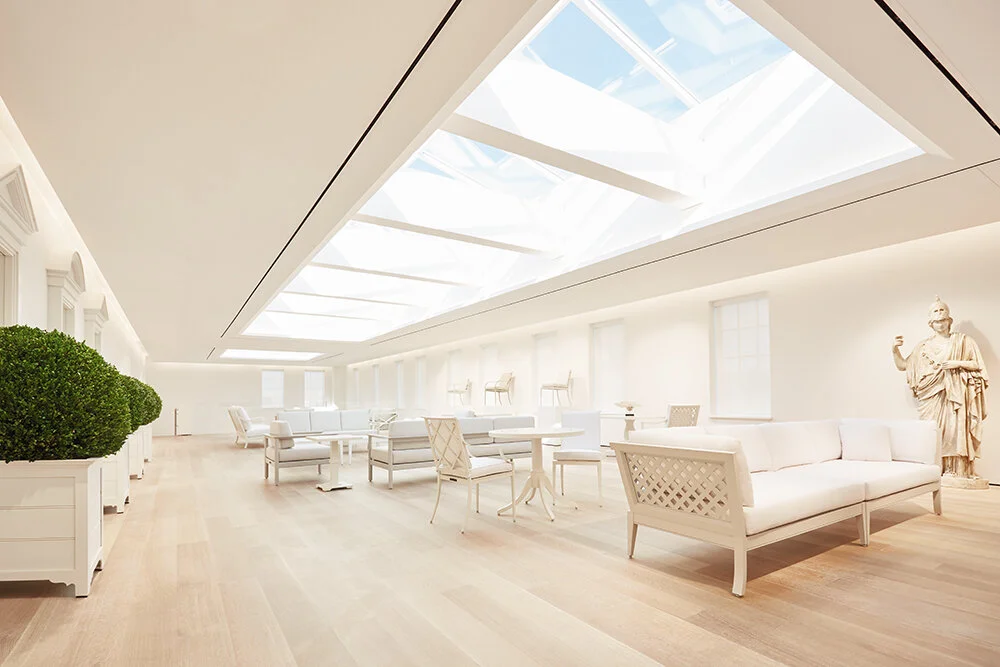
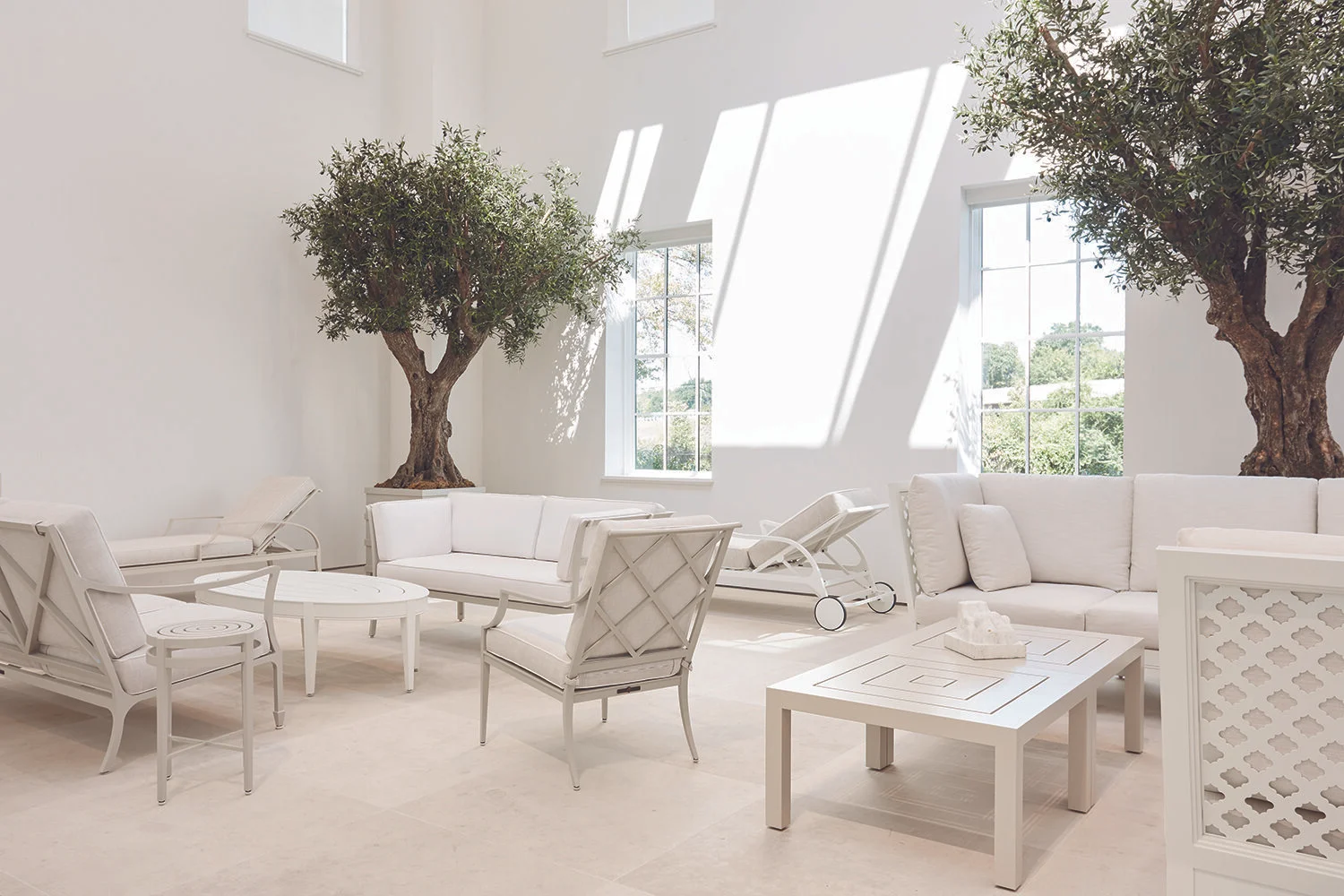
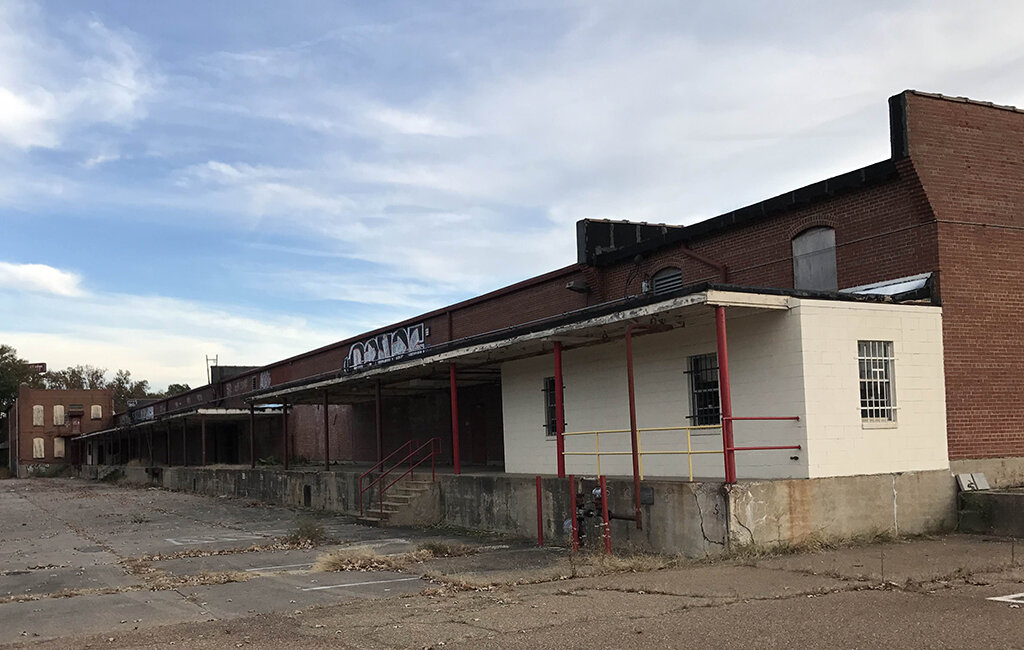
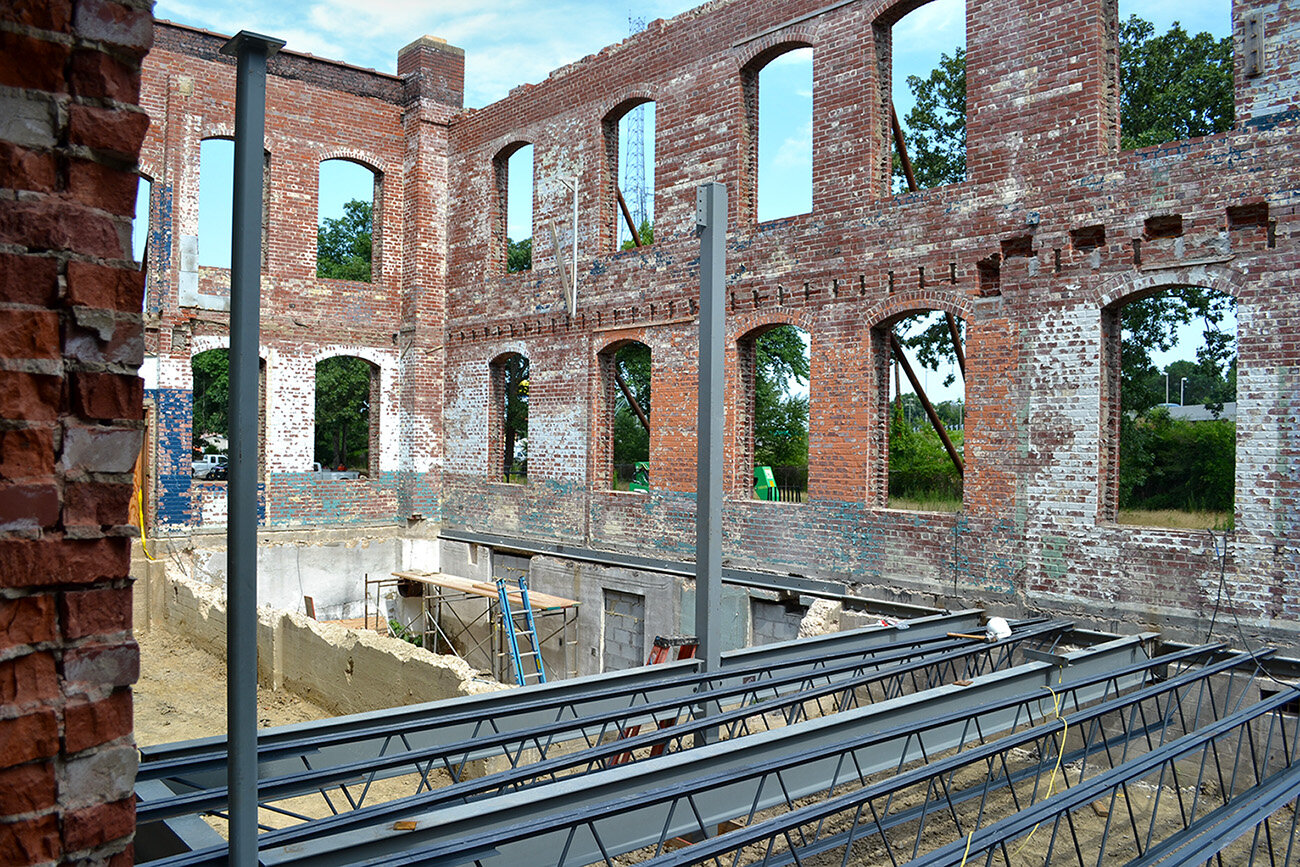
McKinnon and Harris, a high-end outdoor furniture and garden company headquartered in Richmond, acquired a 1940s warehouse in Scott’s Addition that was in significant disrepair, with a collapsed roof over the two-story space and extensive graffiti throughout.
I worked on the design and documentation of the renovation, transforming the deteriorated warehouse into a combined showroom, office, and manufacturing facility.
Photos Keith Isaacs/3North
Location: Richmond
Size: 15,000 SF
Year Completed: 2018
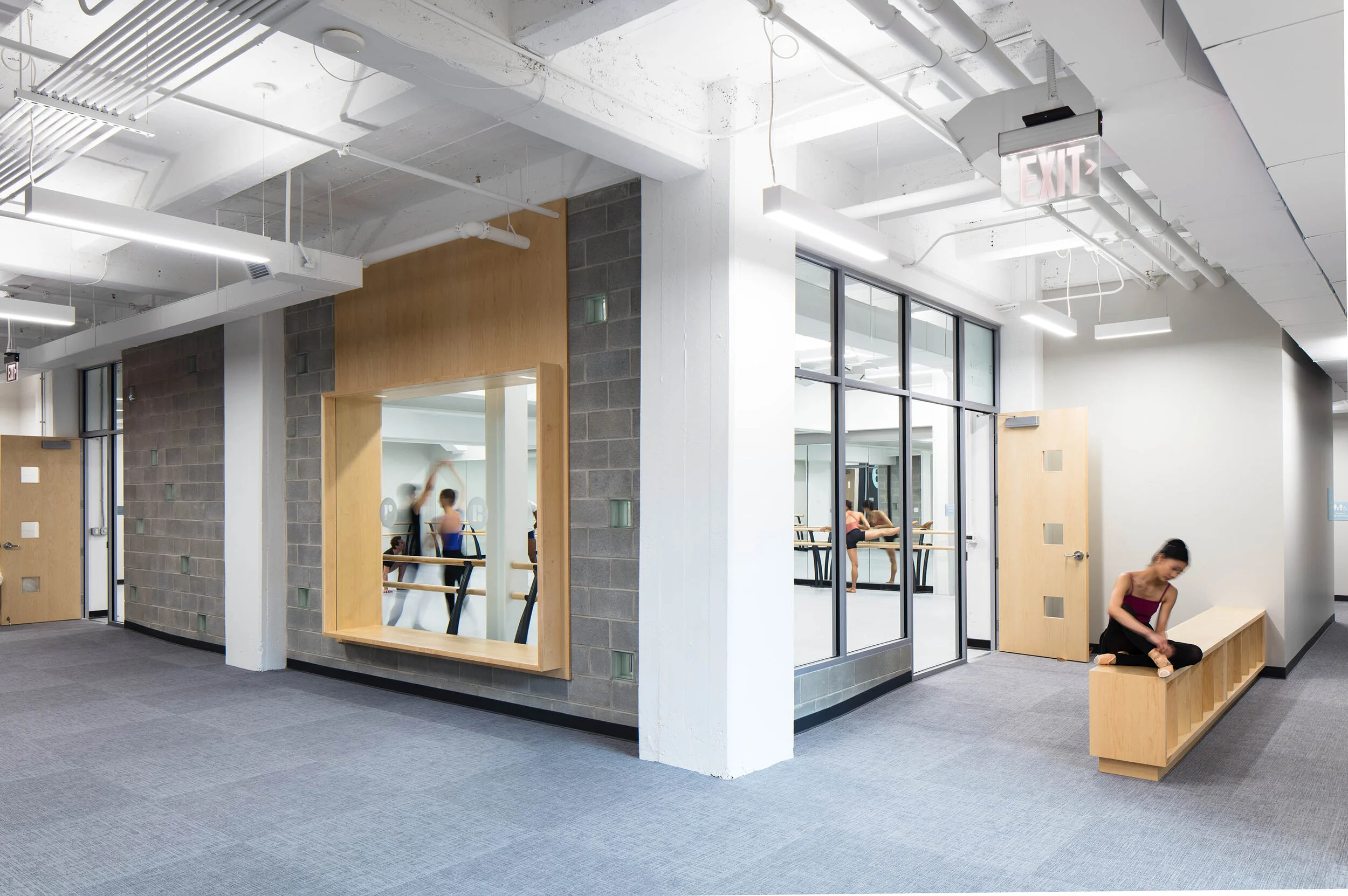
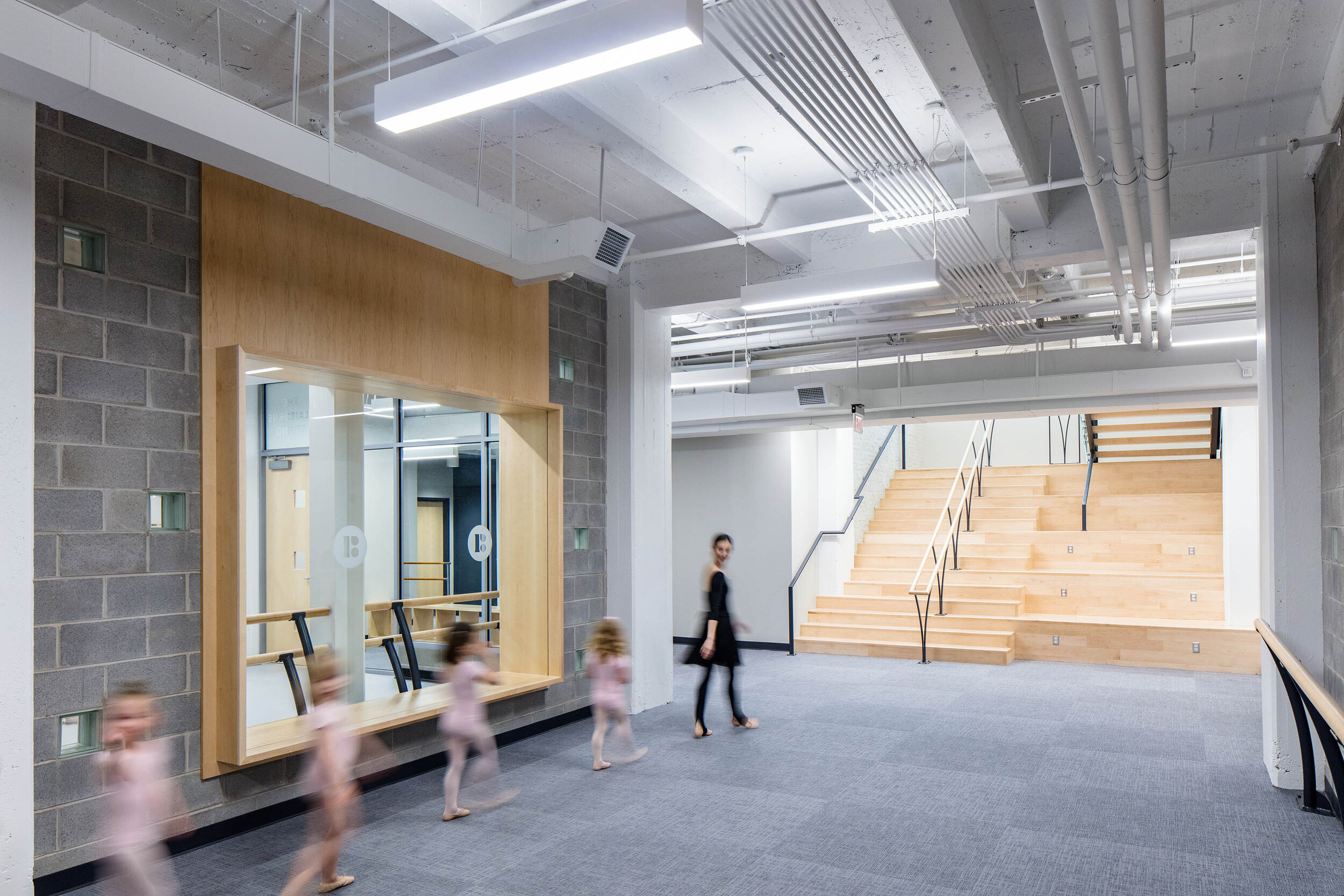
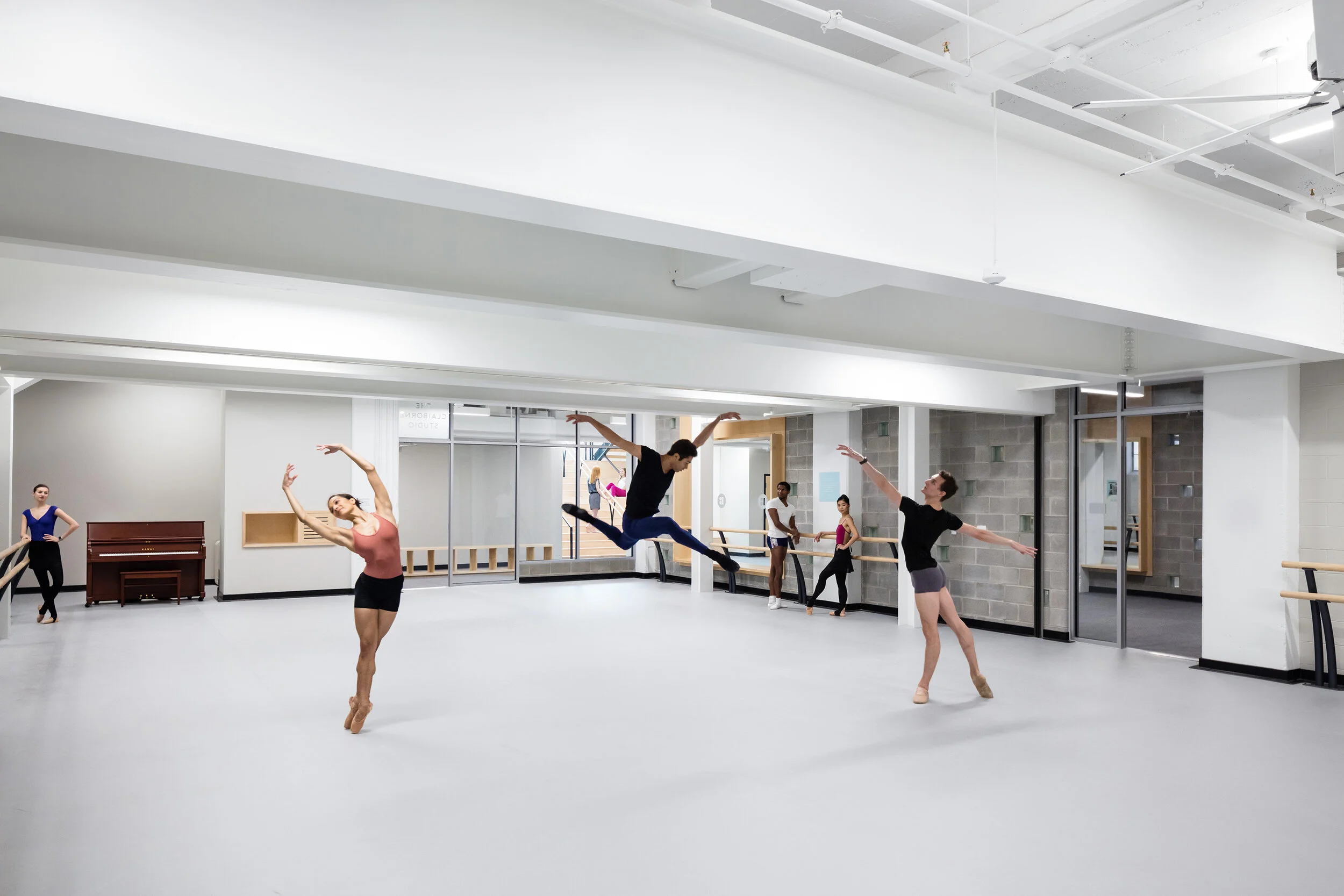
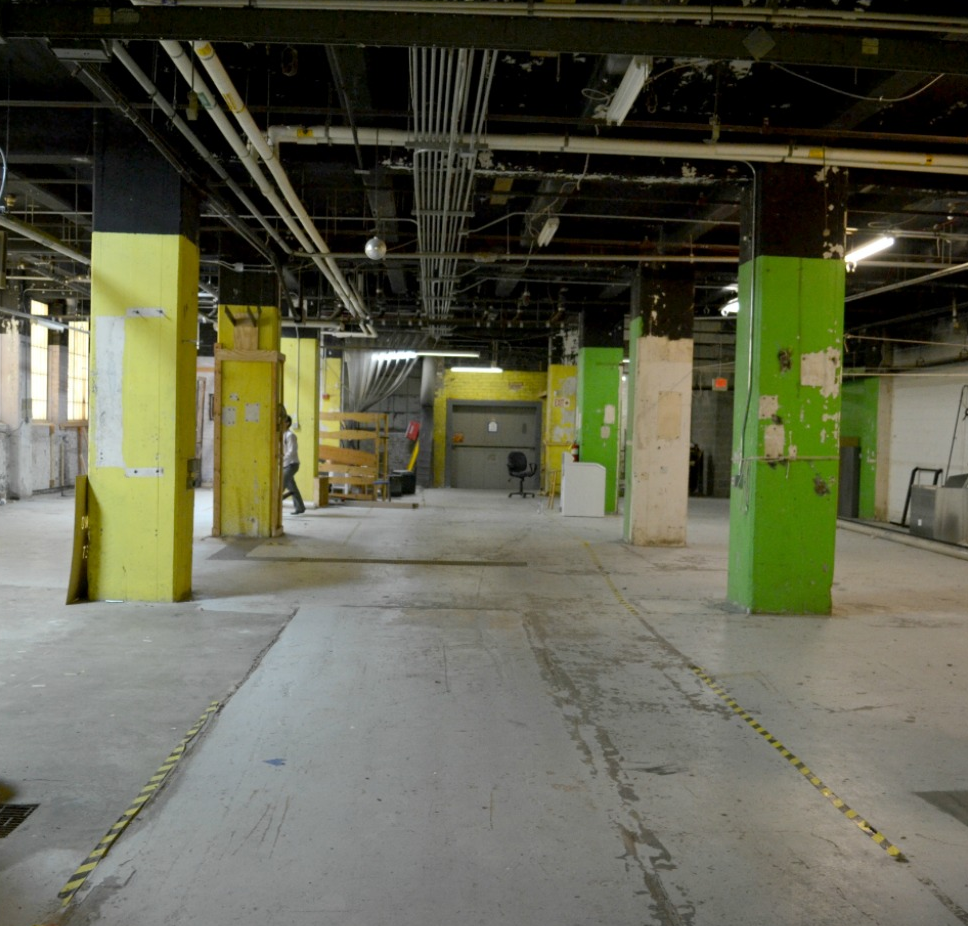
Facing space constraints, the Richmond Ballet expanded into their unfinished basement to accommodate growth.
By removing four large concrete columns and introducing steel beams and columns to redistribute structural loads, the lower level of the former Reynold’s Metal building was transformed to house two new dance studios. A new bleacher-style stair links the main lobby to the lower level, providing a welcoming space for Minds in Motion students to gather, stretch, and prepare for class.
I contributed to the project from concept through construction administration, overseeing design, documentation, and execution.
Photos by Keith Isaacs / 3North
BEFORE
Location: Richmond
Size: 4,500 SF Retail + 161 Units
Year Completed: 2020
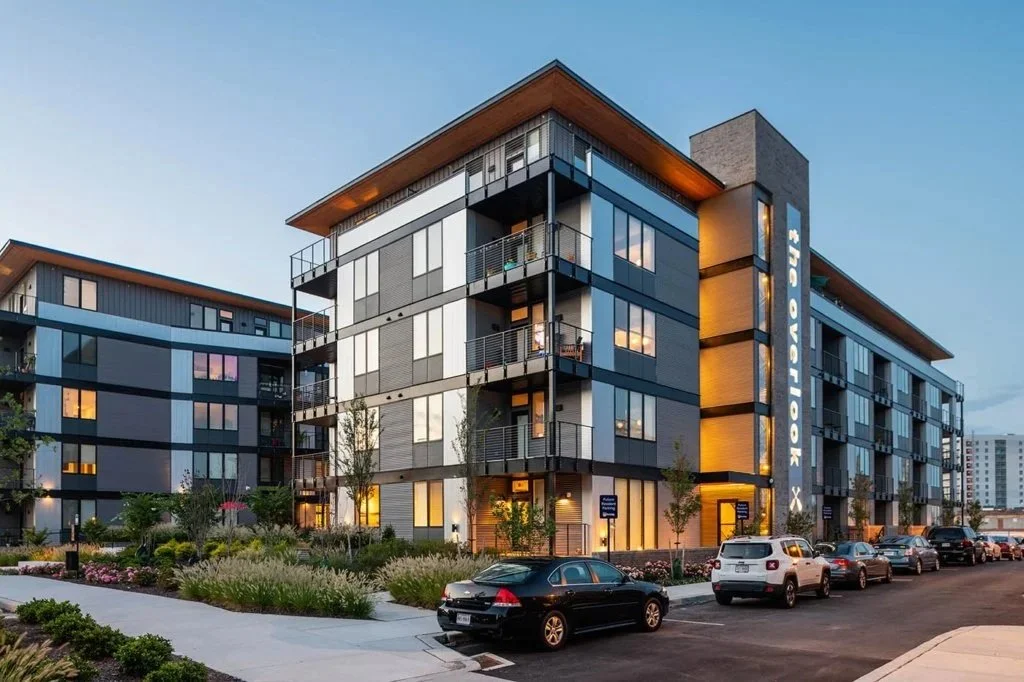
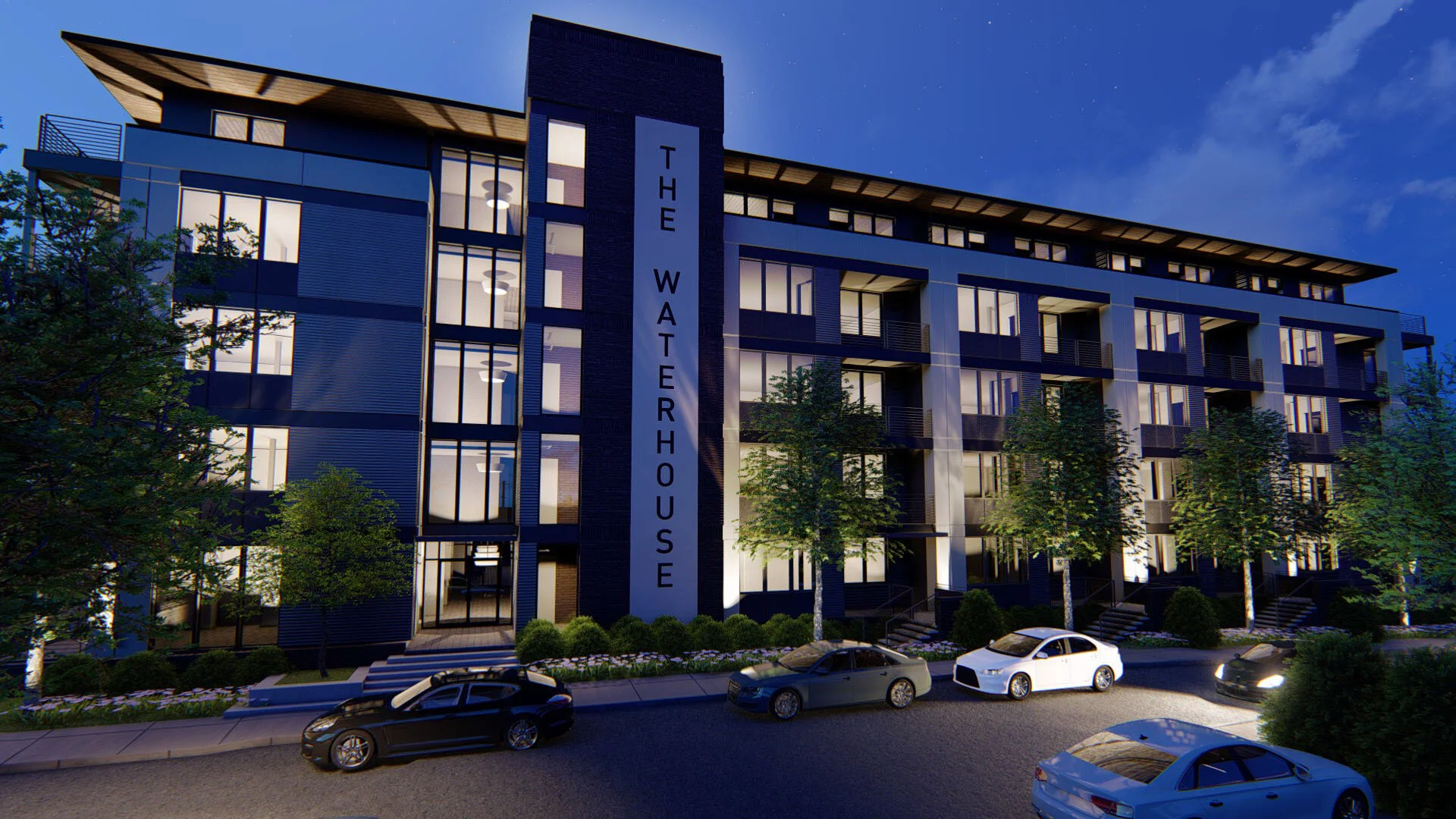
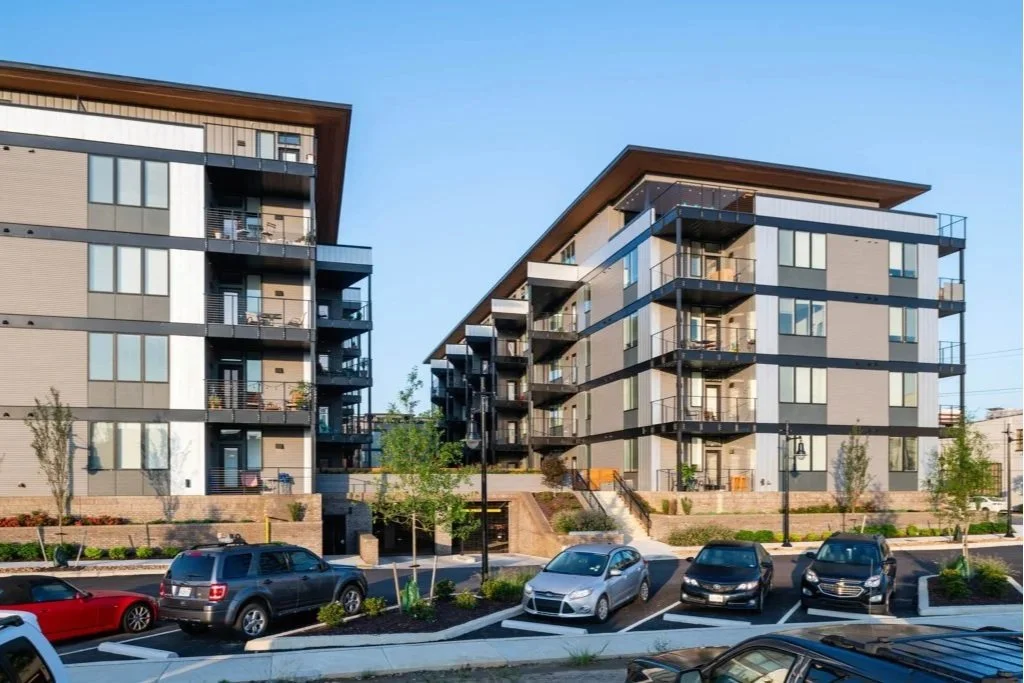
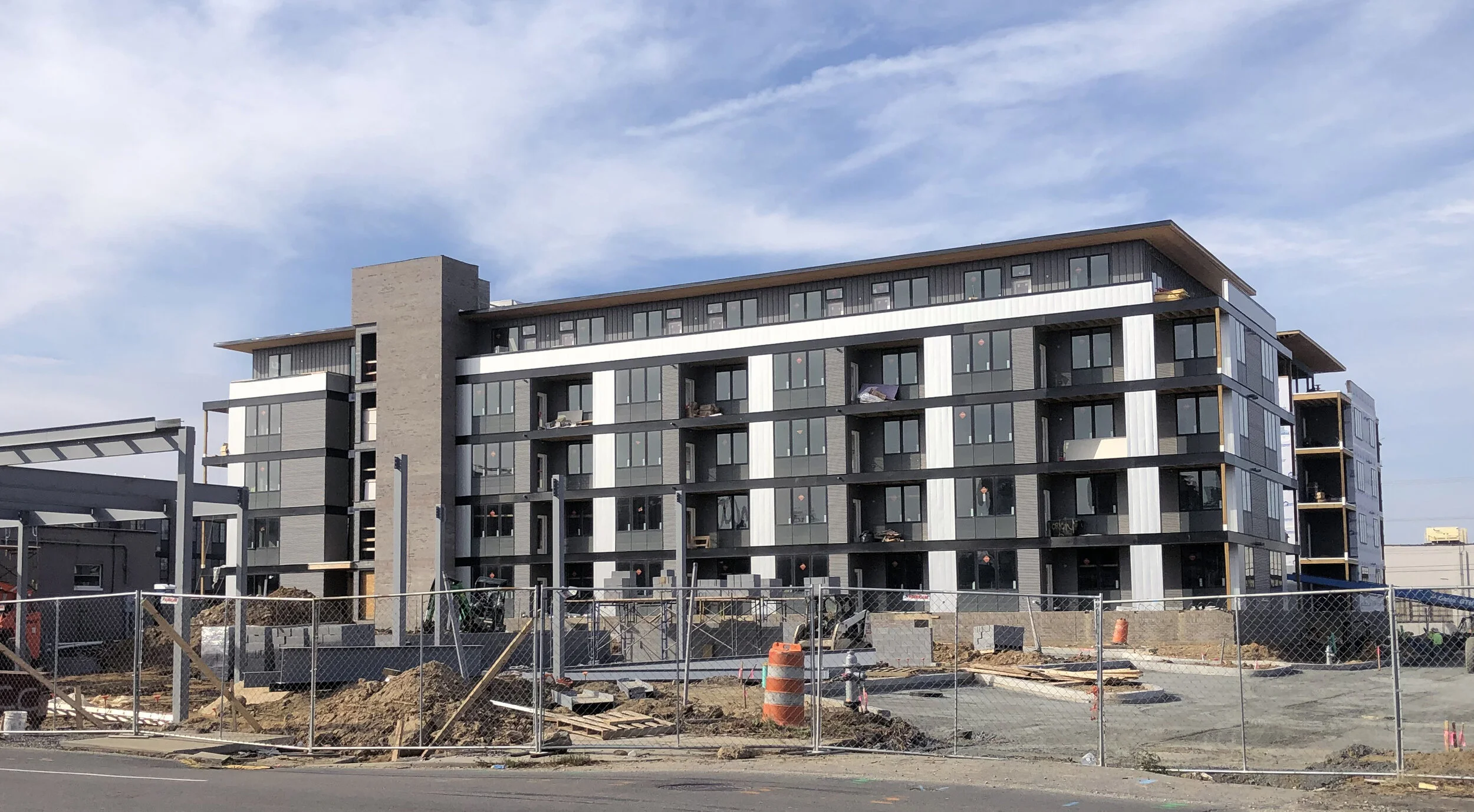
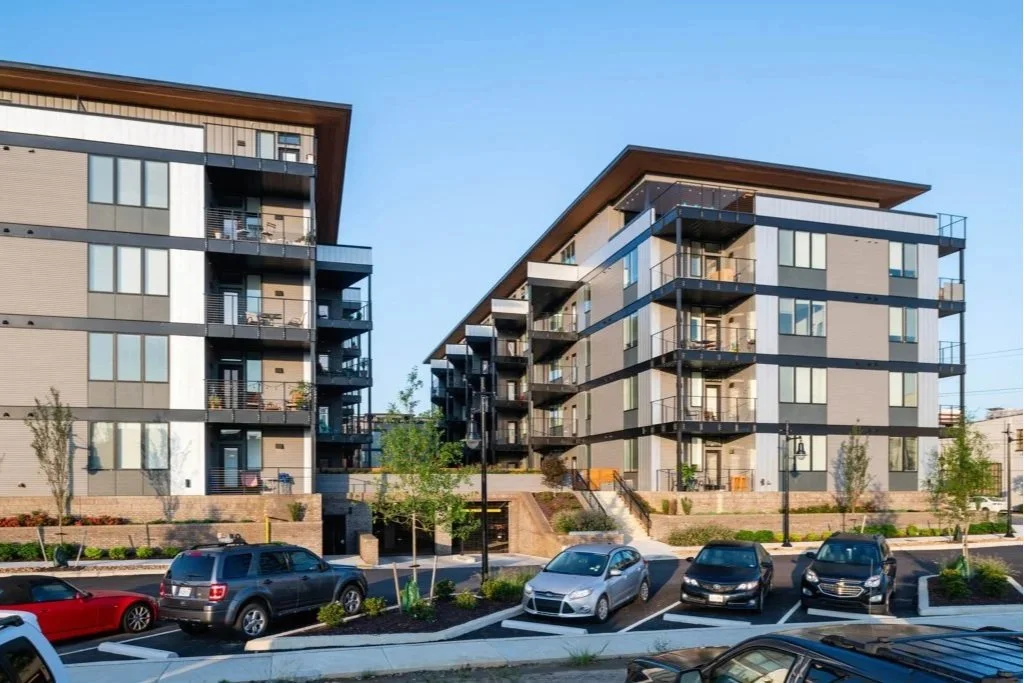
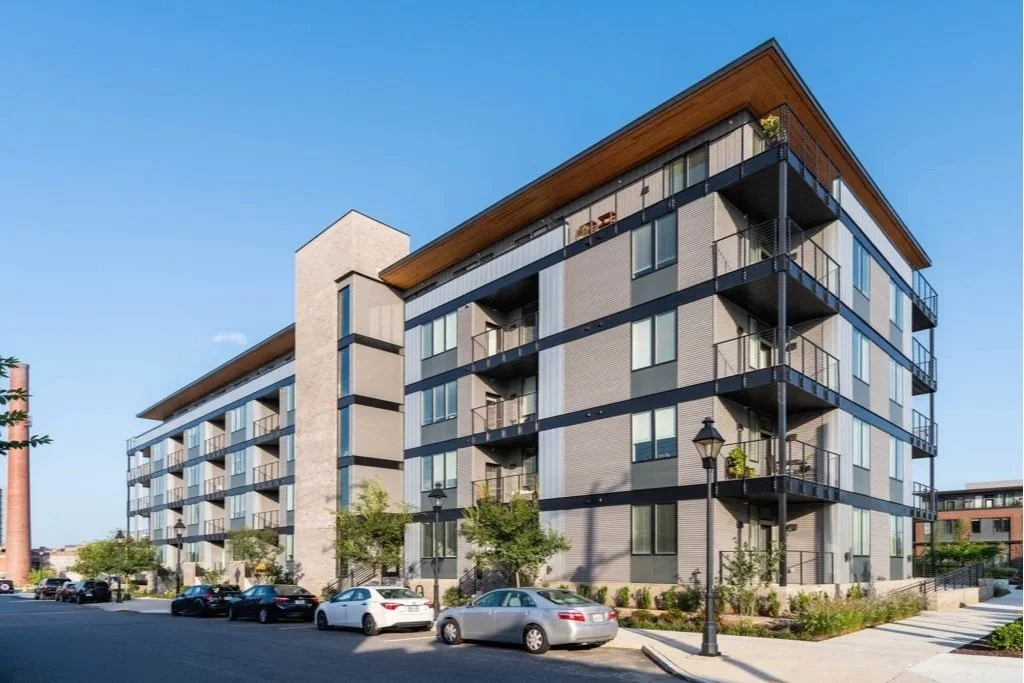
In Manchester’s rapidly evolving neighborhood, City View Marketplace is a new development comprised of five buildings with a combined 161 apartment units and 4,500 sf of commercial space.
The design responds to the historic street grid that once traversed the site, with cohesive architectural elements across all five buildings, including recessed top floors, cantilevered roof overhangs, and a regular rhythm of brick piers.
I contributed to the design and documentation of the three Hull Street buildings and the five-story structure atop structured parking.
Renderings by Hugo Render
Photos by Hannah Clark / Keith Isaacs / 3North
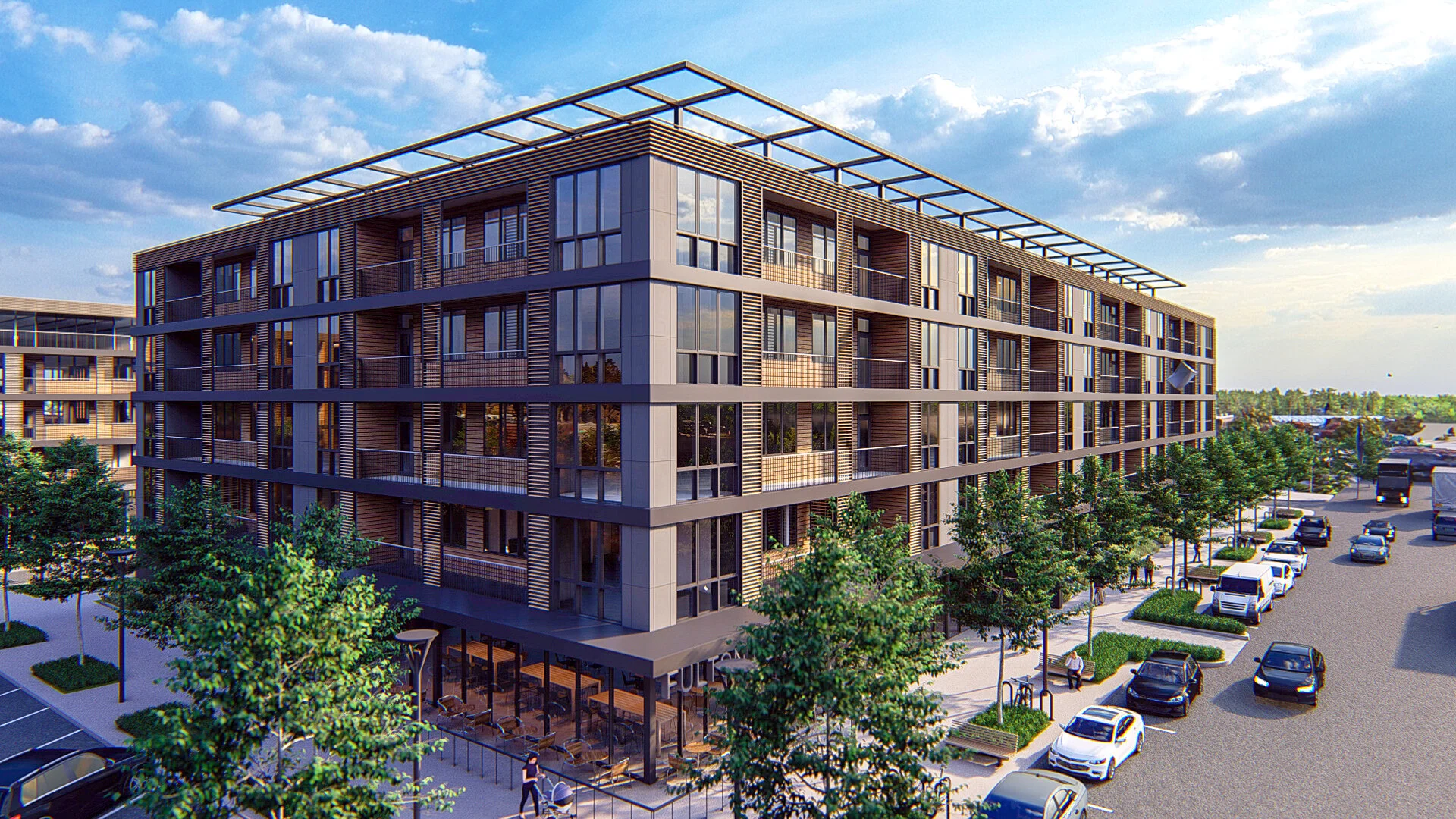
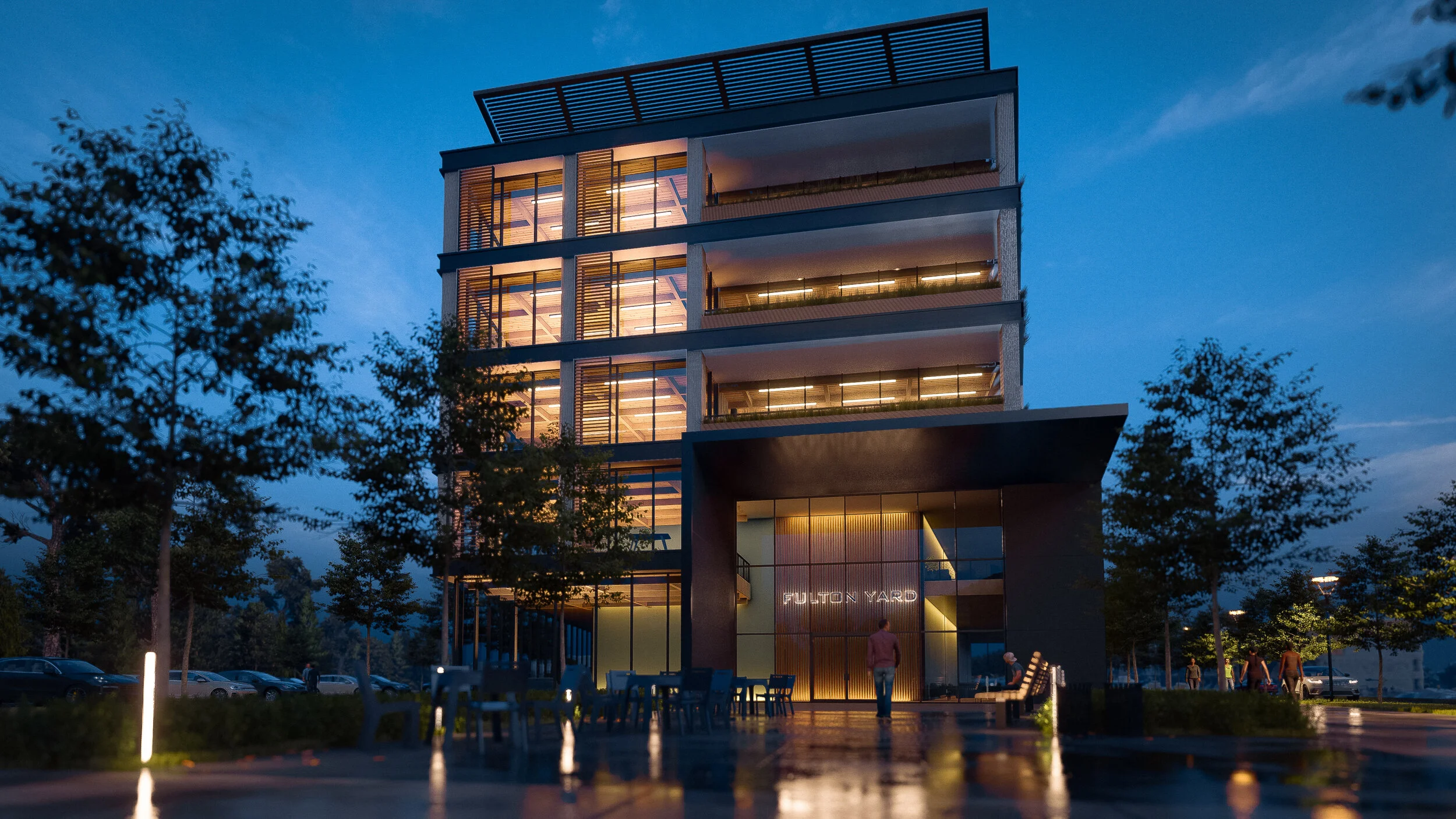
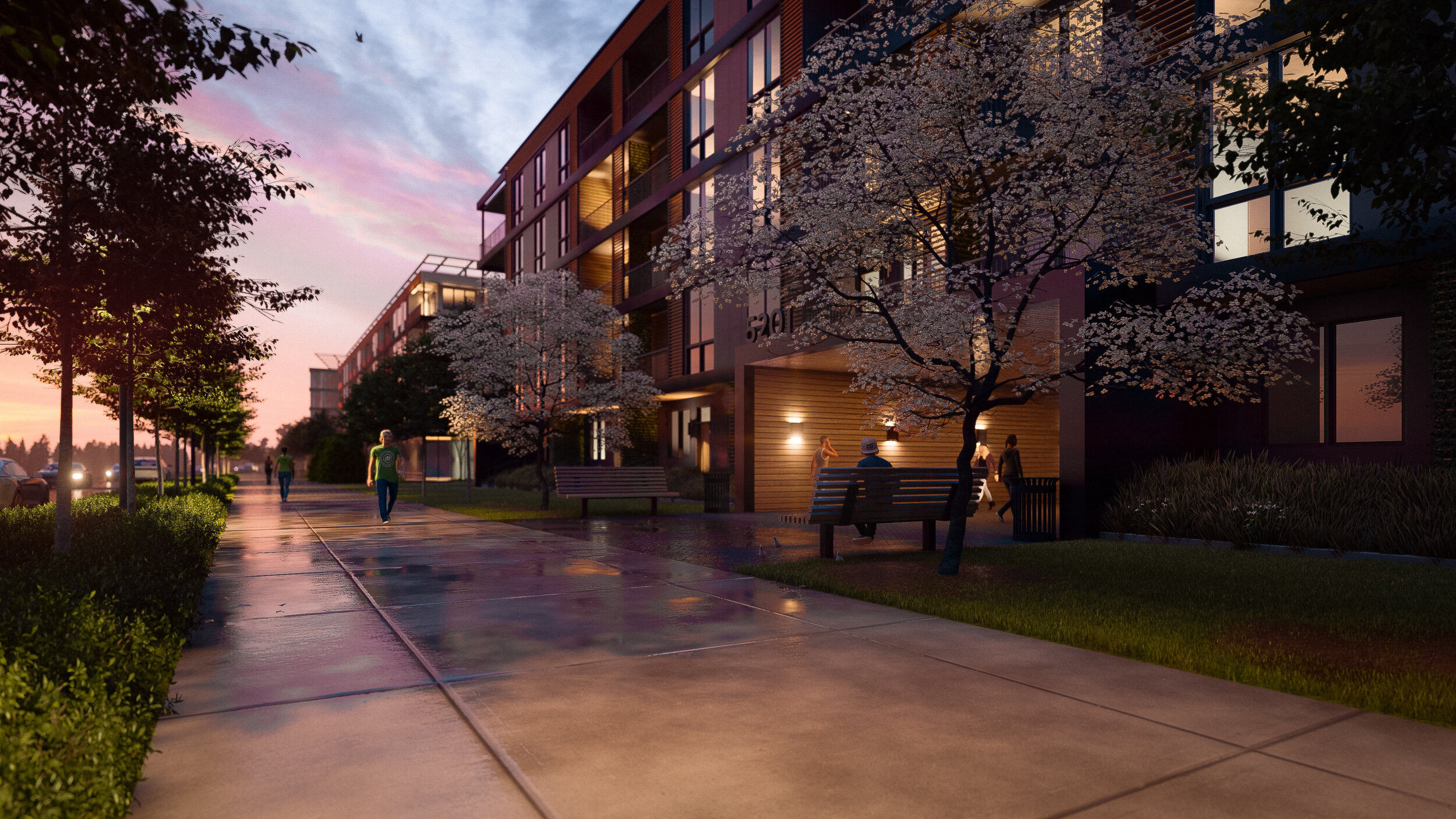
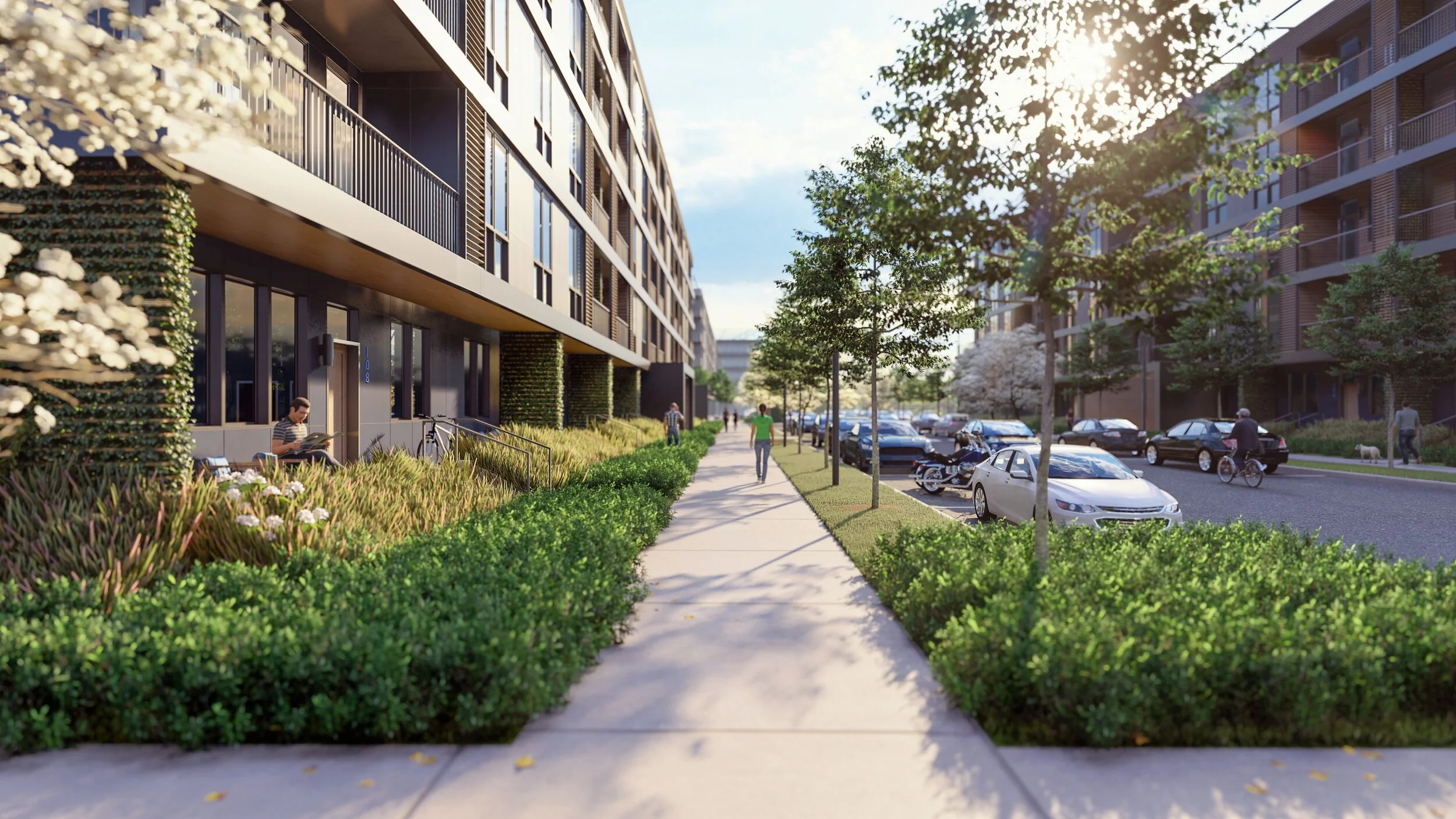
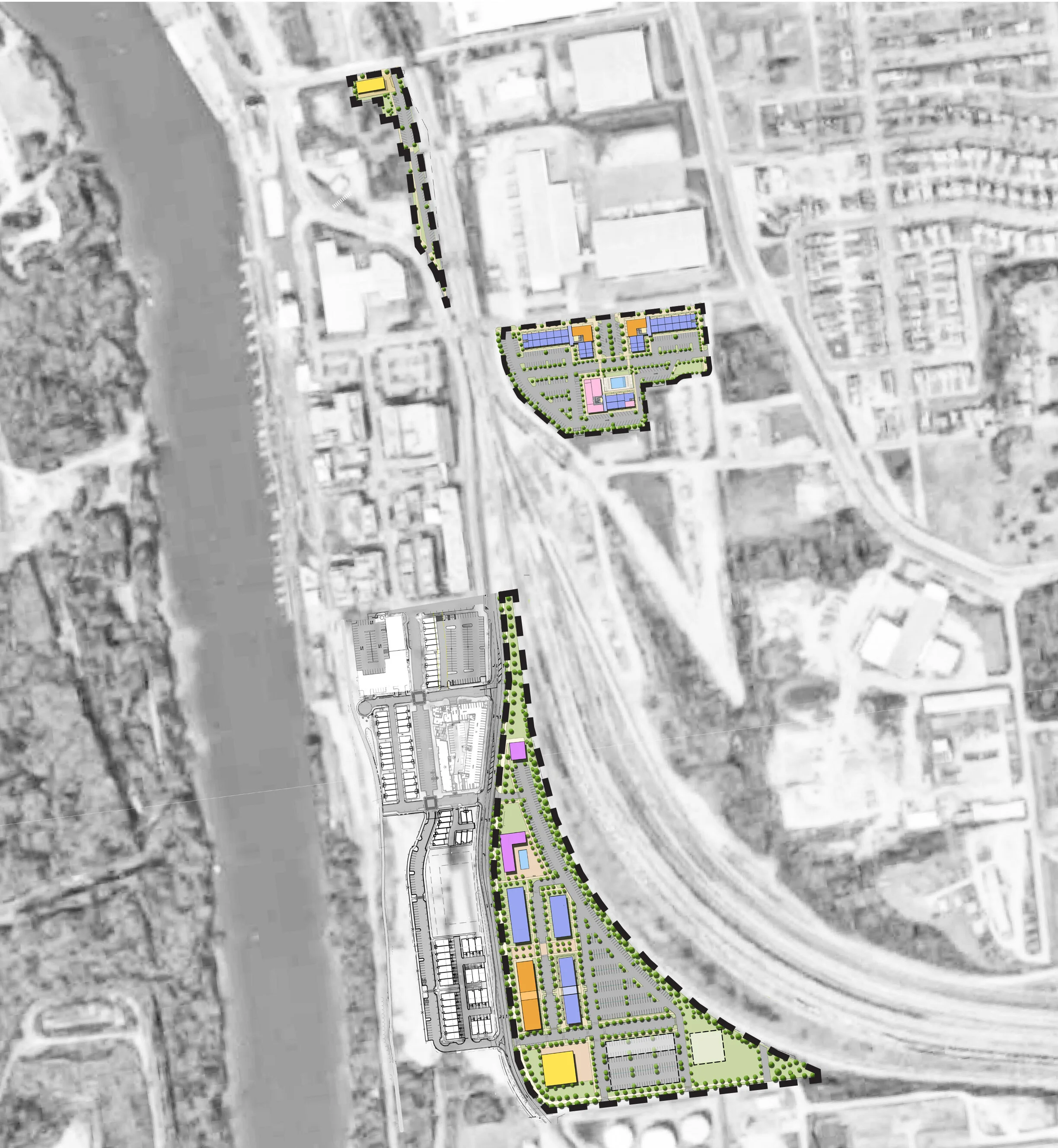
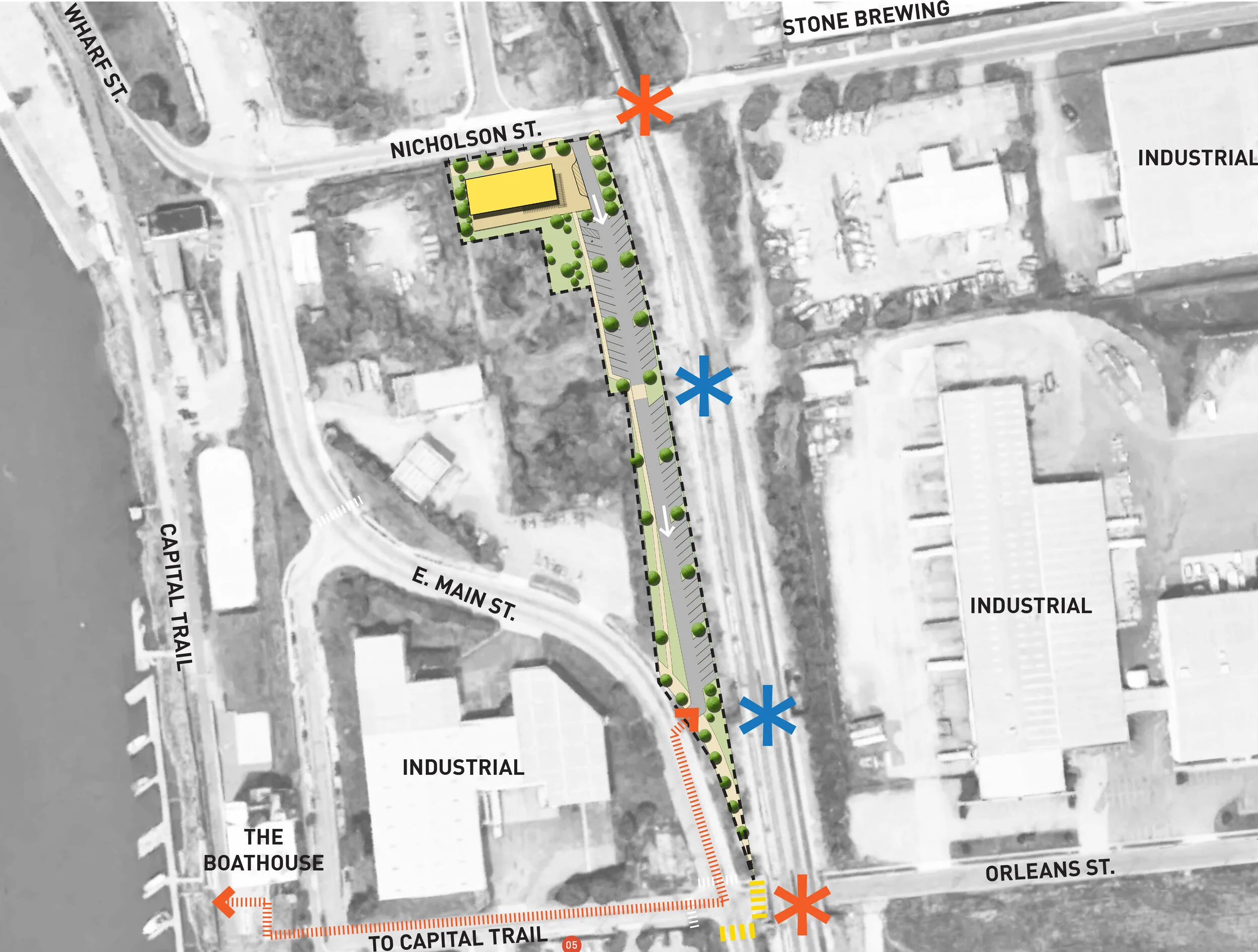
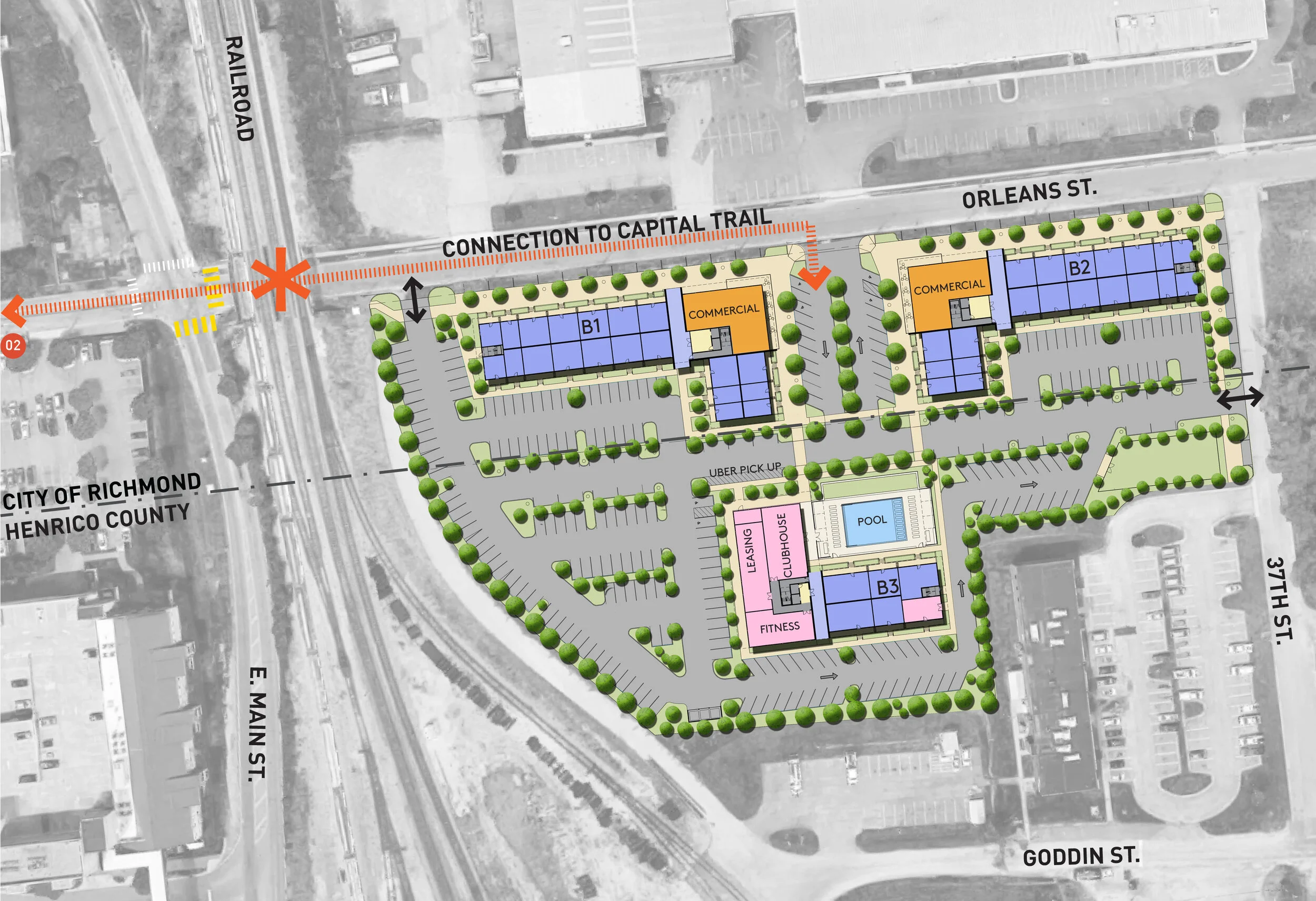
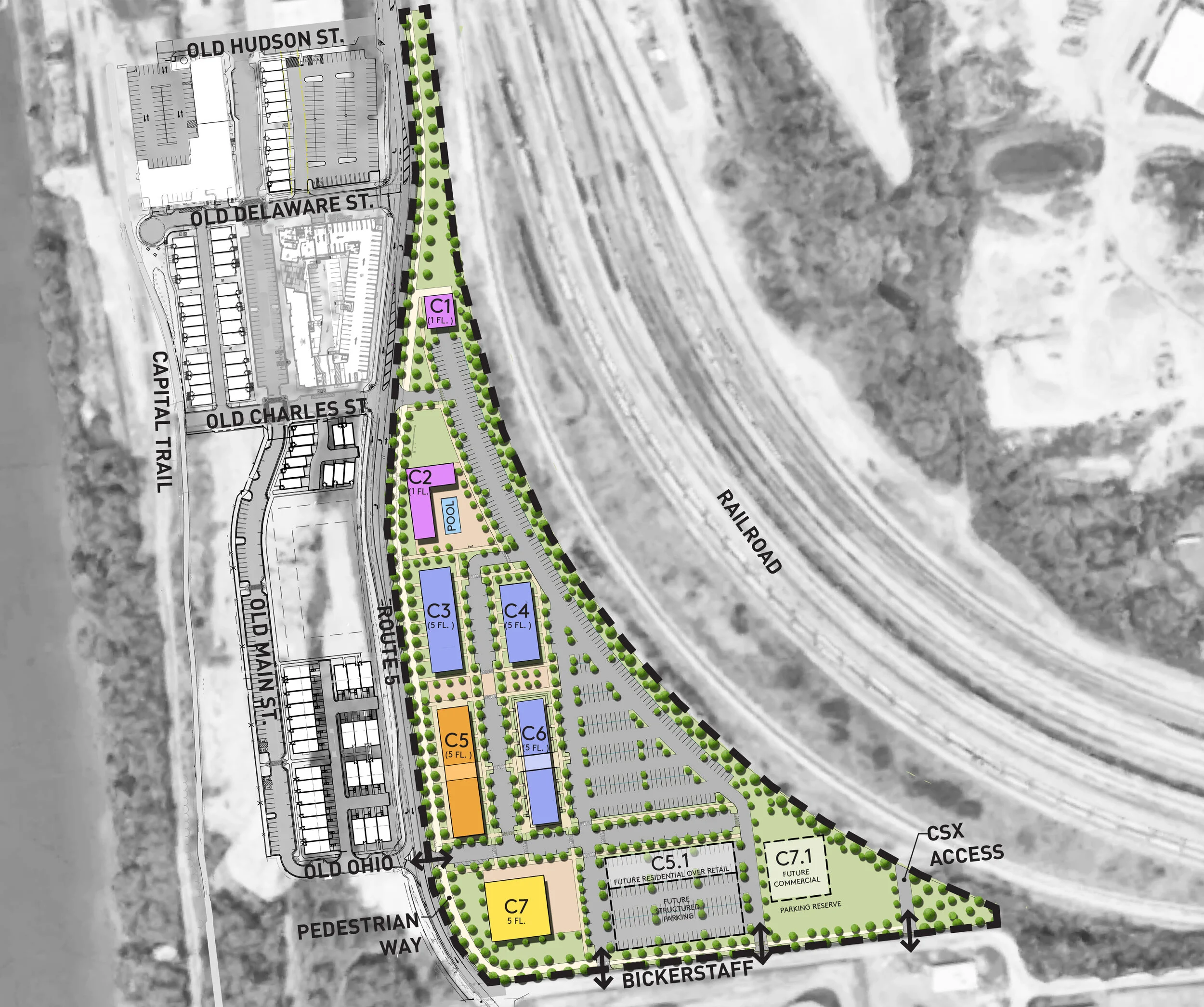
Fulton Yard is a proposed mixed-use development near Rocketts Landing, spanning three parcels across Richmond and Henrico. Working with the developer, legal team, and engineers, we successfully guided the project through rezoning in both jurisdictions.
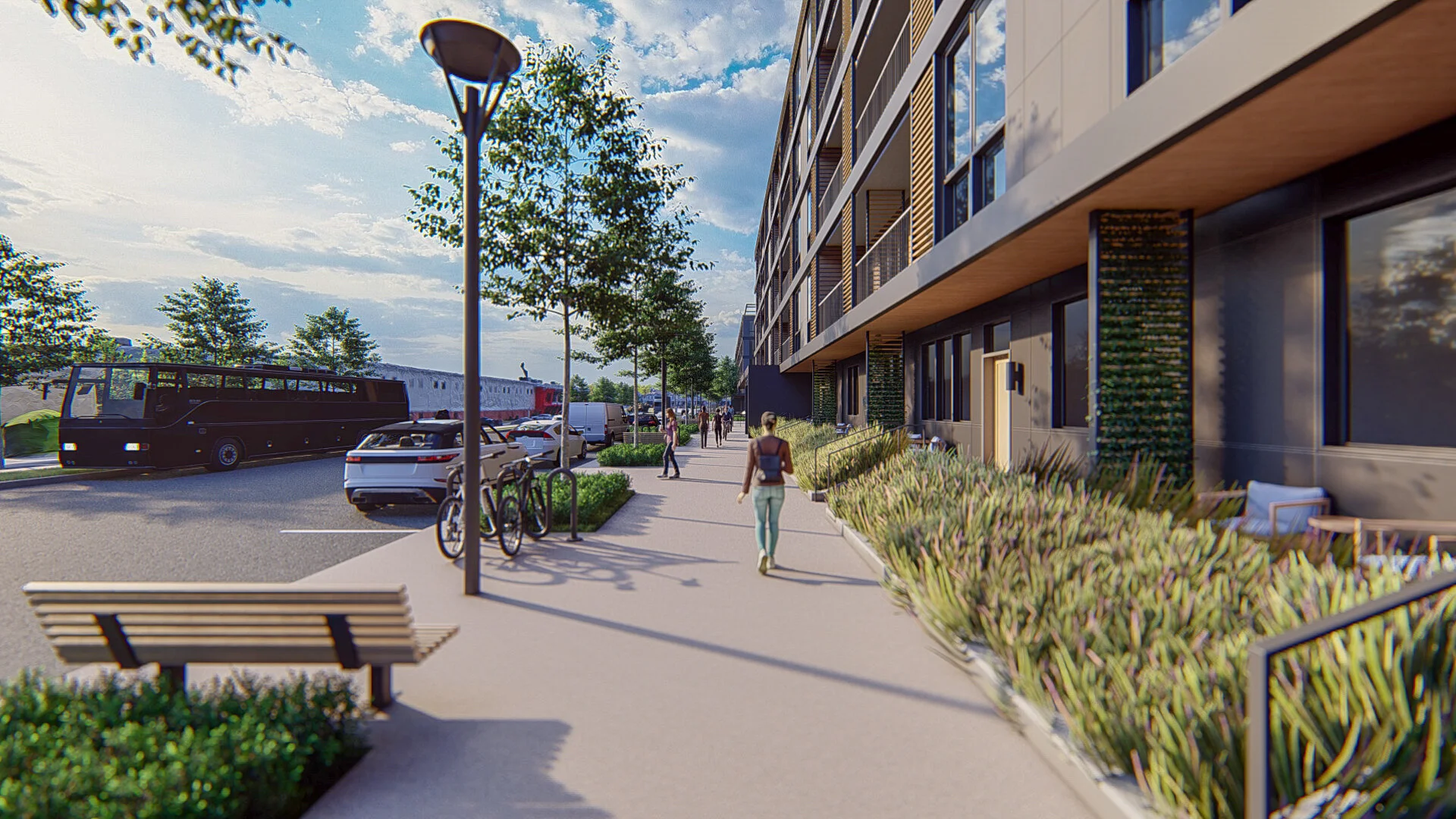
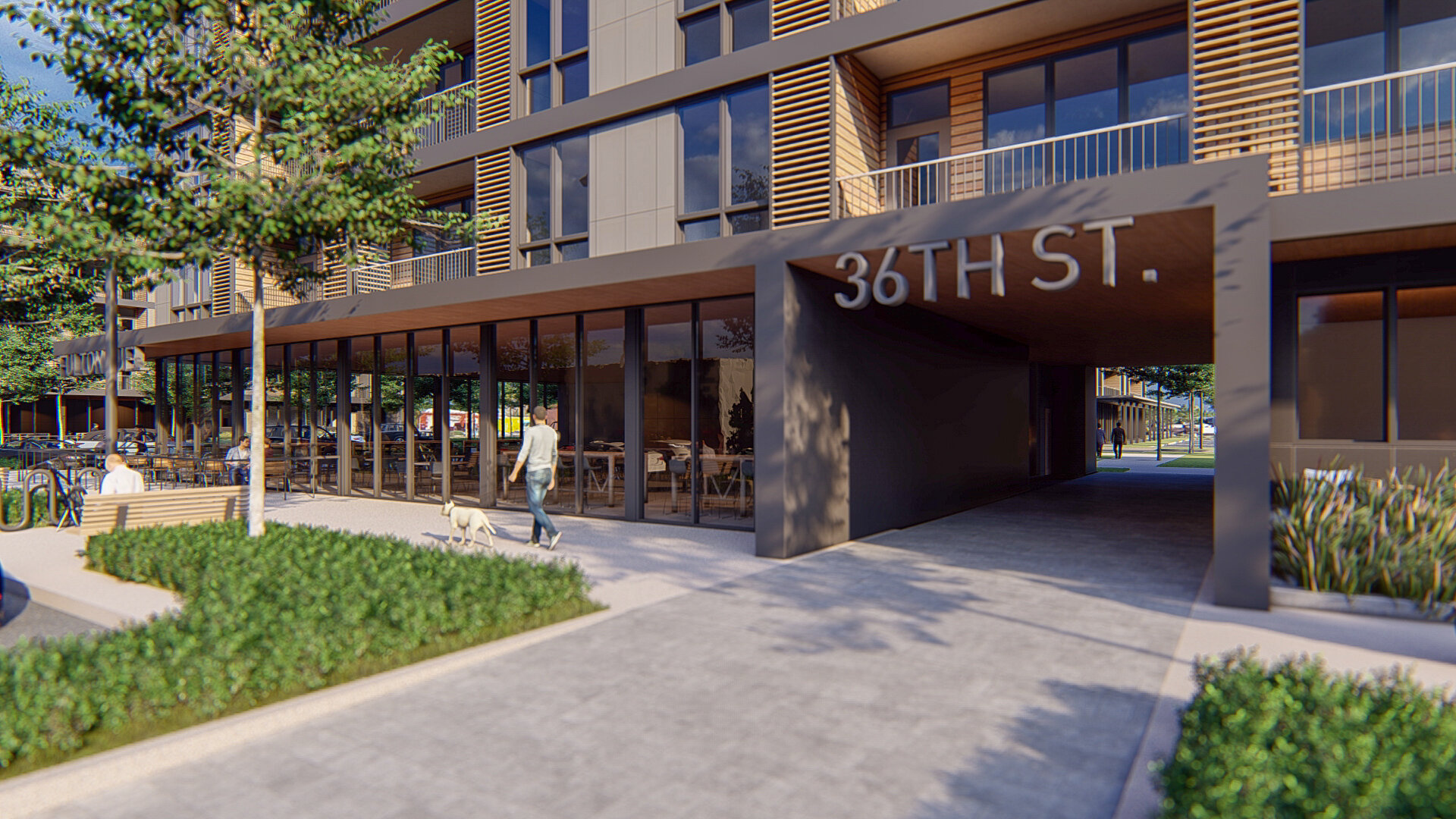
The design draws on four guiding themes—History, Passage, Sense of Place, and Adventure—and responds to the adjacent CSX railroad and the James River. Residential buildings feature recessed, transparent bases and upper floors reminiscent of rail cars, with wood elements echoing the rhythm of nearby tracks. Ground-level breezeways connect parking and retail, while streets and public spaces honor the former Historic Fulton through street names, public art, and trestle underpasses.
Pedestrian experience is a priority, with tree-lined sidewalks, benches, bike racks, street-oriented apartments with garden patios, deep overhangs for commercial space, and rooftop terraces with river and skyline views. Landscaped amenity areas include a pool plaza, grills, games courts, and storage for bikes and watercraft, complemented by apartment “urban mudrooms” for outdoor gear.
I contributed to the design and documentation of Fulton Yard while at 3North.
3 PARCELS
SITE A
SITE B
SITE C
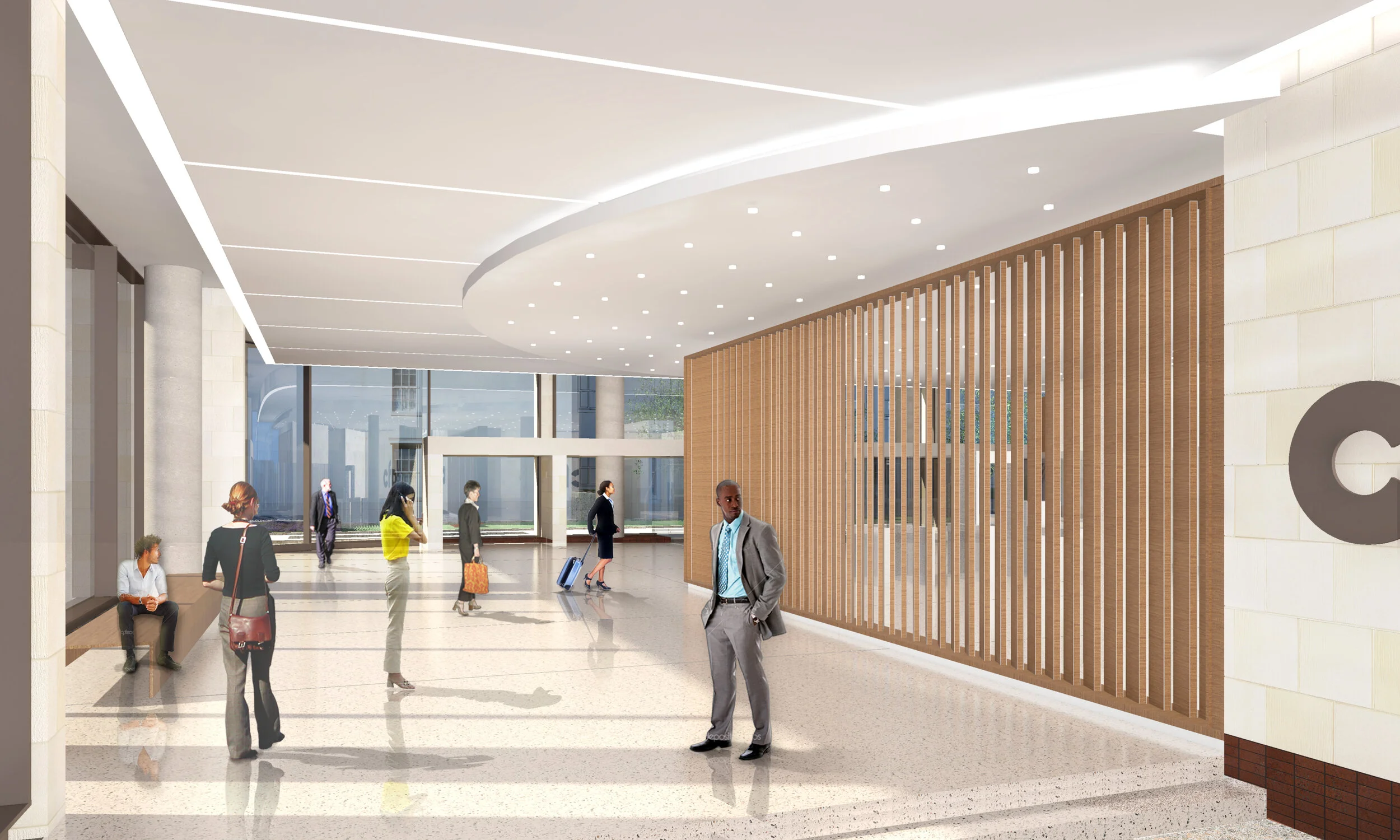
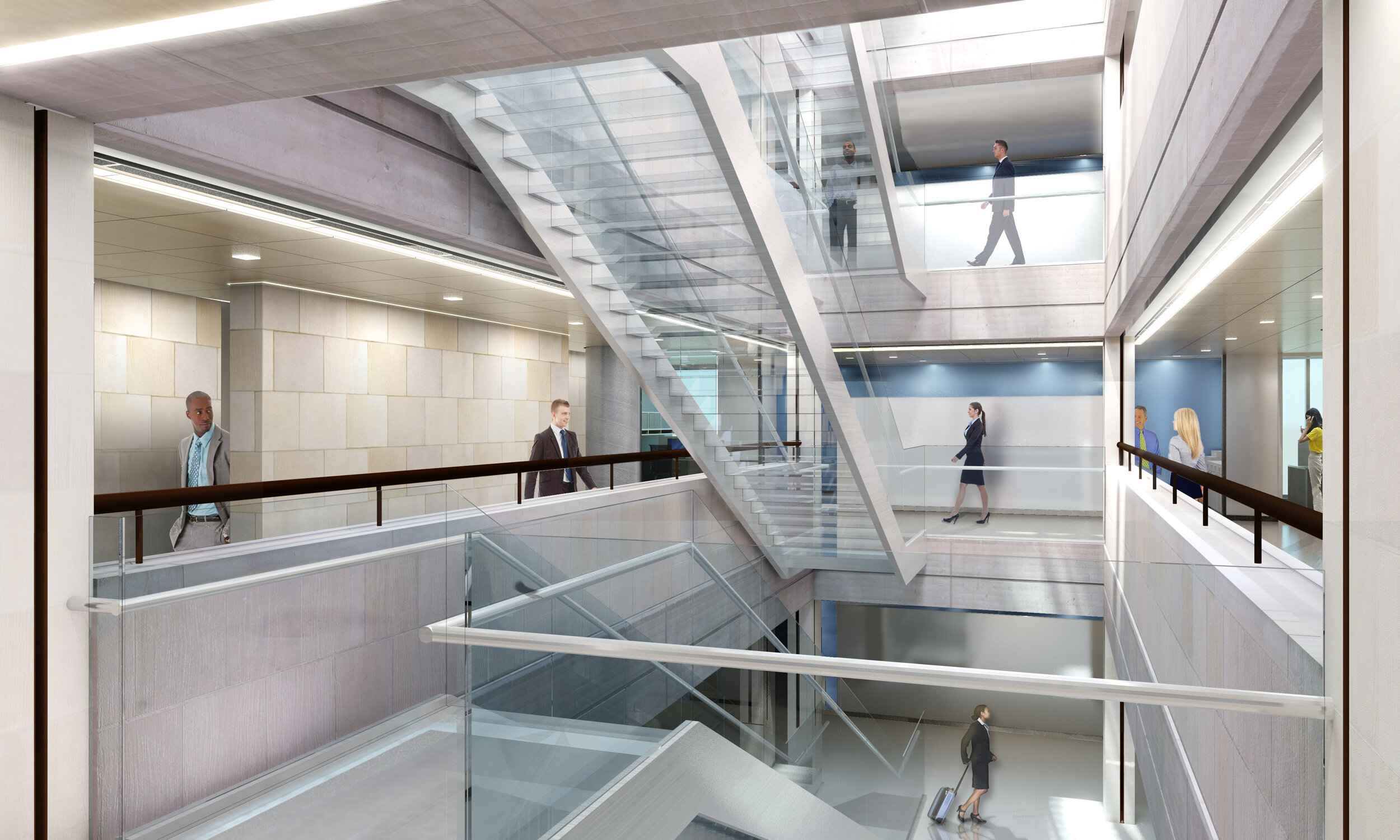
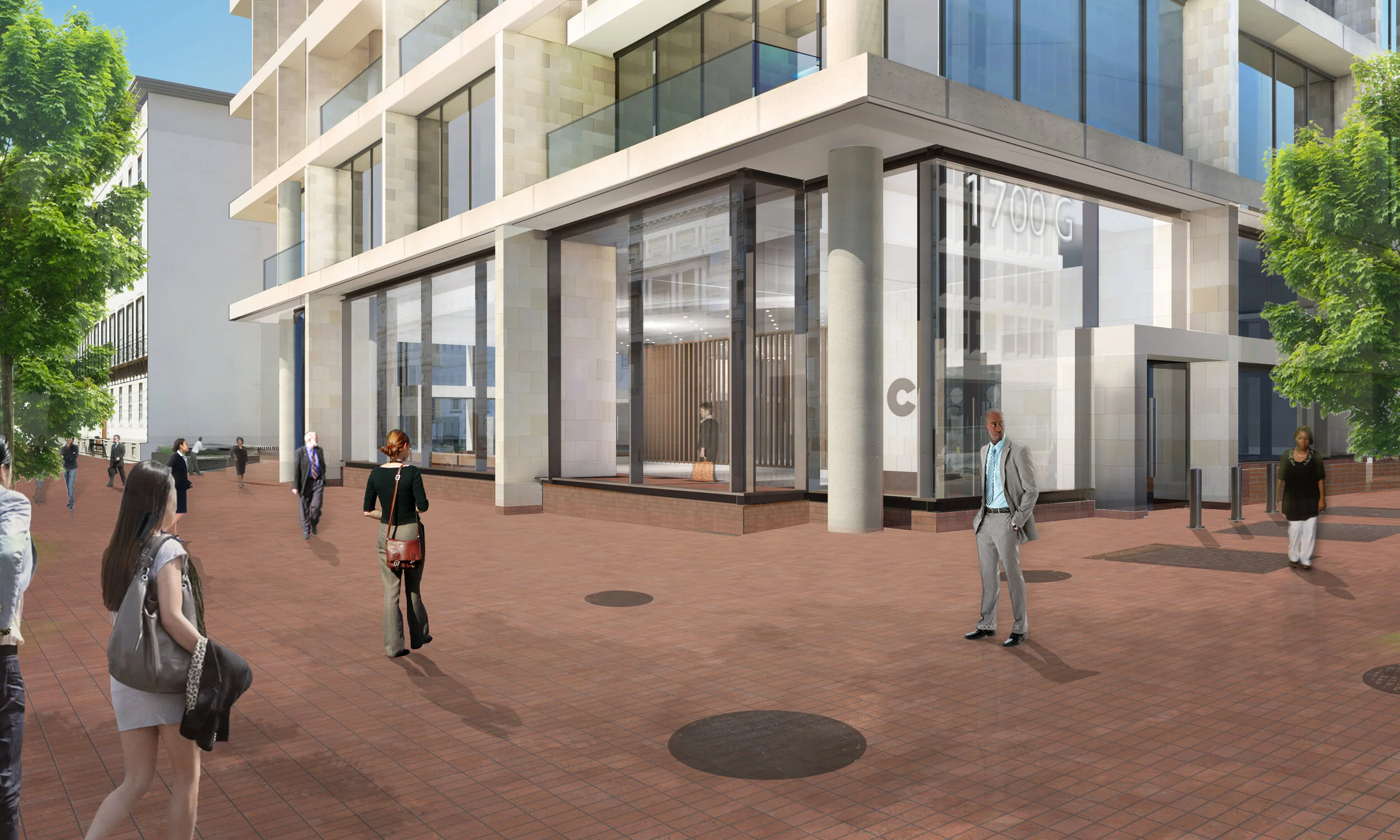
Formerly the Federal Housing and Bank Loan Building, the historically registered Brutalist structure at 17th and G Street NW, Washington, D.C., now houses the Consumer Financial Protection Bureau. Balancing historic preservation requirements, the building’s original Brutalist character, and the client’s programmatic needs, we modernized the 1970s facility to serve as the agency’s headquarters.
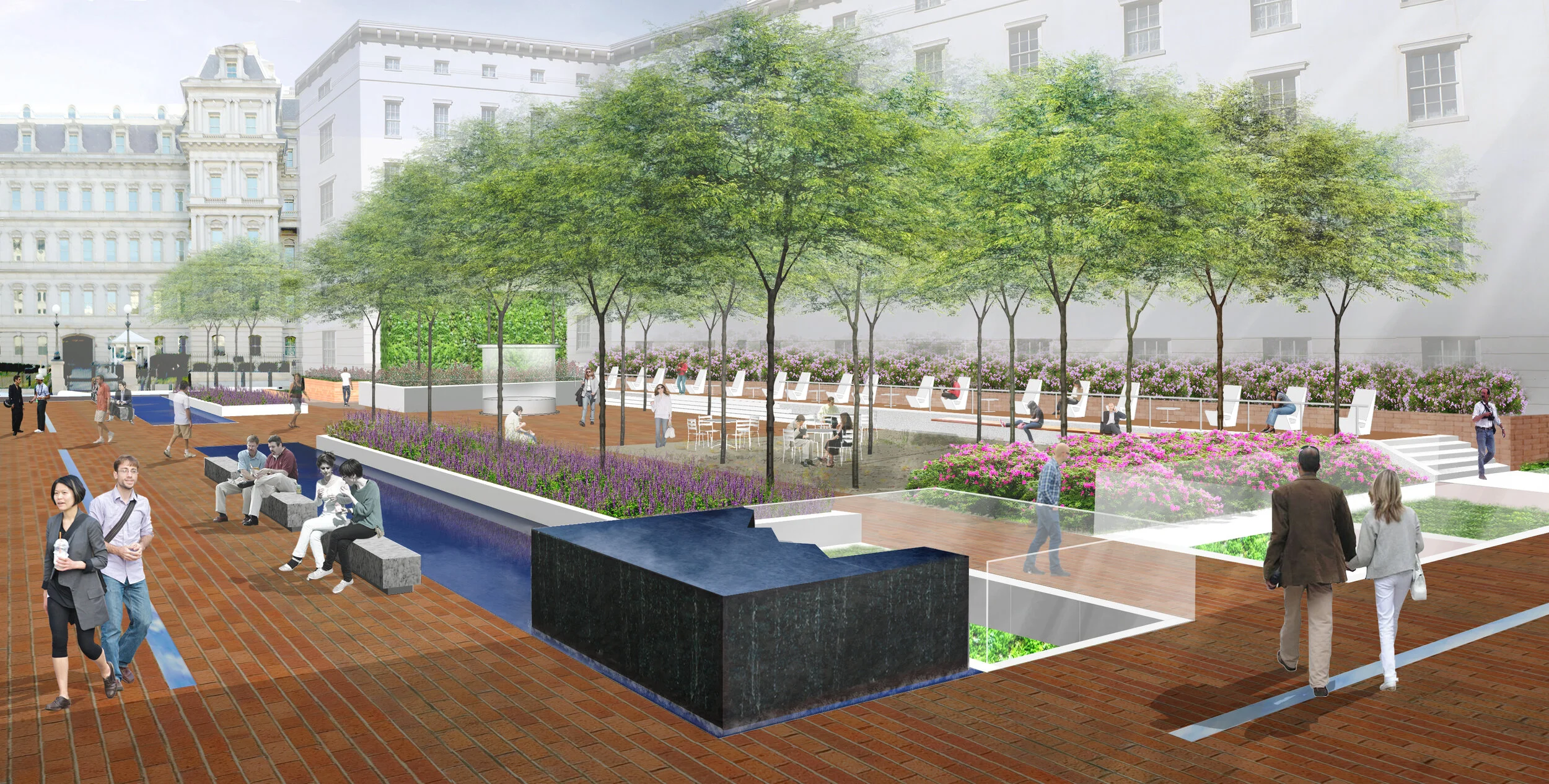
I focused on three key areas: the main lobby, the atrium, and the adjacent outdoor courtyard.
The lobby design honors the building’s 1970s architectural language while increasing transparency to reflect the agency’s mission. A feature wall of rotated wooden slats separates the secured area from the public lobby, maintaining visibility from security stations and reinforcing the agency’s brand—a motif repeated elsewhere in the building.
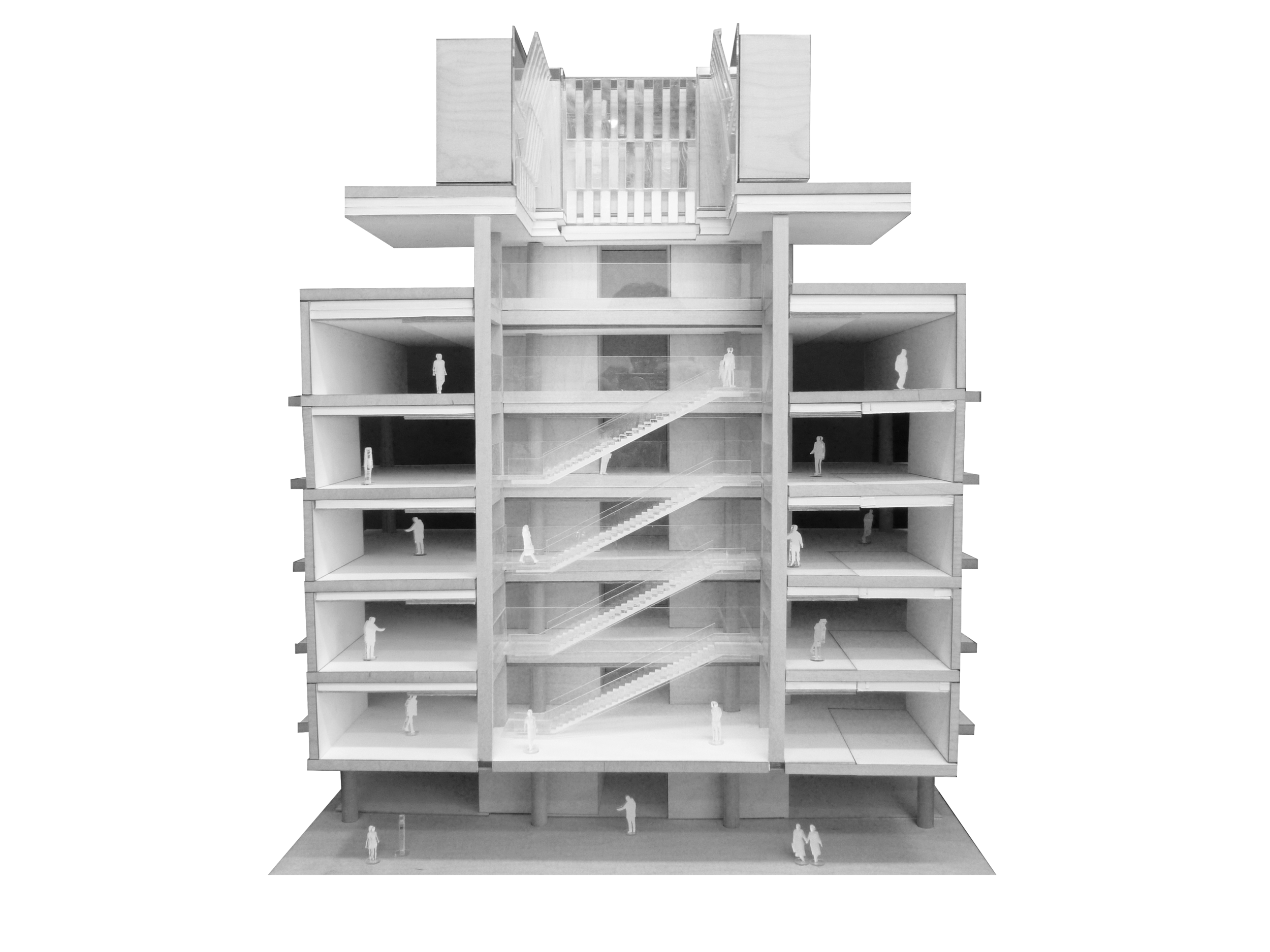
In the six-story atrium, a new glass stair fosters departmental collaboration but limits daylight. Working with a lighting engineer, we designed a reflector system that directs sunlight deep into the atrium, illuminating the ground floor for ten months of the year. Surfaces are strategically oriented to capture and reflect sunlight from multiple angles.
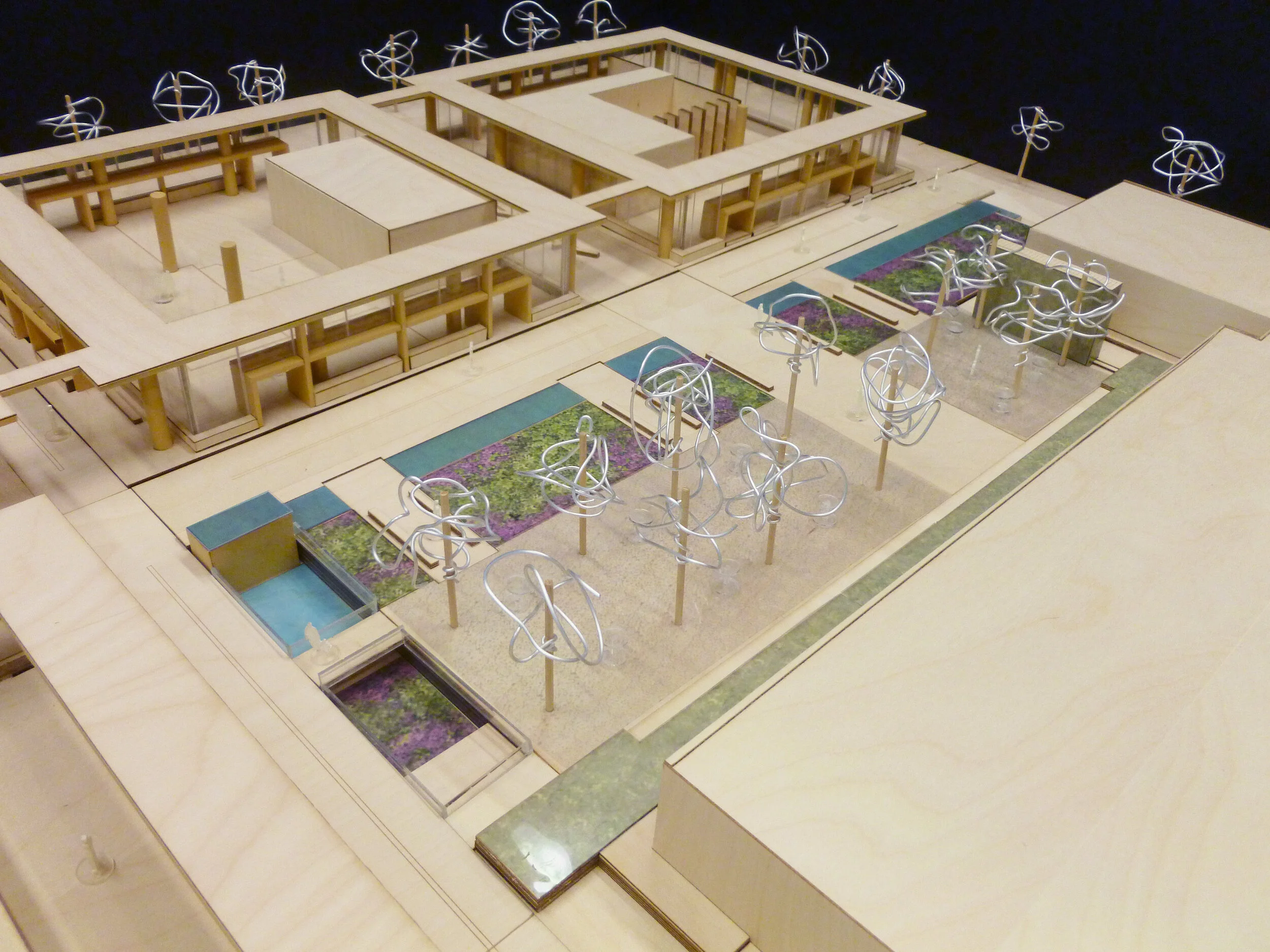
The adjacent courtyard was redesigned in collaboration with a landscape design firm to create a welcoming outdoor environment, featuring a skim fountain, native plantings, and a trellis, supporting both employee use and visual connection to the building.
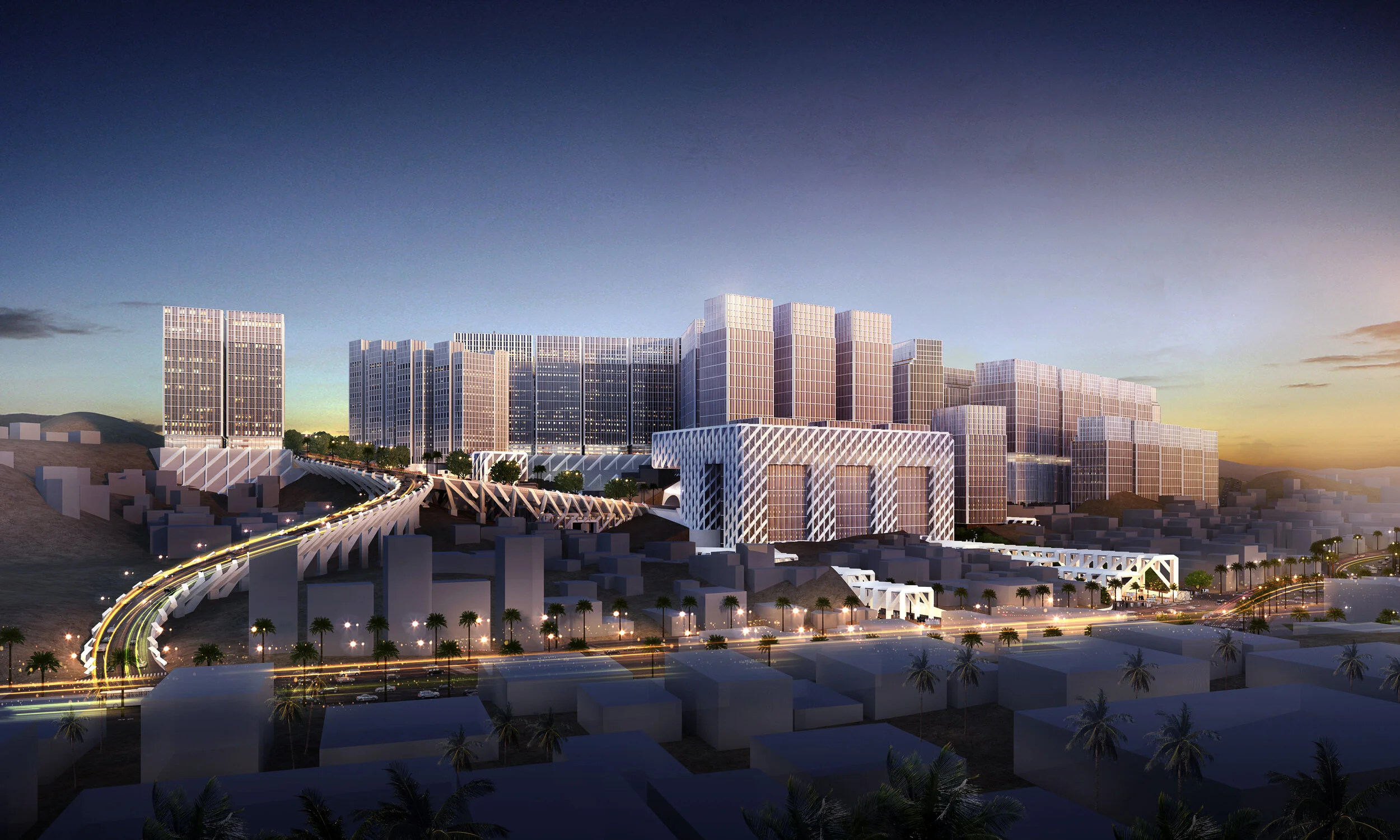
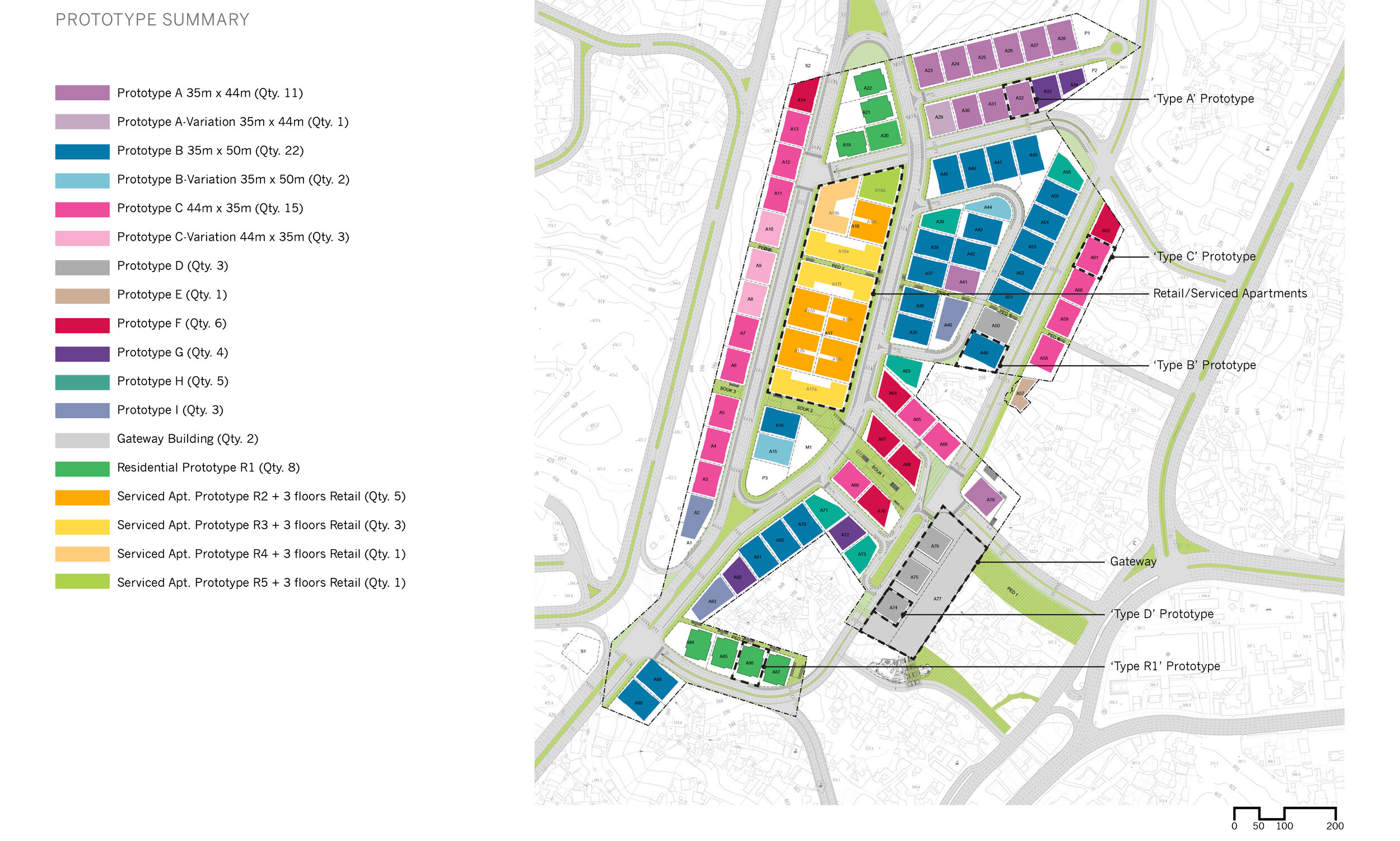
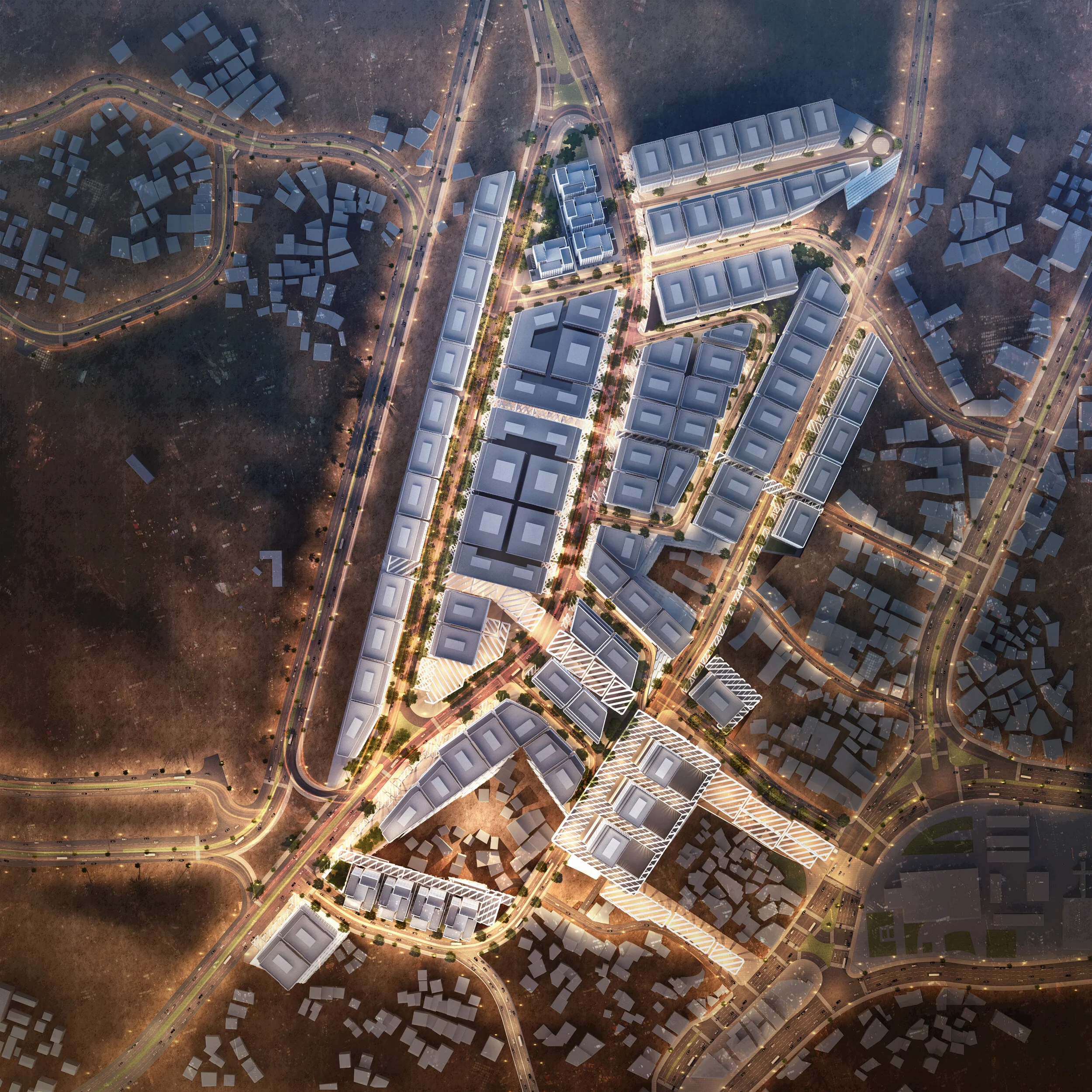
The Hajj, the annual Islamic pilgrimage to Mecca, is the largest gathering of Muslims in the world. Thaker City is designed to accommodate pilgrims during their spiritual journey. Situated atop one of the hills surrounding Mecca, The development is comprised of over 100 buildings, including hotels, retail, and residential spaces.
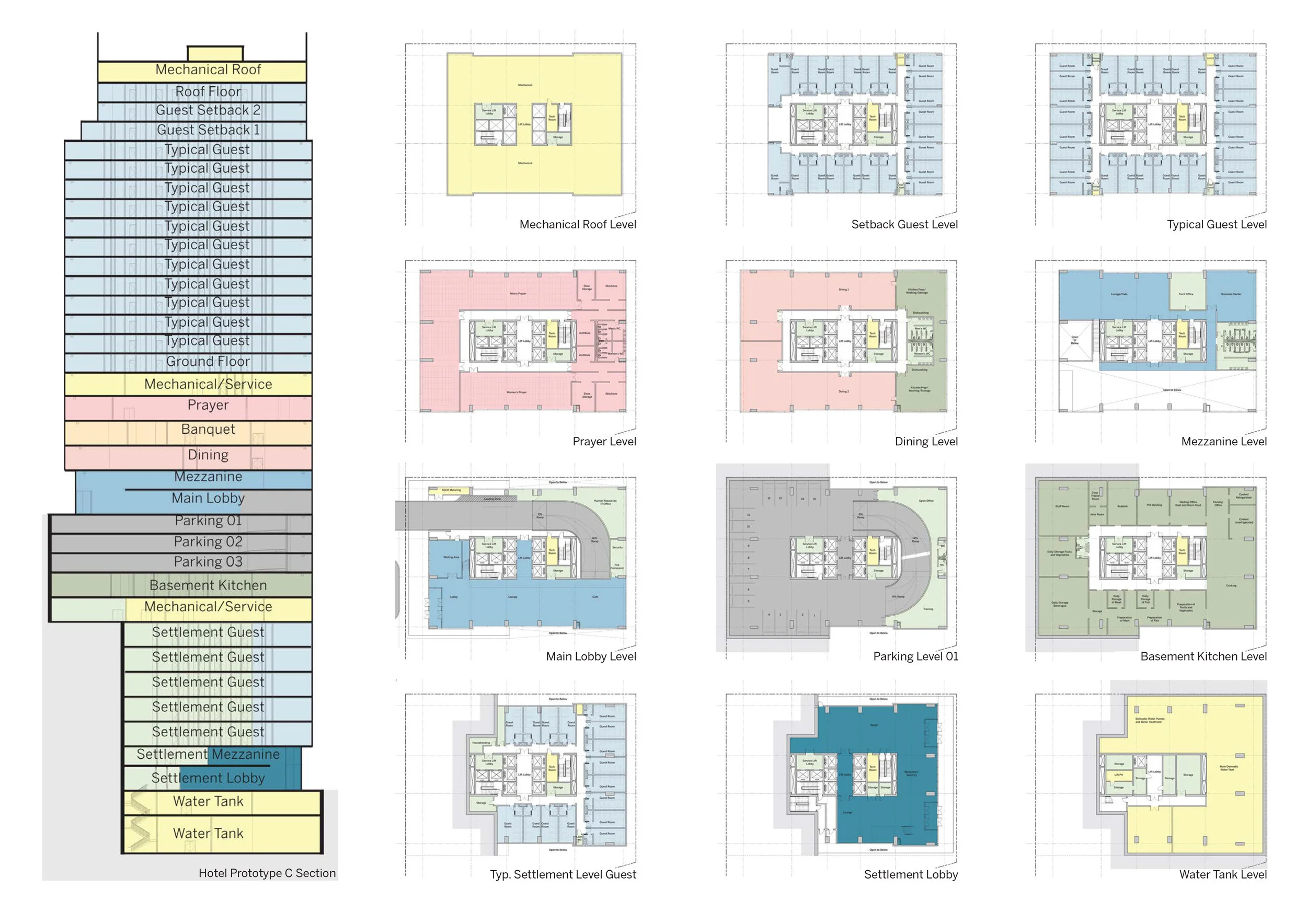
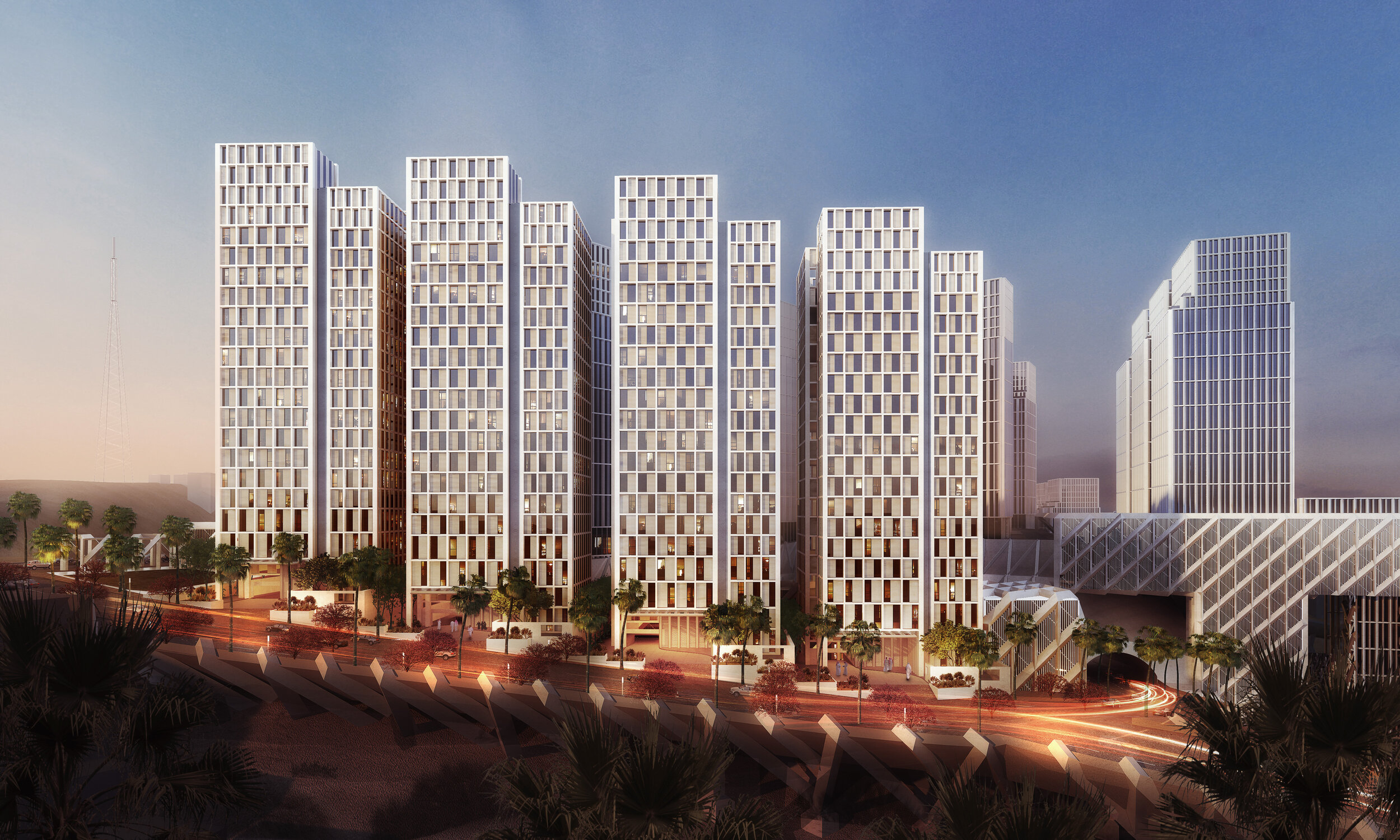
The 79 hotels are designed with site-specific prototypes, thoughtfully oriented toward Al Haram to provide pilgrims with a commanding view of the city. Collaborating with the design team at SOM, I modeled two hotel prototypes and helped to coordinate MEP and structural systems.
Renderings by Atchain
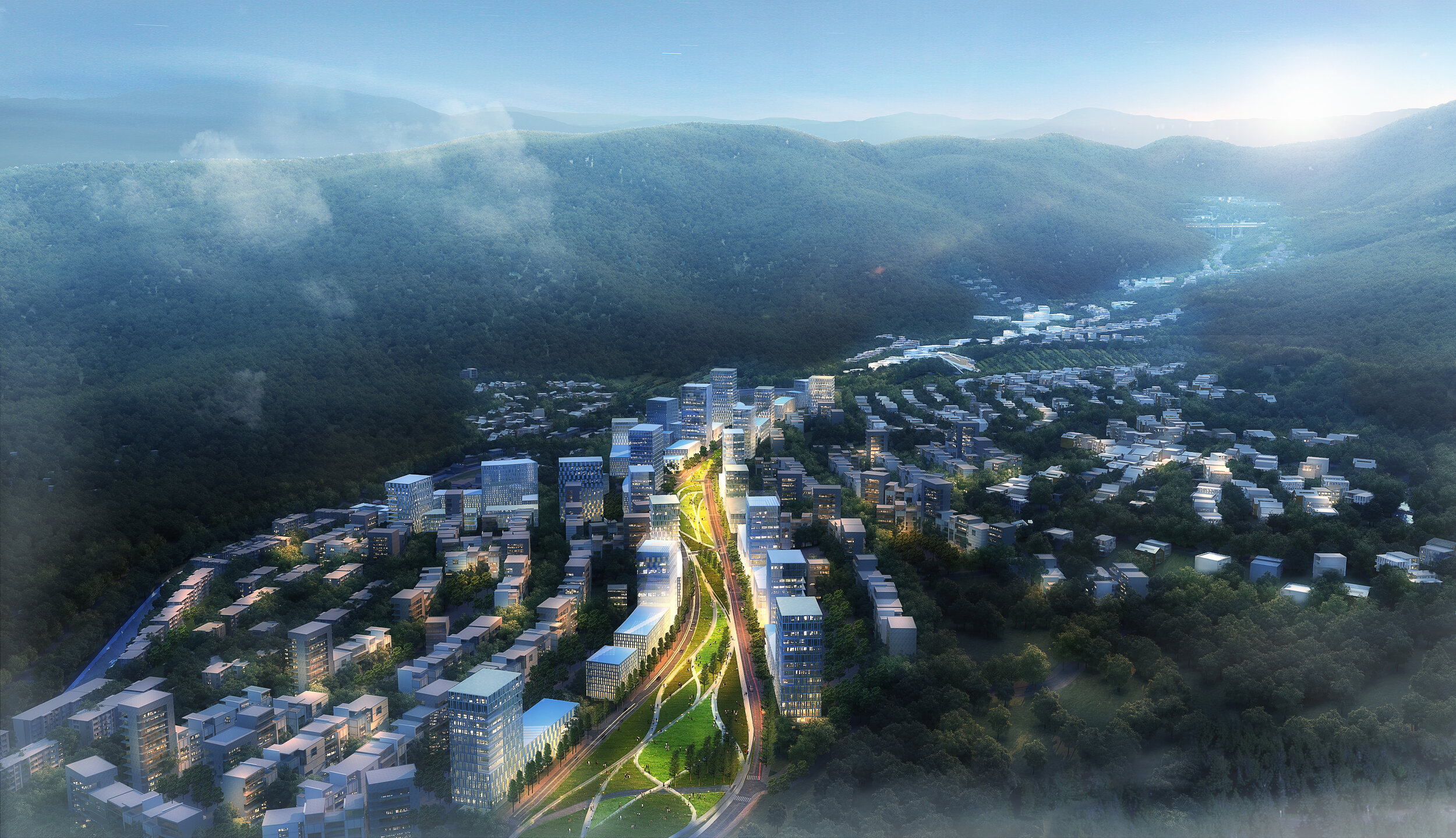
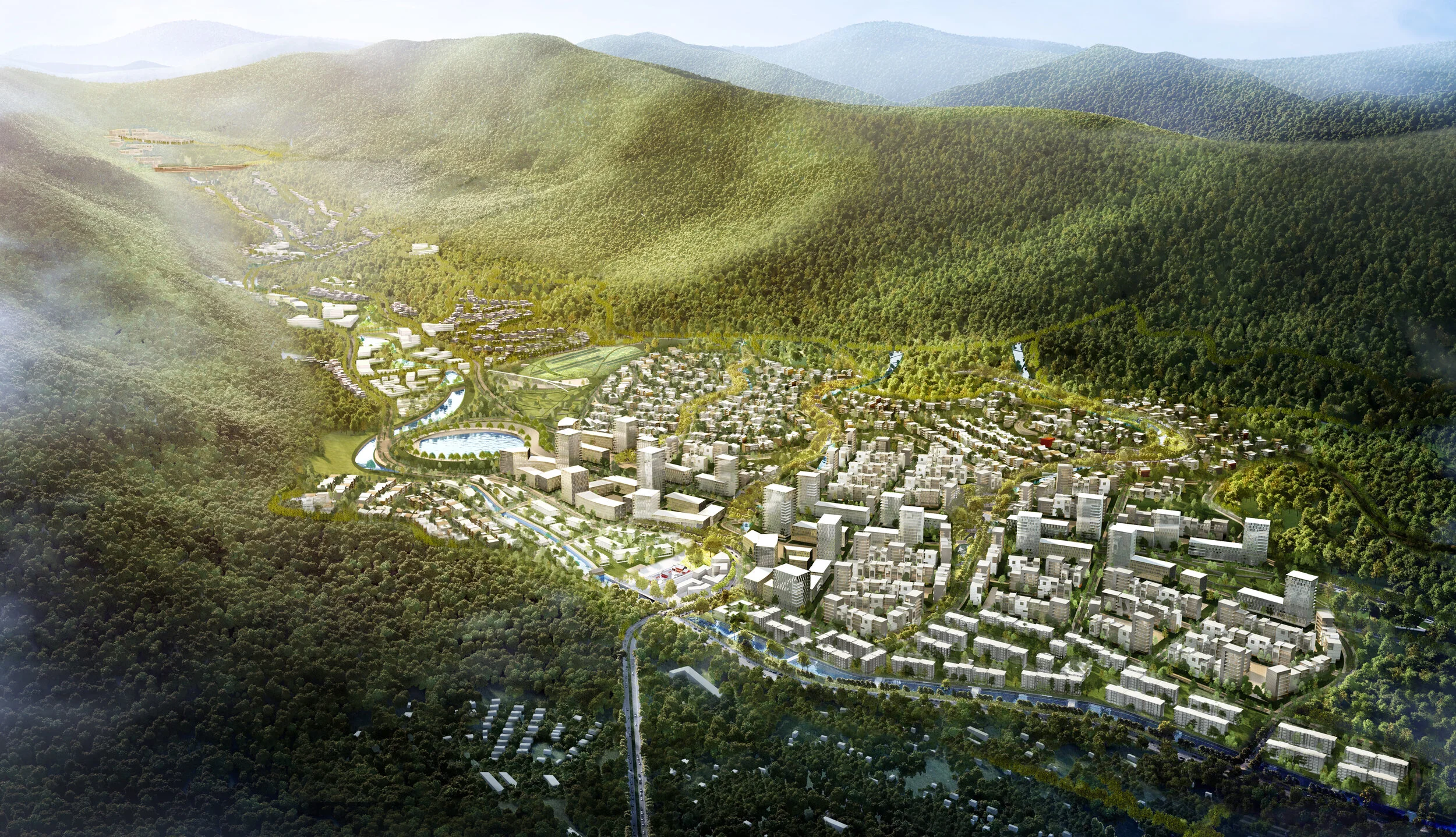
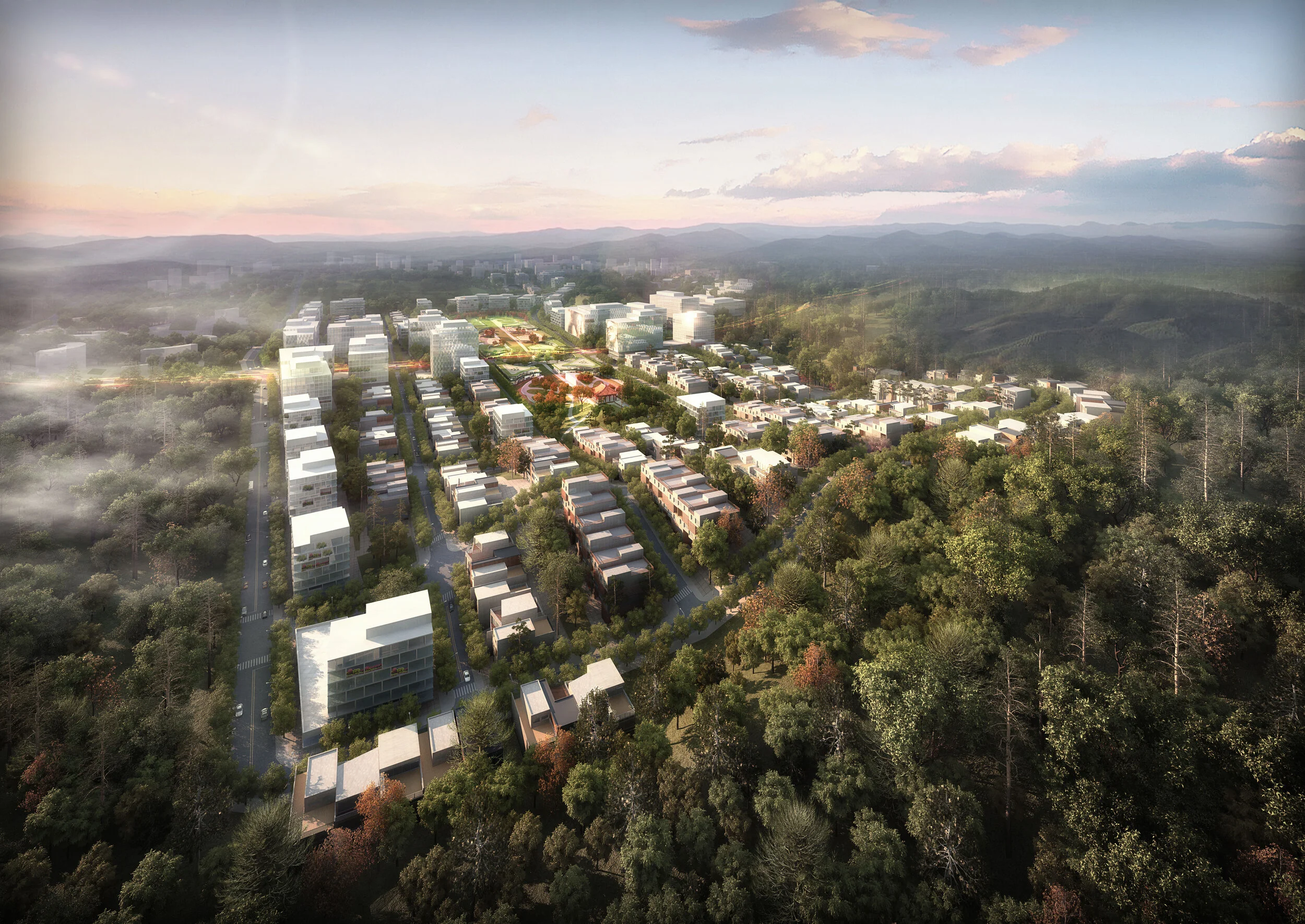
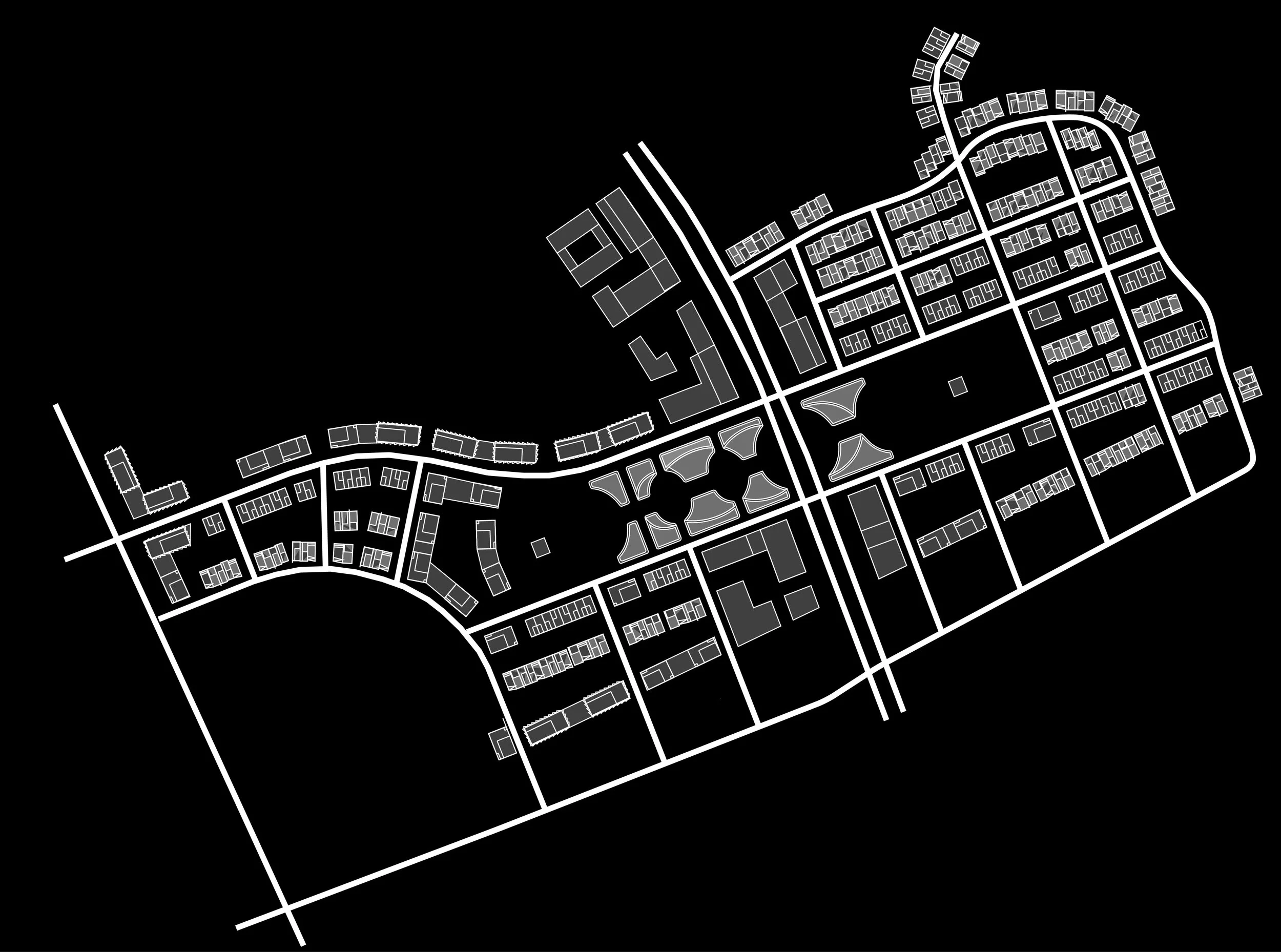
Mentougou is a new Chinese eco-city located between the Taihang Mountains and Beijing’s urban core. It is characterized by its dramatic natural topography. As part of a small team at SOM, we developed the master plan and building typologies in direct response to the terrain, with sustainability as a guiding principle.
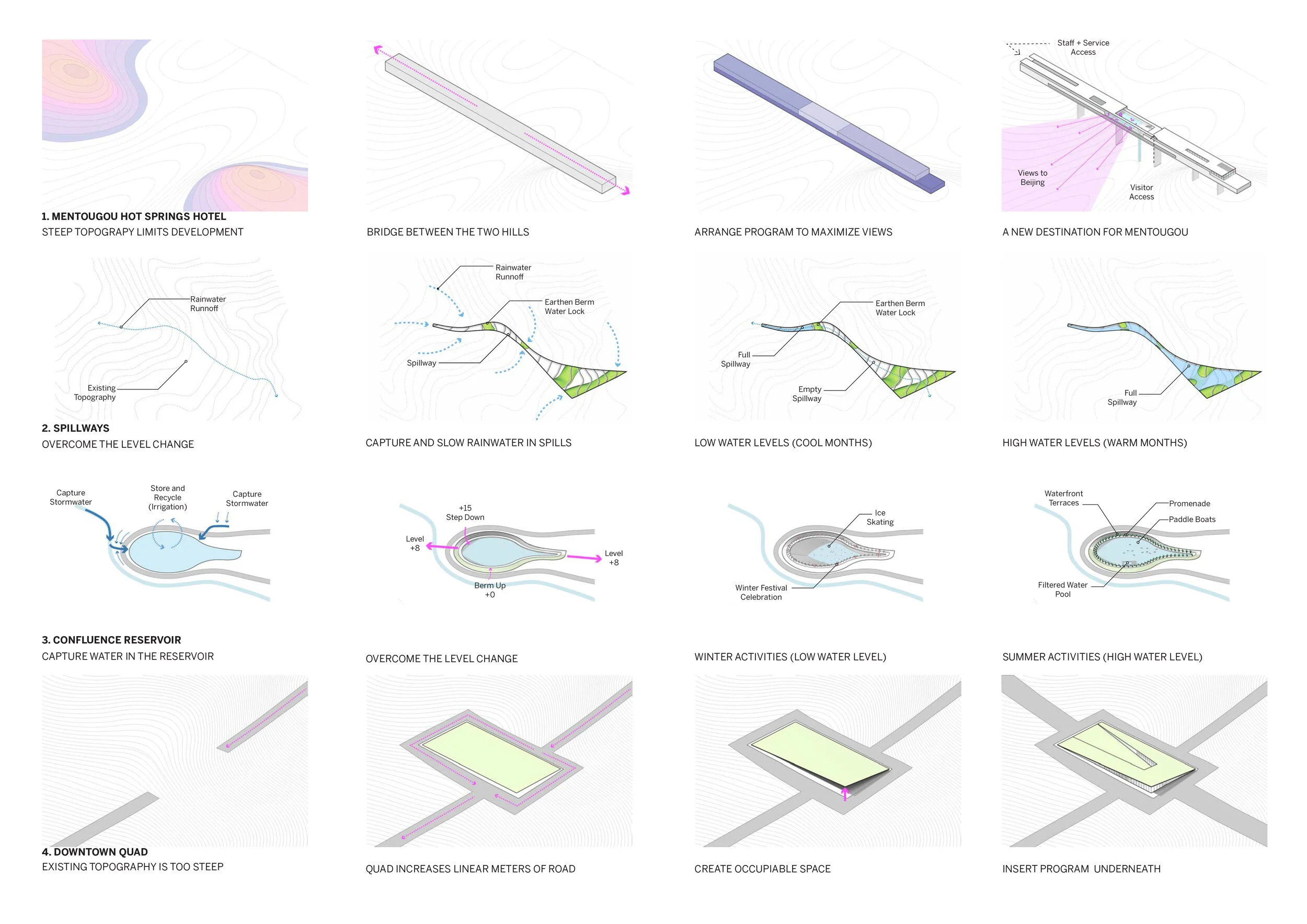
A network of water spills in the valley’s low-lying areas slows and redirects monsoon runoff during the summer months while creating recreational landscapes when water levels are high.
The Confluence Reservoir captures rainwater and greywater from surrounding buildings and reuses it to support an adjacent botanical garden. It also functions as a seasonal recreational space, transforming as water levels rise and recede throughout the year.
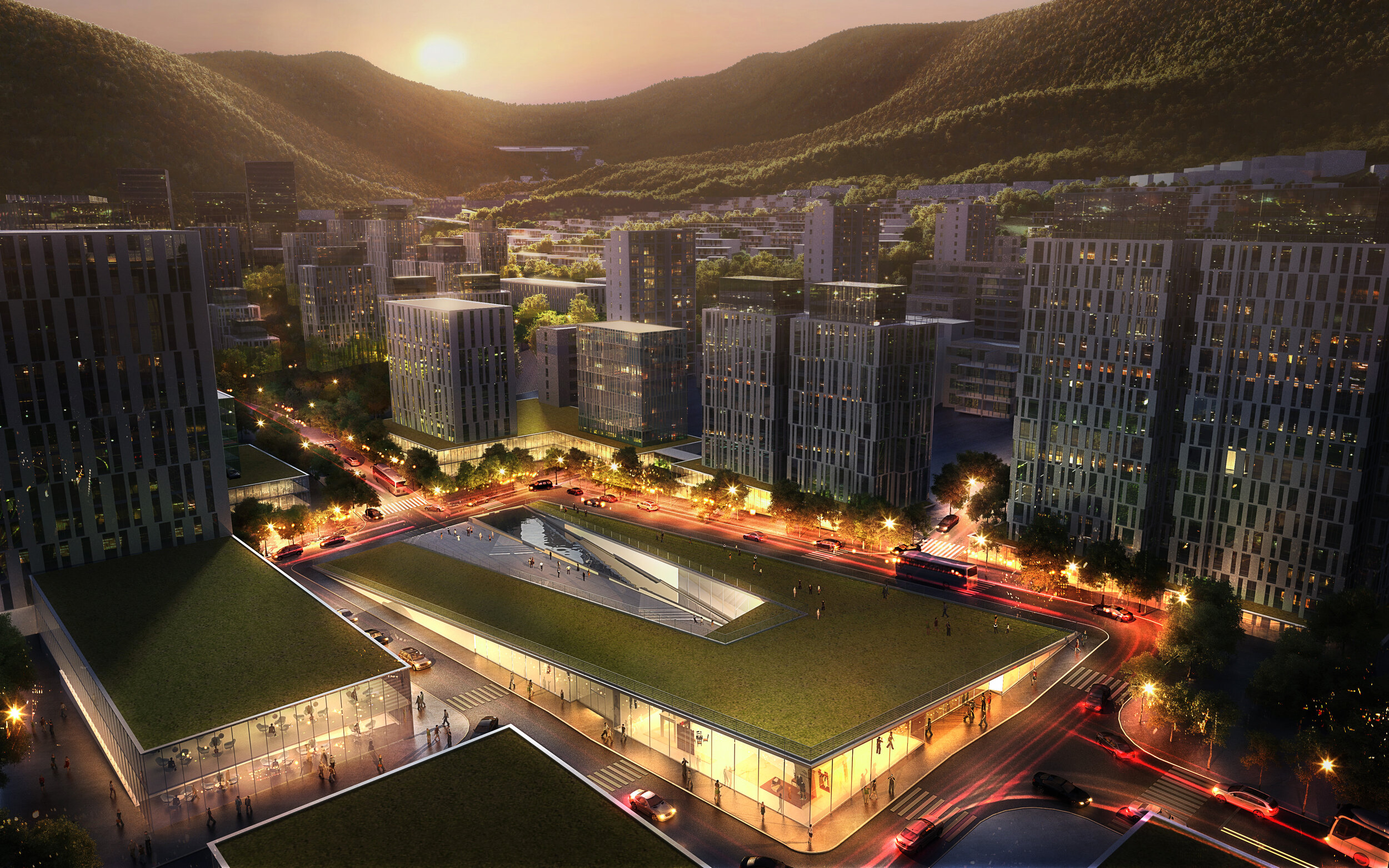
The Quad System enables navigable roadways across steep terrain by increasing the linear distance between elevation changes. The resulting interstitial spaces create opportunities for retail and community-oriented programs.
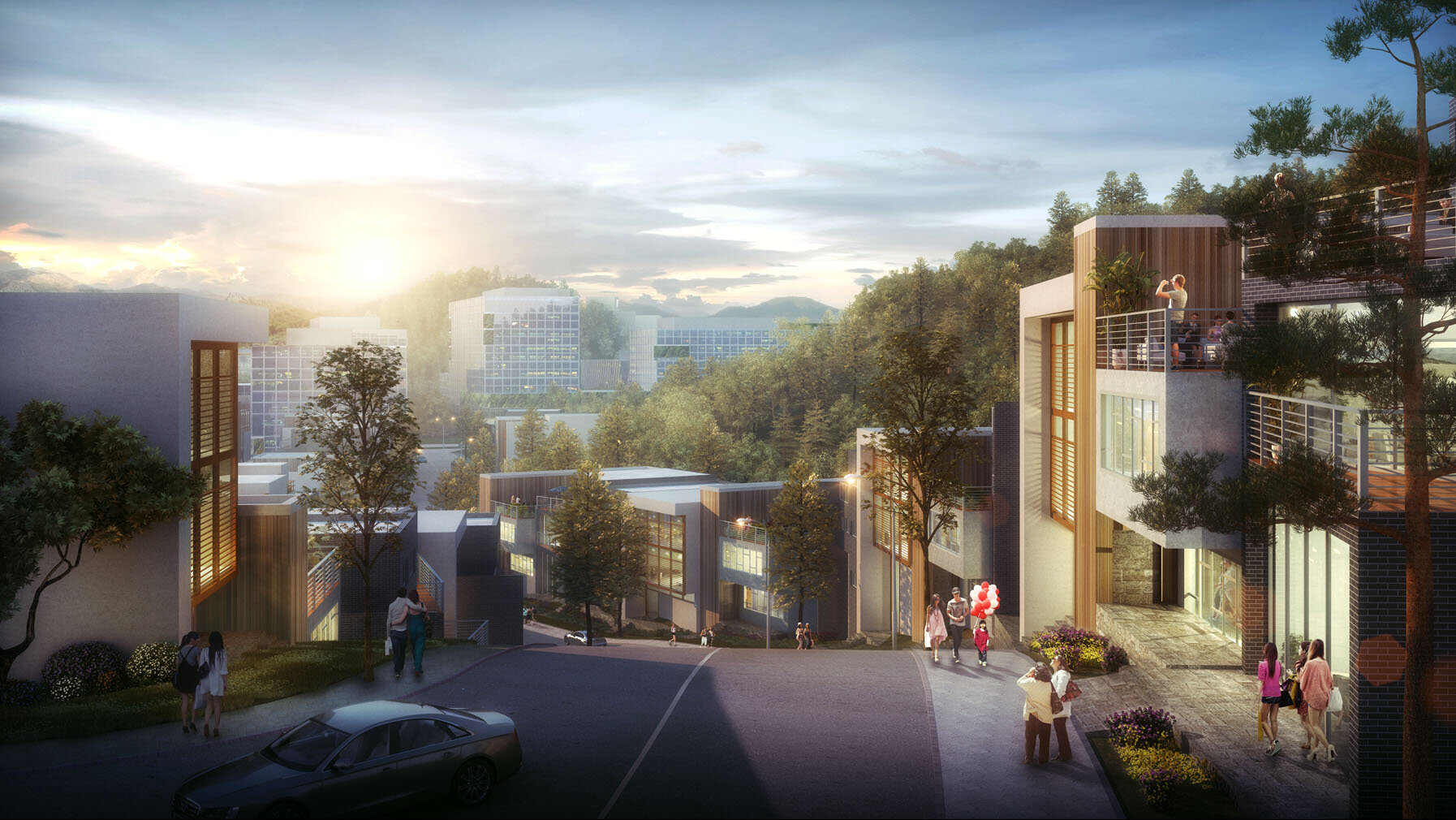
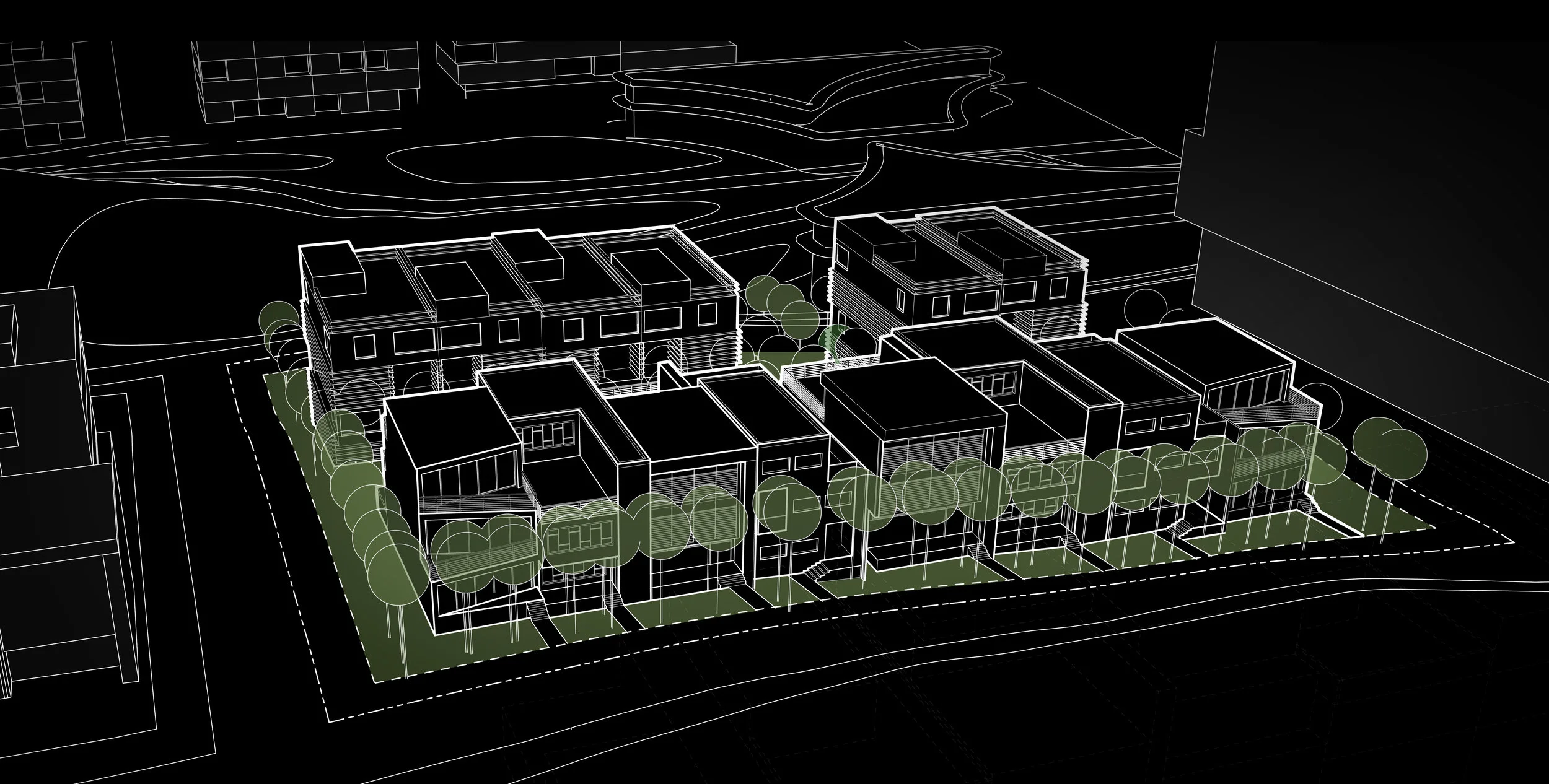
Townhomes near Mentougou’s city center respond to the sloping site by opening onto the street from both front and rear. Sloped roofs and sliding screens draw from local vernacular architecture.
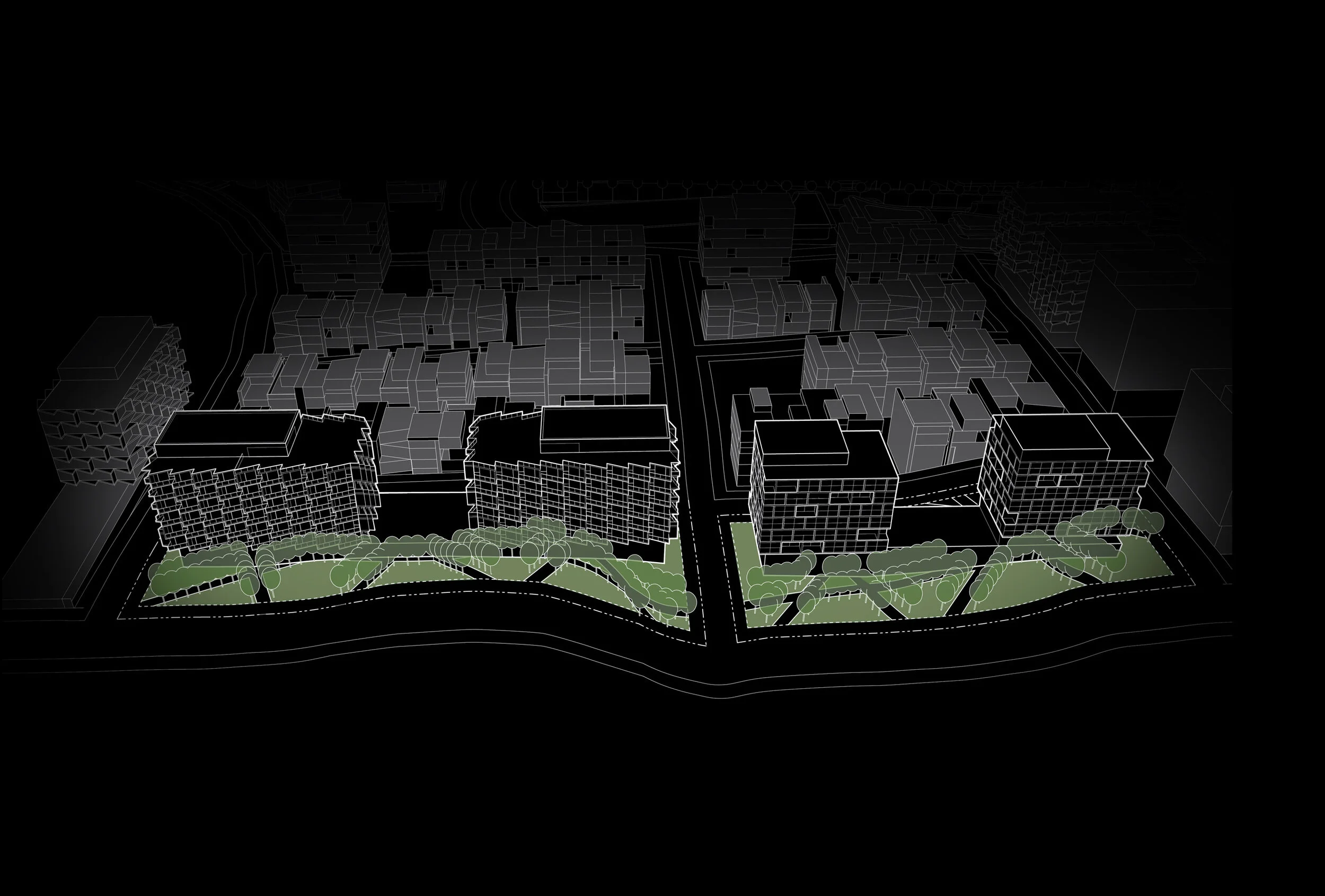
Mid-rise, medium-density housing preserves natural waterways to mitigate flooding. A continuous green band along these corridors forms a biologically diverse park system. The architecture blends traditional elements with modern forms and restrained geometry.
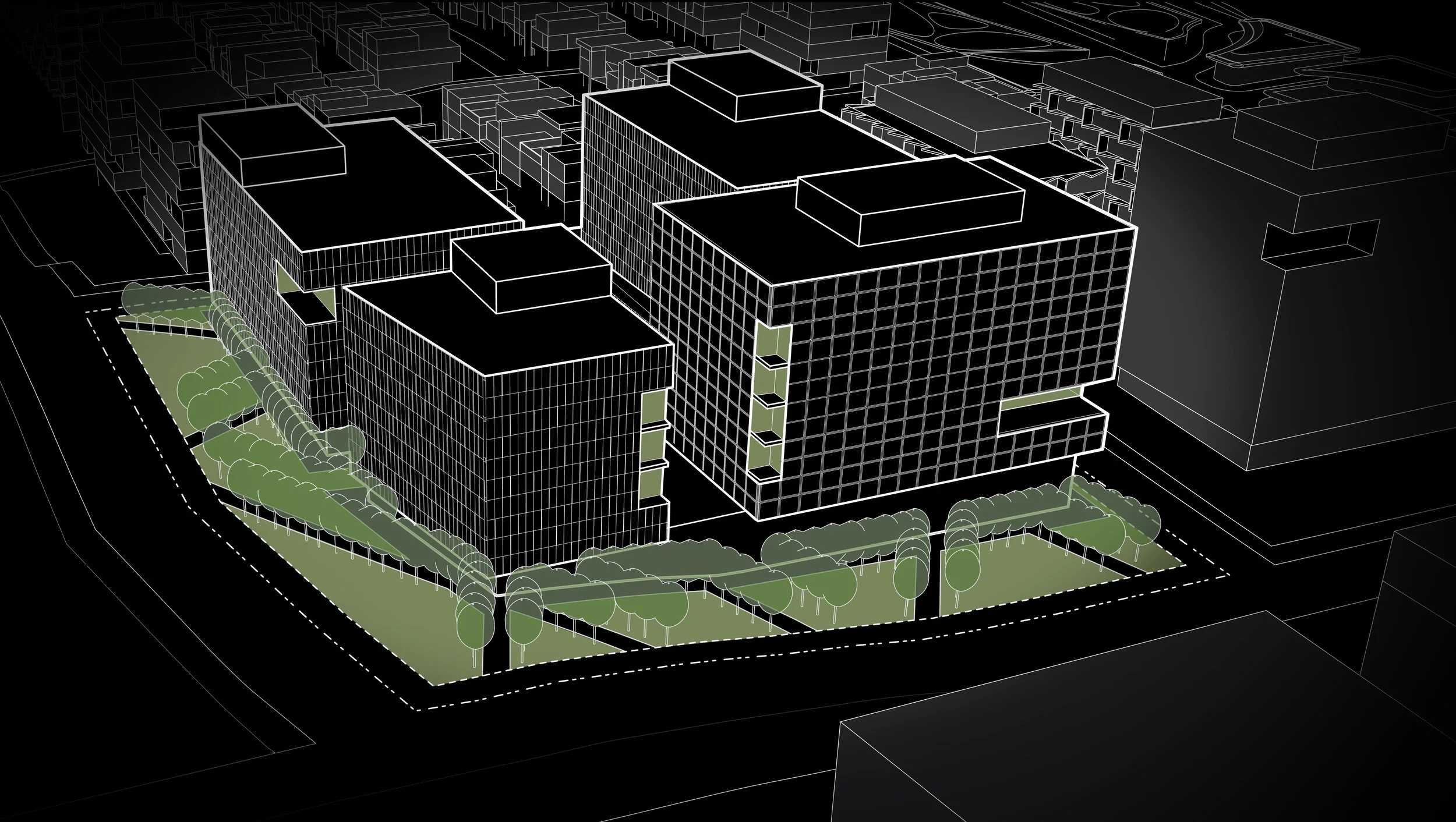
High-rise buildings integrate retail, commercial, and residential uses. A two-story plinth separates the retail base from the residential towers above, while carved voids in the massing provide outdoor access and relief within the dense urban core.
Renderings by Atchain
Working as part of a small team at SOM, we envisioned the Guiyang Tax Free Zone as an international marketplace that brings together products and ideas from around the world within a controlled-access, duty-free environment. The master plan is organized into three distinct districts: the International Trade Zone, the Swiss Villas, and the City Center.
A large central park anchors the City Center and serves as the organizing spine of the development. Retail and dining spaces embedded within the park create a destination for entertainment and cultural activity. Townhouses and apartments, all located within a four-block radius of the park, reinforce a walkable urban fabric. A central commercial boulevard, running perpendicular to the park, connects the City Center to the International Trade Zone.
Renderings by Atchain